
By Sarah Jenkins
Published: October 24, 2023
Location: Detroit, Michigan
The Rise of the Michigan Gigafactory: How Battery Plants Are Reshaping Detroit’s Economy
For over a century, Detroit has been defined by the internal combustion engine. However, as the global automotive industry undergoes its most significant transformation since the assembly line, the region is rapidly pivoting toward a new identity. The era of the Michigan gigafactory has arrived, bringing with it billions of dollars in investment, thousands of promised jobs, and a complex set of challenges for the local workforce.
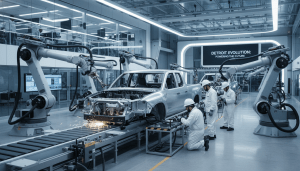
State officials and major automakers are racing to secure Michigan’s position as the hub of electric vehicle (EV) manufacturing in North America. With massive battery plant projects underway from Ford, General Motors, and foreign partners, the landscape of Detroit auto manufacturing is shifting from pistons to pouches.
The Boom of Battery Manufacturing in the Motor City Region
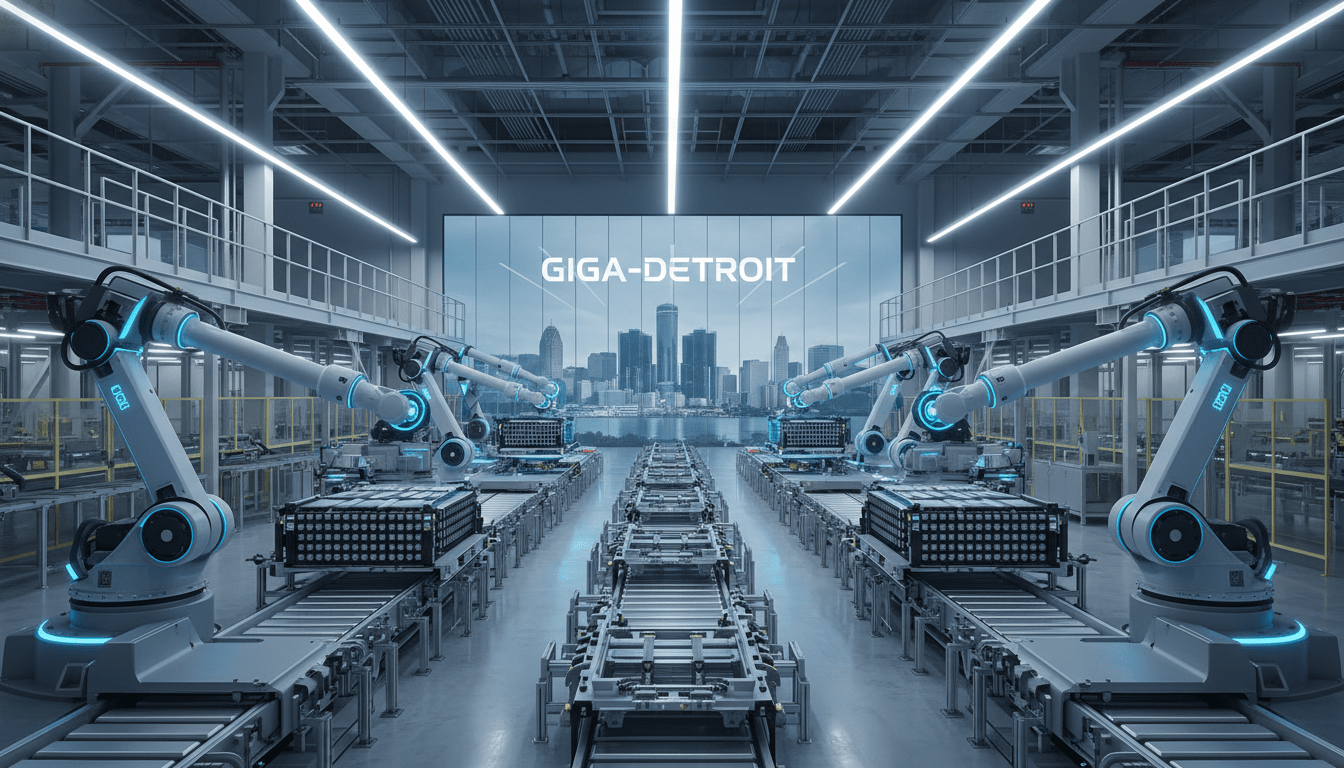
The term "gigafactory," originally popularized by Tesla, has become the industry standard for large-scale battery manufacturing facilities. Michigan has aggressively courted these developments to ensure that as automakers transition to electric fleets, the supply chain remains local.
According to the Michigan Economic Development Corporation (MEDC), the state has secured more than $16 billion in electric vehicle and battery manufacturing investments since 2019. This influx is not just about keeping up with trends; it is an existential necessity for the state’s economy.
"The competition is fierce," said a representative from the Detroit Regional Chamber in a recent briefing. "If we do not capture the battery manufacturing market now, the center of gravity for the auto industry will drift south. The Michigan gigafactory projects are the firewall protecting Detroit’s economic future."
Key developments impacting the region include:
- Ford’s BlueOval Battery Park: Located in nearby Marshall, this massive project has faced start-stop delays but represents a critical localized supply chain for Detroit-assembled EVs.
- GM’s Ultium Cells: With a focus on Lansing and Orion Township, these plants are directly feeding the assembly lines that employ thousands of Metro Detroit residents.
- Our Next Energy (ONE): A homegrown Michigan startup manufacturing batteries in Van Buren Township, bridging the gap between tech startups and heavy manufacturing.
Impact on Detroit Residents and the Workforce
For the average resident in Detroit, the Michigan gigafactory boom presents both opportunity and uncertainty. The immediate benefit is job creation. These facilities require thousands of technicians, engineers, and assembly workers. However, the skills required for battery production differ significantly from traditional powertrain assembly.
Local educational institutions are rushing to fill the gap. Detroit vocational programs and community colleges are increasingly offering certifications in mechatronics and high-voltage systems. The transition suggests that while jobs are available, they demand a retrained workforce.
"We are seeing a shift from mechanical know-how to electromechanical expertise," said Dr. Alan Foster, a labor economist specializing in the Midwest auto sector. "For a Detroit native who has worked on engines for twenty years, this is a daunting transition, but it is also the only path forward."
Economic Ripple Effects
Beyond direct employment, the construction and operation of a Michigan gigafactory create secondary economic benefits. Local construction firms, logistics companies, and service providers in the Metro Detroit area see increased demand. When a plant opens within an hour of the city, the supplier network—largely based in Detroit’s suburbs—activates, preserving the regional ecosystem that supports the city’s tax base.
Challenges and Market Realities
Despite the optimism, the road to an electrified future is not smooth. Recent months have seen a cooling in consumer demand for EVs, leading some automakers to scale back or pause their aggressive expansion plans. This volatility raises questions about the long-term stability of the Michigan gigafactory promises.
Furthermore, political and environmental debates have surrounded several projects. Residents near proposed sites have raised concerns regarding zoning, water usage, and the involvement of foreign technology partners. For Detroit’s leadership, balancing the desperate need for economic development with community concerns and market reality remains a delicate act.
For more on how local policies are adapting to these industrial changes, read our coverage on Detroit city planning and zoning updates.
What Happens Next?
The coming years will be the proving ground for the Michigan gigafactory initiative. As federal incentives from the Inflation Reduction Act continue to influence corporate strategy, Detroit stands at a crossroads. If successful, the region will successfully rebrand from the Rust Belt to the "Battery Belt."
For now, the cranes are in the sky, and the tooling is being installed. The question remains: can the workforce adapt fast enough to keep the Motor City’s heart beating with electric pulses?