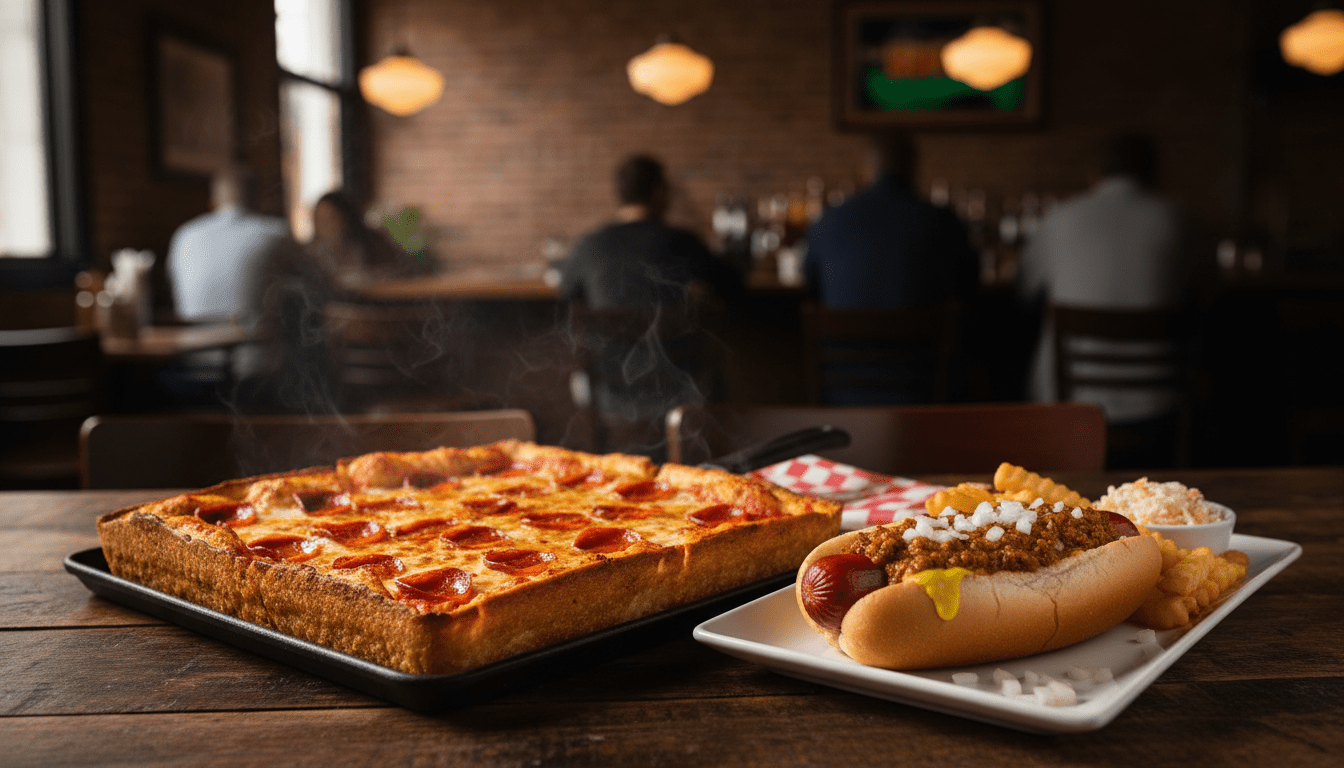
Detroit’s culinary identity is as industrious as its assembly lines. While other cities may lay claim to haute cuisine or fusion trends, the Motor City’s gastronomic reputation was forged in the fires of industry and the melting pot of early 20th-century immigration. The most iconic Detroit foods are not merely regional delicacies; they are edible artifacts of the city’s blue-collar history, designed to fuel autoworkers and satisfy a diverse population.
From the crunch of a caramelized corner of deep-dish pizza to the snap of a natural casing hot dog, these staples tell a story of innovation born from necessity. As Detroit continues its modern renaissance, the preservation of these culinary traditions remains a vital link to the past for residents and a primary draw for the city’s growing tourism sector.
The Great Coney Island War
No discussion of iconic Detroit foods can begin without addressing the Coney dog. Despite the name borrowing from New York’s amusement district, the Coney Island hot dog is a distinctly Detroit invention, rooted in the city’s Greek immigrant community. According to the Detroit Historical Society, the story began in 1917 when Gust Keros opened American Coney Island on West Lafayette Boulevard.
The defining characteristics of a true Detroit Coney are specific: a natural casing hot dog (often made by local purveyors like Dearborn Sausage Co. or Koegel’s), topped with a beanless chili sauce, diced white onions, and yellow mustard, all nestled in a steamed bun. The lore deepened when Keros’s brother brought his own twist to the recipe right next door, founding Lafayette Coney Island. This proximity sparked a friendly but fierce rivalry that has lasted over a century.
“It’s not just about a hot dog; it’s about the lineage,” said a representative from a local culinary history tour group. “When you sit at those Formica counters, you are participating in a ritual that generations of Detroiters have upheld. It’s arguably the most democratic dining experience in the city, where CEOs and factory workers eat side-by-side.”
Detroit-Style Pizza: An Industrial Innovation
While the Coney dog speaks to immigrant heritage, Detroit-style pizza speaks to the city’s industrial might. The origin story of this square, deep-dish pie traces back to 1946 at Buddy’s Rendezvous (now Buddy’s Pizza). Gus Guerra, seeking to add something new to his menu, adapted a Sicilian dough recipe, but the true innovation lay in the cookware.
Guerra reportedly baked his pizzas in blue steel pans originally designed as drip trays for automotive parts in local factories. These heavy, rectangular pans conducted heat intensely, creating the signature frico—the crispy, caramelized cheese edge that defines the style. Unlike Chicago deep dish, which is heavy on sauce and eaten with a fork, Detroit-style is airy, with the sauce often ladled on top of the cheese to prevent a soggy crust.
In recent years, this style has exploded globally, but local purists maintain that it tastes different in the 313 code. The expansion of chains and the resilience of independent pizzerias highlight the enduring economic power of the local food scene. Data from industry reports suggests that Detroit-style pizza has become one of the fastest-growing pizza categories in the United States over the last five years, exporting the city’s brand worldwide.
The Sweet Side: Vernors and Sanders
Beyond savory staples, Detroit boasts America’s oldest surviving ginger ale brand. Vernors, created by pharmacist James Vernor, dates back to just after the Civil War. Legend has it that Vernor stored the syrup in an oak cask before leaving for war in 1862; when he returned four years later, the aging process had created a robust, vanilla-heavy flavor profile distinct from the dry ginger ales of the East Coast.
Similarly, the Fred Sanders confectionery empire introduced the Bumpy Cake and the hot fudge cream puff. These items remain staples at family gatherings across Metro Detroit, representing a legacy of local manufacturing that catered to the city’s sweet tooth during its boom years.
Impact on Detroit Residents
For locals, these foods are more than just caloric intake; they are anchors of community identity. In neighborhoods that have faced economic turbulence, long-standing establishments serving these iconic Detroit foods often served as stable community hubs. They provide continuity in a city familiar with change.
Furthermore, the accessibility of these foods—traditionally priced for the working class—ensures they remain inclusive. However, as ingredient costs rise, local business owners face the challenge of maintaining quality without alienating their loyal customer base. A recent survey of small business owners in the Detroit business sector indicated that supply chain volatility for ingredients like dairy and meat remains a primary concern for preserving these heritage recipes at affordable prices.
Economic Data and Tourism
Culinary tourism is a growing driver for the local economy. According to data from the Detroit Metro Convention & Visitors Bureau, food culture is consistently ranked as a top motivator for visitors. The global recognition of Detroit-style pizza, in particular, has turned the original locations of Buddy’s, Loui’s, and Cloverleaf into pilgrimage sites for food enthusiasts.
- Longevity: Many of these establishments have been in operation for over 75 years.
- Job Creation: The local food supply chain, from sausage makers to bakeries, supports thousands of jobs in the region.
- Brand Export: Detroit-style pizza franchises have now opened in markets as far away as London and Tokyo.
Preserving the Legacy
As new developments reshape the city’s skyline, there is a conscious effort to protect these legacy businesses. From the preservation of the Coney Island facades to the expansion of heritage brands into grocery stores, the city is leveraging its history to fuel its future. These iconic Detroit foods serve as a reminder that innovation in Detroit has never been limited to the assembly line—it is also found on the plate.