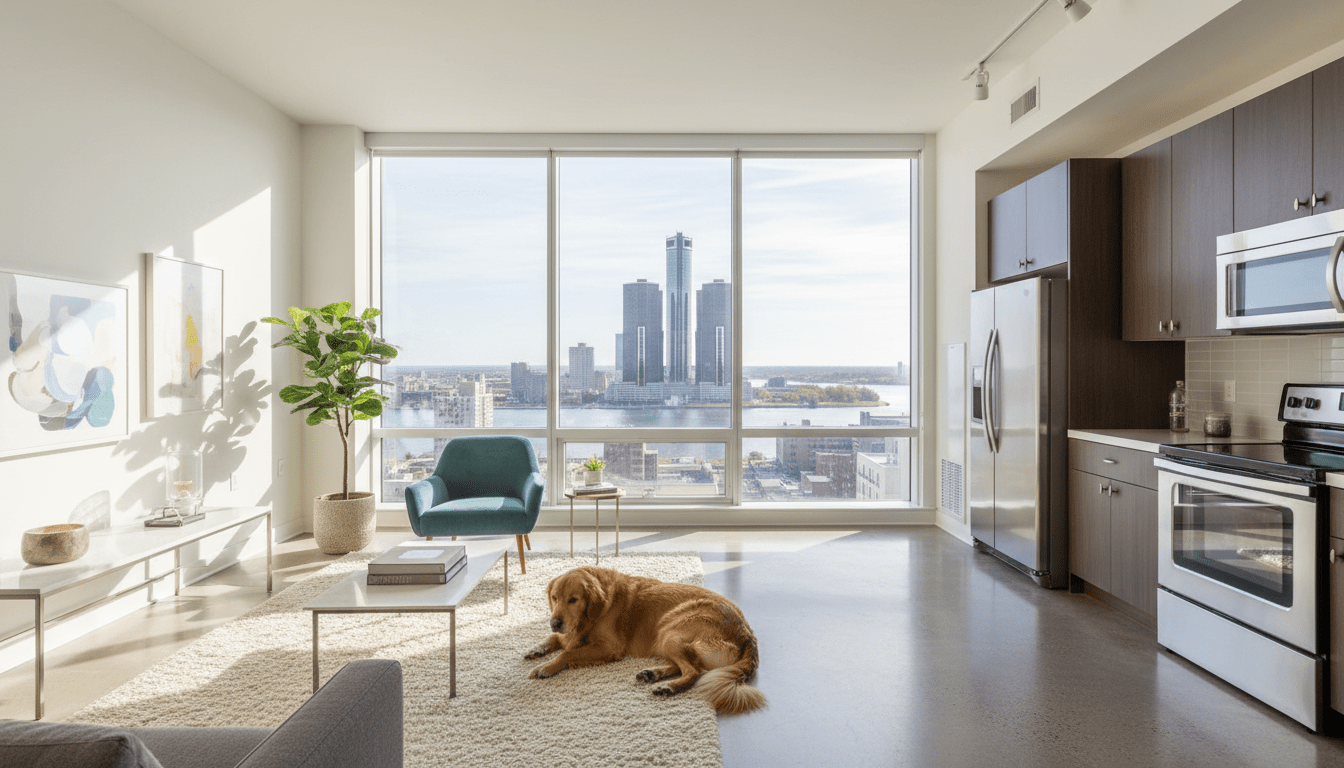
As Detroit’s housing market continues its post-pandemic evolution, a distinct trend has emerged among developers and property managers: a pivot toward high-end accommodations for four-legged residents. The availability of pet-friendly apartments in Detroit has shifted from a niche perk to a primary competitive necessity for new developments in Downtown, Midtown, and Corktown, reflecting broader changes in renter demographics and lifestyle priorities.
Data indicates that the surge in pet ownership during the COVID-19 pandemic has permanently altered housing requirements for prospective tenants. Consequently, Detroit’s multifamily housing sector is witnessing an “amenity arms race,” where rooftop dog parks, on-site grooming stations, and concierge pet services are becoming as standard as fitness centers and co-working spaces.
The Shift in Development Priorities
For years, finding a rental unit in the city that accepted animals—particularly large dogs—was a significant challenge for residents. However, recent analysis suggests the market is correcting to meet demand. According to the 2023-2024 National Pet Owners Survey conducted by the American Pet Products Association (APPA), 66% of U.S. households own a pet. In urban centers like Detroit, this translates to a massive cohort of renters who filter their housing searches exclusively by pet policies.
Local developers have noted this shift. In newly renovated buildings along the Woodward corridor and within the growing district of Corktown, marketing materials now prominently feature pet spas and proximity to public green spaces. This is not merely a marketing gimmick but a response to vacancy data; properties that impose strict “no pets” policies often see longer turnaround times for filling units compared to those offering flexible Detroit real estate market options.
Reports from national listing platforms like Zillow highlight that “pet-friendly” is consistently one of the most used search filters for renters in the metro Detroit area. As new high-rises break ground, architects are increasingly incorporating dedicated relief areas and washing stations into the blueprints, recognizing that for many young professionals moving into the city, the dog comes first.
Financial Implications: Pet Rent and Fees
While accessibility has improved, the cost of securing pet-friendly apartments in Detroit has also risen. The widespread adoption of “pet rent”—a monthly fee added on top of the base rent—has become standard practice across corporate-managed communities. This differs from the traditional one-time security deposit and represents a recurring revenue stream for landlords.
According to data from local housing advocacy groups, these fees can range anywhere from $25 to $100 per month per animal, in addition to non-refundable cleaning fees that can exceed $300. For tenants, this creates a hidden layer of housing inflation. A standard one-bedroom unit in Midtown might appear affordable at face value, but once pet fees and parking are calculated, the total monthly output rises significantly.
Landlords argue these fees are necessary to cover the increased wear and tear on units and common areas. However, tenant unions and housing advocates have raised concerns that cumulative fees disproportionately affect lower-income residents who rely on pets for emotional support but may not have the official documentation to qualify for fee waivers under Fair Housing regulations.
Impact on Detroit Residents
The liberalization of pet policies is a double-edged sword for longtime Detroit residents. On one hand, it increases the housing stock available to families with animals. On the other, the specific nature of these policies often includes restrictions that exclude common breeds.
Many “pet-friendly” buildings enforce strict weight limits or breed restriction lists, often banning Pit Bulls, Rottweilers, and Dobermans—breeds that are popular among Detroiters. This creates a disconnect where a building is marketed as inclusive, yet remains inaccessible to a significant portion of the local population due to the type of dog they own.
“It is creating a tiered system,” said local housing activists familiar with tenant rights in the city. “You have luxury buildings that welcome French Bulldogs and Golden Retrievers with open arms, but a family with a mixed-breed dog that weighs over 50 pounds often struggles to find compliant housing outside of single-family home rentals in the neighborhoods.”
Furthermore, as downtown redevelopment projects continue to gentrify historic areas, the conversion of older, more lenient buildings into managed properties often leads to the implementation of stricter pet policies, displacing existing tenants with animals that no longer fit the new corporate criteria.
Background & Data: The Role of Service Animals
It is crucial to distinguish between pets and assistance animals. Under the Fair Housing Act, housing providers are required to provide reasonable accommodations for individuals with disabilities who use assistance animals. This federal mandate overrides “no pet” policies and breed restrictions, provided the tenant can supply credible documentation of their disability-related need.
However, confusion regarding the distinction between Emotional Support Animals (ESAs) and Service Animals persists among both tenants and smaller landlords in Detroit. The U.S. Department of Housing and Urban Development (HUD) has issued guidance clarifying that housing providers cannot charge pet rent or deposits for assistance animals, yet reports of friction over this issue remain common in local housing disputes.
The City of Detroit Animal Care and Control also plays a role in this ecosystem, emphasizing the importance of licensing and vaccination. As density increases in apartment living, the city has ramped up efforts to ensure that pets in multi-unit buildings are properly vaccinated against rabies and distemper, aligning public health safety with the growing density of the animal population.
What Happens Next
Looking ahead, the definition of pet-friendly apartments in Detroit is likely to expand further. Industry experts predict that the next wave of development will move beyond physical amenities to include partnerships with local service providers. We are already seeing property managers partnering with local dog walking services and mobile groomers to offer exclusive rates to residents, effectively creating a full-service lifestyle package.
As the competition for tenants remains fierce in the luxury and mid-market sectors, the buildings that offer the most comprehensive and least restrictive pet policies may find themselves with the lowest vacancy rates. For Detroit renters, this means more options, provided they can navigate the complex landscape of breed lists and monthly fees.