For decades, Detroit was defined by its status as a bastion of Black homeownership and single-family living. However, the economic landscape of the last fifteen years has fundamentally altered the calculus for residents deciding between renting vs. buying in Detroit. As the city moves further into 2025, prospective residents and long-time locals face a complex housing market characterized by rising interest rates, increasing rental costs in developed corridors, and a housing stock that offers high potential but significant hidden costs.
Data from the U.S. Census Bureau and analysis from local think tanks like Detroit Future City indicate that while Detroit remains one of the most affordable major cities in the United States for purchasing property, the gap between the list price and the "true cost" of ownership is often wider here than elsewhere. Conversely, the rental market has tightened, particularly in the 7.2 square miles of the greater downtown area, forcing many to weigh the flexibility of a lease against the equity-building potential of a deed.
The Current State of the Detroit Housing Market
The debate over Detroit real estate is driven by unique local factors. Unlike coastal cities where the barrier to entry is a multimillion-dollar down payment, Detroit’s barrier is often the condition of the home and the subsequent taxes and insurance.
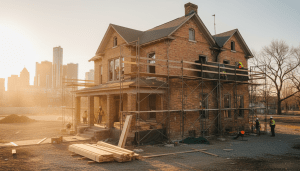
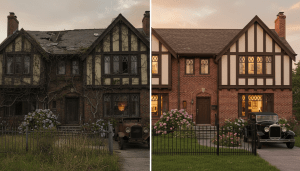
According to recent market reports, the median home price in Detroit has seen steady appreciation, yet remains accessible compared to national averages. However, housing analysts warn that the "sticker price" can be deceptive. A home listed for $80,000 may require an additional $50,000 in immediate repairs to meet habitability standards, complicating the mortgage process for traditional lenders.
"The inventory is there, but the move-in ready inventory is scarce," noted a representative from a local housing non-profit during a recent community development meeting. "Buyers are competing fiercely for turnkey properties, while homes requiring rehabilitation sit on the market longer, often accessible only to cash buyers or investors."
The Argument for Buying: Equity and Stability
Despite the challenges, buying remains a primary goal for many Detroiters, supported by city initiatives aimed at increasing resident retention. The Detroit Down Payment Assistance Program and various lending products from local banks are designed to bridge the appraisal gap that often stalls deals in emerging neighborhoods.
Long-term Wealth Generation
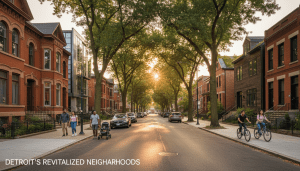
Purchasing a home locks in housing costs—specifically the principal and interest—protecting residents from the volatility of rent hikes. For those looking to stay in the city long-term, buying offers a hedge against the gentrification that has seen rents double in areas like Corktown and Midtown over the last decade.
The Detroit Land Bank Authority
The Detroit Land Bank Authority continues to be a major player, offering properties at varying price points. While the famous $1,000 auctions are largely a thing of the past, the Land Bank provides a pipeline for residents to acquire property without competing on the open MLS market. However, these purchases come with strict compliance agreements requiring buyers to renovate and occupy the homes within a set timeframe.
The Argument for Renting: Flexibility and Avoiding Liability
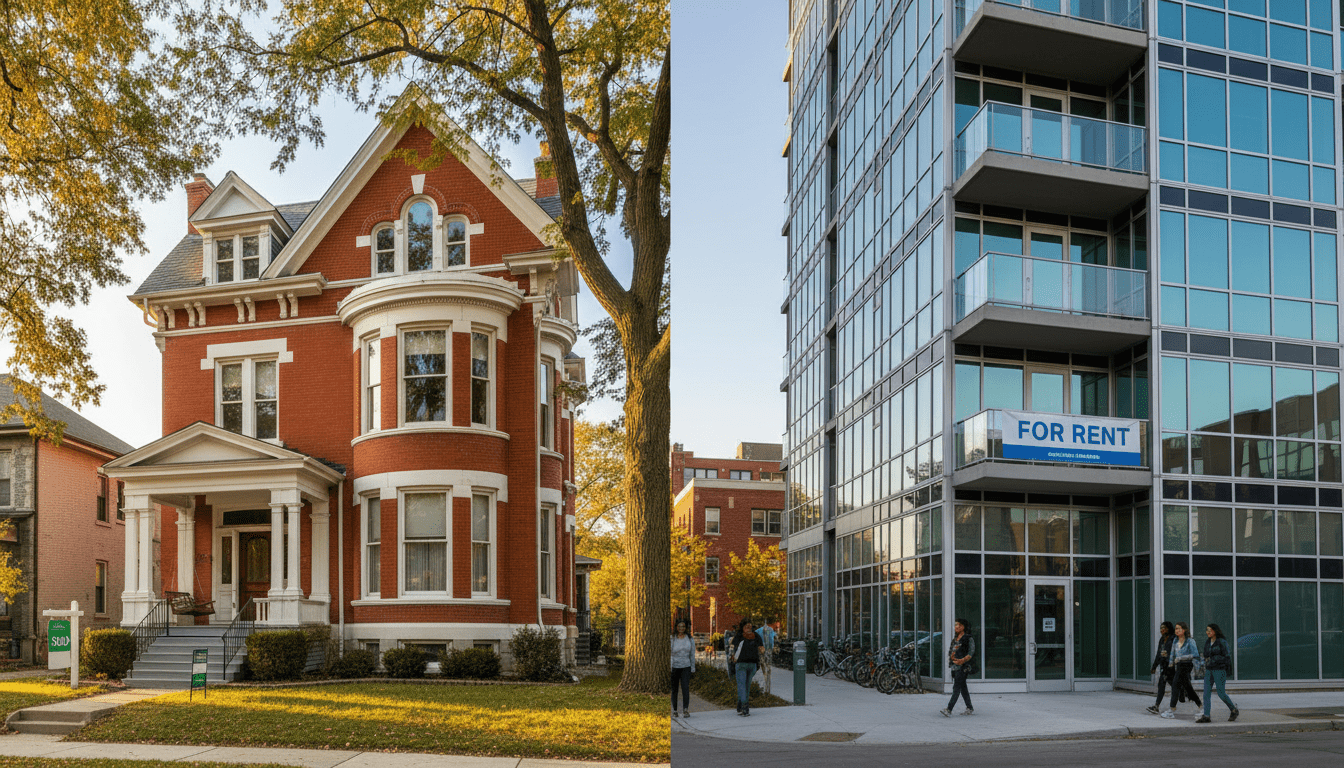
While homeownership is the American Dream, the financial reality of the rent vs. buy Detroit equation often tips toward renting for those unprepared for the unique liabilities of Motor City homeownership.
The Cost of Maintenance and Utilities
Detroit’s housing stock is aging. Many homes were built before 1950 and lack modern insulation, leading to high utility bills during Michigan winters. Renters generally shift the burden of major repairs—roof leaks, furnace failures, and plumbing issues—to the landlord. In a city where a new roof can cost a significant percentage of the home’s value, this risk mitigation is a key factor for renters.
Property Taxes and Insurance
Detroit has historically had some of the highest property tax rates in the nation, though efforts have been made to assess properties more accurately. Additionally, Detroit generally has the highest car insurance rates in the country, and homeowners insurance can also be premium-priced due to perceived risks. Renters, who only need relatively cheap renters insurance, avoid these heavy carrying costs.
Neighborhood Nuances: Downtown vs. Neighborhoods
The decision often depends heavily on geography. In the Detroit Local Living context, the market is bifurcated.
- Greater Downtown: In areas like Downtown, Midtown, and Brush Park, buying options are often limited to high-priced condos. Renting is the norm here, offering access to the QLINE, stadiums, and nightlife. Rents are high, comparable to Chicago or parts of the East Coast, but the lifestyle amenities are immediate.
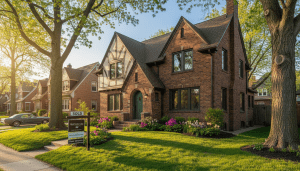
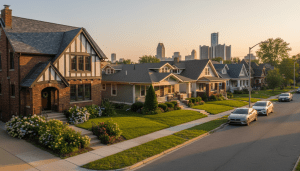
- The Neighborhoods: In areas like Bagley, East English Village, or Rosedale Park, the math favors buying. Rents for single-family homes in these areas have risen, often exceeding the monthly mortgage payment of a comparable property, provided the buyer can secure a loan.
Impact on Detroit Residents
The shift from a majority-homeowner city to a majority-renter city, a milestone Detroit passed several years ago, has had profound social impacts. Housing stability is closely linked to community stability. When residents rent, they are vulnerable to lease non-renewals and eviction, particularly if a landlord decides to sell the property to capitalize on rising values.
Local advocacy groups have raised concerns about "predatory land contracts," a rent-to-own model that often results in tenants losing their investment. Residents are urged to seek legal counsel or housing counseling before entering into non-traditional buying agreements.
Economic Outlook and Future Trends
Looking ahead, the Detroit housing market is expected to stabilize but remain competitive. Interest rates, while fluctuating, are unlikely to return to the historic lows of 2020, meaning the cost of borrowing will remain a hurdle. However, Detroit’s continued economic diversification—moving beyond just automotive to include tech and fintech—may drive wage growth, increasing purchasing power for locals.
For those sitting on the fence, the consensus among local real estate experts is clear: If you have the capital for immediate repairs and plan to stay for five-plus years, buying in Detroit offers undeniable value. For those seeking flexibility or lacking a significant emergency fund for repairs, renting remains the safer financial harbor.