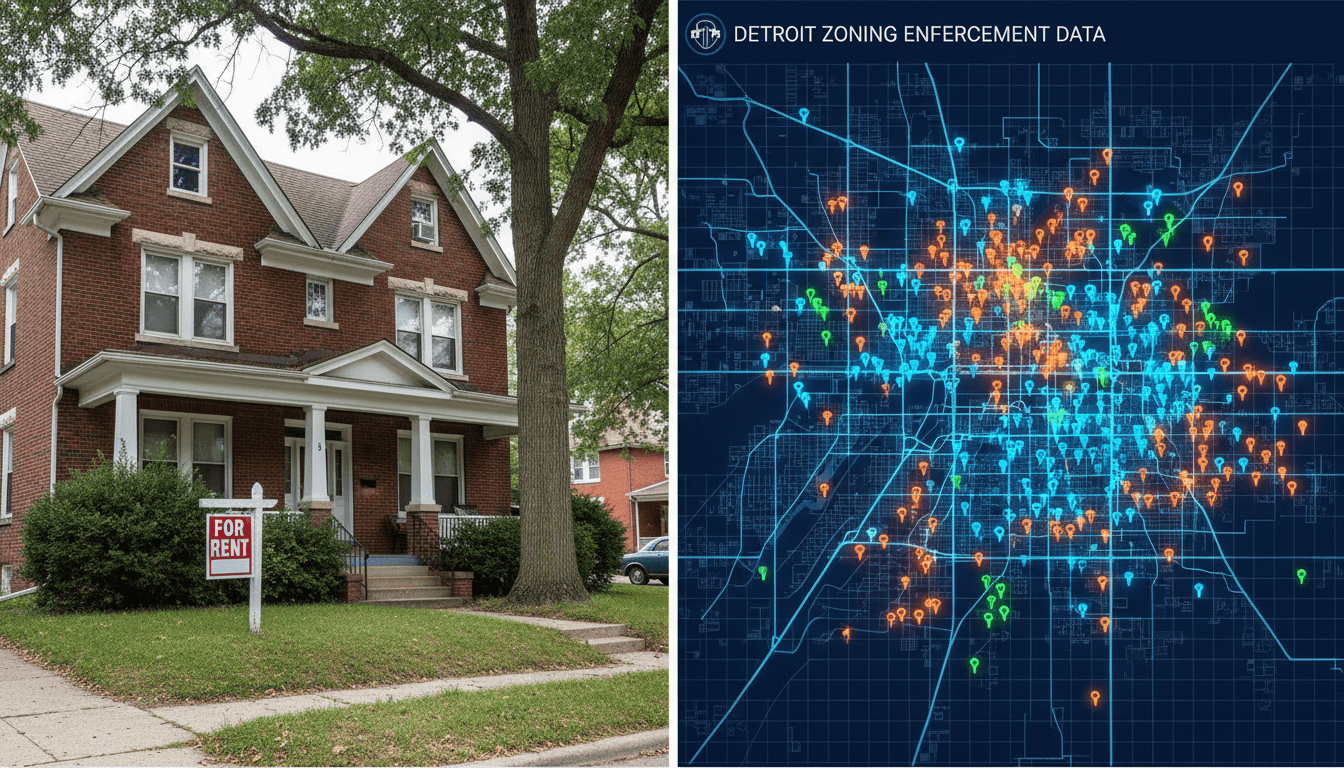
The landscape of short-term rentals Detroit is undergoing a significant shift as city officials move to enforce strict ordinances aimed at preserving neighborhood integrity and housing availability. Following a grace period for education and registration, the City of Detroit’s Buildings, Safety Engineering, and Environmental Department (BSEED) has begun intensifying efforts to bring property owners into compliance with Chapter 46 of the City Code.
For years, Detroit has been a lucrative market for platforms like Airbnb and Vrbo, attracting investors and visitors to the city’s rebounding districts. However, the rapid proliferation of short-term rentals (STRs) has sparked a complex debate regarding zoning, noise complaints, and the displacement of long-term residents. The current crackdown focuses on ensuring that STRs in residential zones (R1 and R2) are the owner’s principal residence—a rule designed to prevent outside investors from turning residential streets into hotel districts.
Understanding the New Enforcement Landscape
The core of the regulation requires that any property used for short-term rental purposes must be registered with the city. According to the City of Detroit’s official guidelines, hosts in residential neighborhoods must prove that the property is their primary residence. This measure effectively bans the practice of buying up single-family homes solely for the purpose of operating them as full-time vacation rentals.
BSEED officials have stated that the goal is not to eliminate tourism but to ensure safety and compliance. Unregistered rentals often bypass safety inspections, leaving guests vulnerable to code violations such as inadequate fire exits or faulty electrical systems. Under the current ordinance, hosts are required to pay a registration fee, undergo an inspection, and maintain liability insurance. Failure to comply can result in steep fines and the deactivation of listings on booking platforms.
Reports indicate that the city is utilizing third-party software to monitor listing platforms and identify non-compliant properties. This digital dragnet allows enforcement officers to cross-reference active listings with the city’s registration database, issuing warning letters and citations to violators. For many hosts who have operated under the radar, this signals the end of a lenient era.
Impact on Detroit Residents and Neighborhoods
The enforcement of regulations regarding short-term rentals Detroit has drawn mixed reactions from the community, highlighting a divide between residents seeking peace and hosts seeking income.
For neighborhood associations in areas like Corktown, Brush Park, and West Village, the regulations come as a relief. Long-term residents have frequently cited issues with “party houses”—properties rented out for weekends that bring excessive noise, trash, and parking congestion. “It changes the fabric of the block when you don’t know who is sleeping next door from one night to the next,” said a resident of the Boston-Edison district during a recent community meeting. Residents argue that converting homes into full-time rentals removes inventory from the long-term housing market, driving up rents and making it harder for families to find affordable homes.
Conversely, many local hosts argue that short-term renting provides a vital economic lifeline. In a city where property taxes and maintenance costs can be high, the supplemental income from an Airbnb suite often helps homeowners keep their properties. “The extra income allows me to pay for a new roof and keep up with rising utility costs,” mentioned a local host who operates a room rental in Midtown. These hosts fear that overly aggressive enforcement or bureaucratic hurdles could strip them of essential revenue, ironically putting their homeownership at risk.
This tension is reflective of broader Detroit housing market trends, where the balance between attracting investment and protecting legacy residents is constantly being tested.
Data and Market Trends
Data regarding the density of short-term rentals reveals why the city felt compelled to act. According to analytics from AirDNA, which tracks short-term rental data, Detroit saw a surge in active listings following the pandemic. At its peak, thousands of entire-home listings were available, a significant portion of which were owned by out-of-state investors or LLCs rather than individual homeowners.
The U.S. Census Bureau data and local housing studies have shown that while Detroit still has a surplus of housing structures compared to its population, the supply of habitable, move-in-ready homes is tight. Housing advocates argue that every home removed from the long-term market for tourist use exacerbates this shortage. The city’s requirement for the property to be a “principal residence” in residential zones specifically targets this issue, attempting to return housing stock to the local market.
Furthermore, economic reports suggest that while STRs generate tourism spending, the benefits are unevenly distributed. Hotels pay specific taxes that contribute to city funds, whereas unregulated STRs often bypassed these contributions prior to the new agreements with booking platforms. By enforcing registration, the city also ensures it captures appropriate revenue to fund services.
What Happens Next for Hosts and Travelers
As the city moves forward, the timeline for full compliance is tightening. Property owners currently operating unregistered units are urged to begin the process immediately to avoid fines. The city has indicated a willingness to work with compliant homeowners to navigate the inspection process, but patience for blatant violators is wearing thin.
For travelers, this may mean fewer options in quiet residential zones and a potential shift toward boutique hotels or compliant listings in mixed-use zones (B4, B5, etc.), where the principal residence requirement does not apply. This shift could drive more tourism traffic into downtown and commercial corridors, aligning with broader Detroit development news regarding hotel capacity and downtown revitalization.
Ultimately, the regulation of short-term rentals Detroit is a test case for how the city manages its growth. By prioritizing permanent residents while allowing homeowners to benefit from the sharing economy, Detroit aims to create a sustainable model that welcomes visitors without displacing the community that makes the city worth visiting.