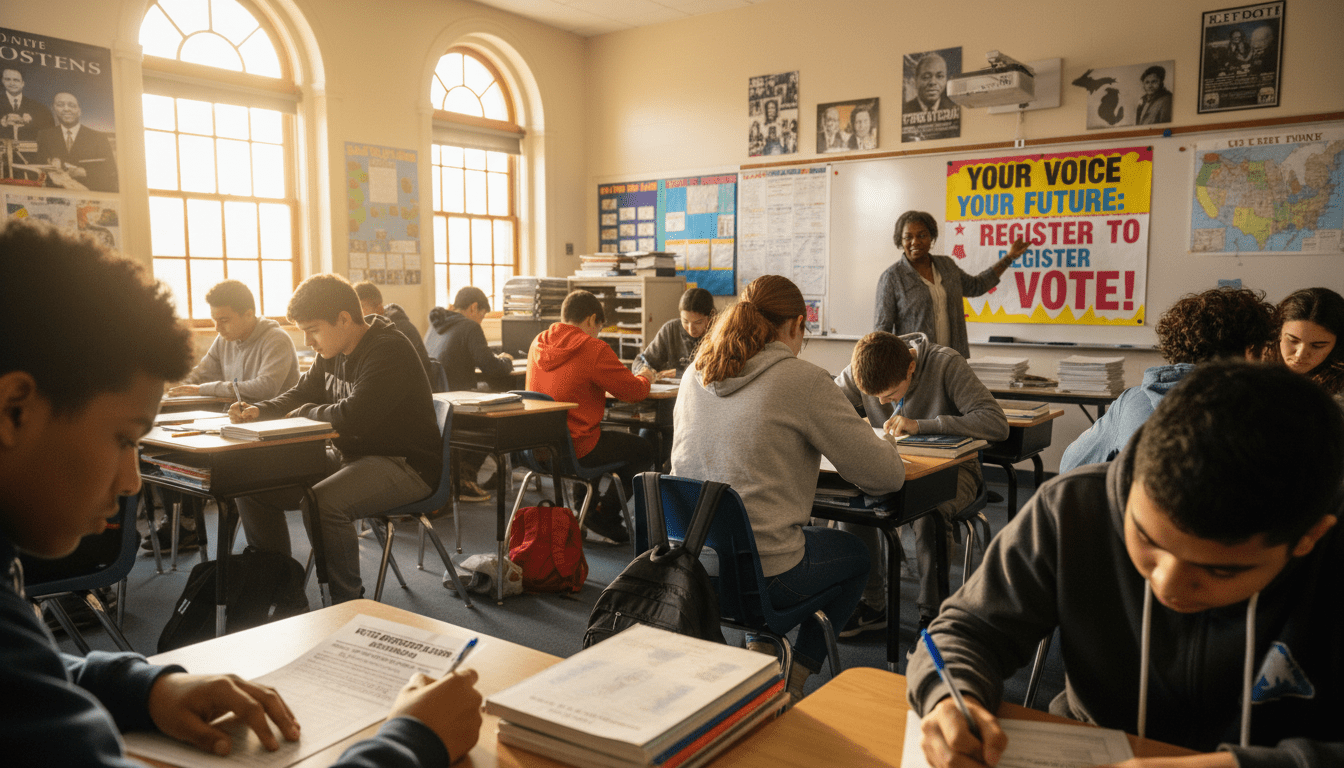
A quiet but significant transformation is underway in high school corridors across Detroit, as election officials and educators launch a concerted effort to engage the next generation of voters long before they cast their first ballot. Following the implementation of Michigan’s Proposal 2, tens of thousands of Detroit high school students now have the legal right to preregister to vote starting at age 16, a move designed to close the gap in youth civic participation.
While neighboring states like Minnesota have made headlines with their own push to register over 180,000 students, Michigan is executing one of the most robust youth voting expansions in the Midwest. For students in the Detroit Public Schools Community District (DPSCD) and charter networks across the city, the message is clear: the path to the ballot box now begins in the classroom.
Understanding Student Voter Preregistration
The concept of student voter preregistration is a relatively new addition to Michigan’s election landscape, brought about by the voter-approved constitutional amendment Proposal 2 in 2022. Previously, young people had to wait until they were 17.5 years old to register. Now, 16- and 17-year-olds can officially preregister, placing them on a “waiting list” within the Qualified Voter File.
According to the Michigan Department of State, once a preregistered student turns 18, their registration automatically becomes active, eliminating the administrative hurdle that often disenfranchises first-time voters who miss registration deadlines. This systemic change is expected to significantly impact Detroit, a city where increasing voter turnout has been a decades-long priority for local leaders.
Secretary of State Jocelyn Benson has frequently emphasized that preregistration is about preparation. By securing their status early, students can focus on understanding the ballot rather than navigating bureaucracy during their senior year or first year of college.
The Impact on Detroit Residents and Schools
For Detroit families, this shift represents a vital opportunity to build generational voting habits. Local organizations and the Detroit City Clerk’s office have ramped up engagement efforts, visiting high schools to educate students not just on how to register, but why local elections matter.
Janice Winfrey, the Detroit City Clerk, has historically championed efforts to make voting more accessible to Detroiters. The new preregistration laws allow her office to capture data on future voters earlier, ensuring that when these students turn 18, they are already in the system and ready to receive absentee ballot applications or voting information.
Local educators note that this integrates well with civics curricula. Teachers in Detroit high schools can now pair lessons on the branches of government with the tangible action of filling out a preregistration form. This practical application of civics is designed to combat voter apathy early on.
“It changes the conversation from ‘you can’t do this yet’ to ‘get ready, you’re up next,’” said a social studies coordinator working with Detroit youth programs. “It gives Detroit students a sense of ownership over their future before they even graduate.”
Streamlining the Process for Teens
The process has been streamlined to accommodate digital-native students. Eligible teenagers can preregister online via the Michigan Voter Information Center if they possess a Michigan driver’s license or state ID. For those without identification—a common barrier in urban centers like Detroit—schools are facilitating paper registration drives where the last four digits of a Social Security number can be used for verification.
This removal of barriers is critical for Detroit, where transportation and access to Secretary of State branch offices have previously been cited as impediments to obtaining state ID cards for minors.
Background & Data: The Youth Vote Factor
The push for student voter preregistration is backed by data suggesting that once young people vote, they are likely to become lifelong voters. However, the hurdle has always been the first vote. Data from the Center for Information & Research on Civic Learning and Engagement (CIRCLE) consistently shows that “process issues”—missing deadlines or not knowing how to register—are top reasons youth fail to vote.
In the 2022 midterm elections, Michigan saw the highest youth voter turnout rate in the country, with voters aged 18-29 casting ballots at a rate significantly higher than the national average. By lowering the engagement age to 16, state officials aim to solidify Michigan, and specifically Detroit, as a hub for youth civic power.
For more on how local policies are shaping the city’s future, read our coverage on Detroit City Council’s latest development plans and the impact on neighborhood infrastructure.
What Happens Next for Detroit Students?
As the academic year progresses, Detroit parents can expect to see more information coming home regarding voter readiness. The City of Detroit is also leveraging this data to better understand the demographic shifts in coming elections. With thousands of students graduating from Detroit high schools annually, the successful conversion of these students into active registered voters could shift the margins in local mayoral and council races.
Community groups are urging parents to encourage their 16-year-olds to take advantage of the provision immediately. The logic is simple: secure the right to vote now, so there is no scramble later.
For ongoing updates on education and policy changes in the city, visit our section on Detroit Public Schools Community District updates.
While the headlines may often focus on national swing states or numbers from neighbors like Minnesota, the real story for Detroiters is the quiet empowerment happening in local homerooms. The infrastructure is now in place to ensure that the next generation of Detroiters is heard loud and clear.