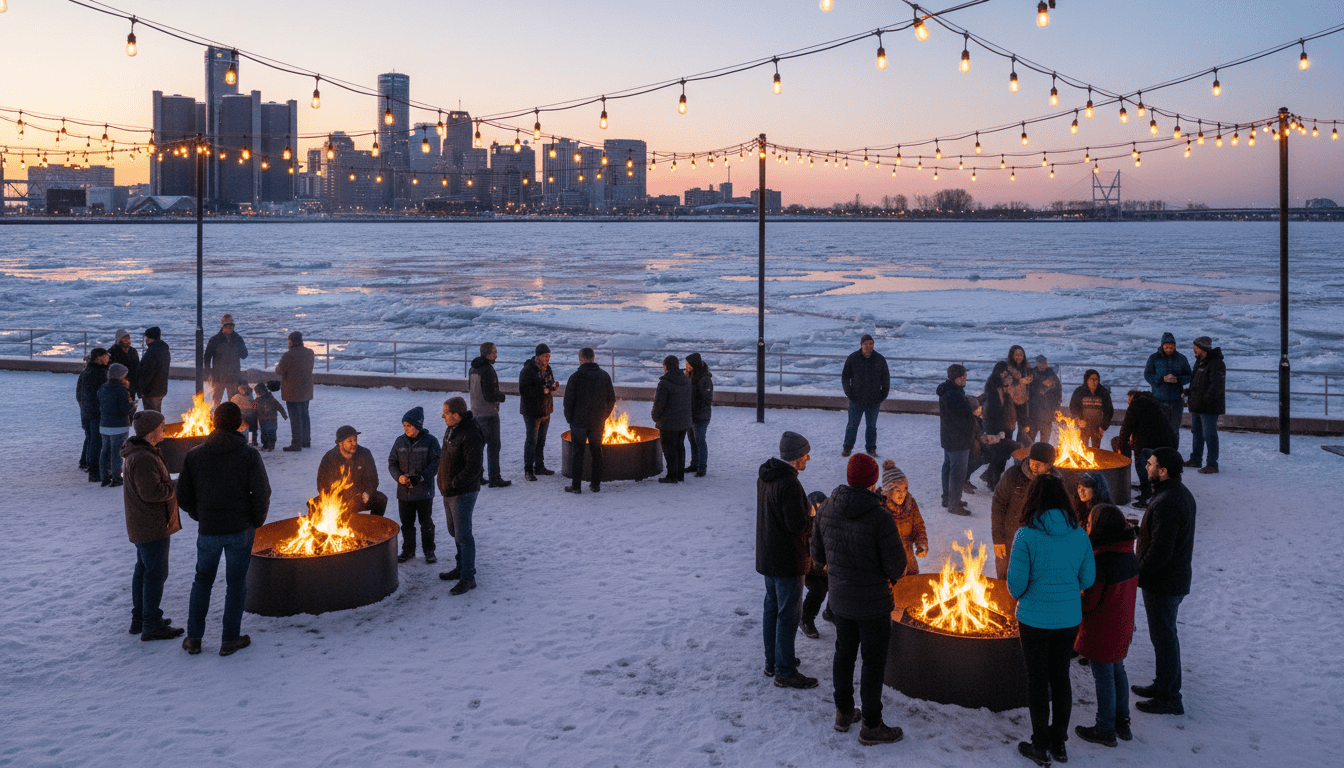
Detroit’s approach to the colder months has undergone a significant transformation in recent years. Once characterized by a hibernation of public life, the city is now leveraging strategic partnerships between municipal leadership, private developers, and non-profit conservancies to activate downtown and neighborhood corridors. For residents and visitors alike, the inventory of things to do in Detroit in winter has expanded beyond traditional indoor venues, evolving into a robust calendar of outdoor activation that drives foot traffic to local businesses.
This shift represents a deliberate economic strategy. By investing in winter placemaking—from the riverfront to the heart of downtown—Detroit is challenging the narrative that the city shuts down when the temperature drops. Data from local business associations suggests that extending the tourism season through January and February is vital for the sustainability of the hospitality sector.
The Activation of Downtown and the Monroe Street Midway
Central to the city’s winter strategy is the continued activation of the Monroe Street Midway. Managed by Bedrock Detroit, the space—which serves as a roller rink in the summer—transforms into a winter destination featuring bumper cars, arcade games, and art installations. This initiative is part of a broader effort to maintain density in the central business district.
According to reports from Bedrock, these seasonal activations are designed not just for entertainment, but to serve as economic engines. By creating a centralized hub of activity, foot traffic spills over into surrounding restaurants and retail shops that might otherwise see a sharp decline in patronage during the post-holiday slump. The Midway creates a continuous loop of engagement when paired with nearby Campus Martius Park, which hosts the city’s signature ice rink.
“The goal is to create a walkable winter experience that rivals other major northern cities,” said a representative associated with downtown planning efforts. “When we provide high-quality public spaces, we see a direct correlation in retail spending in the immediate vicinity.”
Riverfront Revitalization: Winter at Valade
Beyond the skyscrapers, the Detroit Riverfront Conservancy has played a pivotal role in redefining outdoor recreation during the snowy season. The “Winter at Valade” series at Robert C. Valade Park has become a case study in successful cold-weather urban planning. Unlike traditional parks that see usage plummet in winter, Valade Park utilizes massive outdoor fire pits, warming sheds, and programmed weekends (such as “Fire and Ice” festivals) to keep residents engaged with the riverfront year-round.
The Conservancy’s programming addresses a critical need for accessible, low-cost recreation. By prioritizing free admission and affordable food options, the riverfront initiatives ensure that the expansion of things to do in Detroit in winter remains inclusive for long-time residents, not just tourists. This aligns with the city’s broader neighborhood revitalization goals, connecting the riverwalk amenities to the broader community infrastructure.
Impact on Local Culture and Indoor Economy
While outdoor placemaking grabs headlines, Detroit’s cultural institutions remain the backbone of the winter economy. The Detroit Institute of Arts (DIA) and the Motown Museum continue to draw significant regional tourism. Recent expansion efforts at the Motown Museum, part of a $55 million campaign, are poised to increase capacity, further solidifying the city’s status as a year-round cultural hub.
For the local hospitality industry, these cultural anchors are essential. “The synergy between museum attendance and dining reservations is undeniable,” noted a source from the Detroit Restaurant and Lodging Association. When cultural institutions host special winter exhibitions, surrounding establishments report stabilizing revenue streams that help bridge the gap between the holiday season and the spring thaw.
Impact on Detroit Residents
The increase in winter programming has a tangible impact on the quality of life for Detroiters. Historically, limited options for family-friendly activities in winter forced residents to travel to suburbs for entertainment. The current wave of development keeps distinct economic activity within city limits.
Furthermore, these developments address social isolation, a common issue in northern climates during winter. By providing safe, well-lit, and populated public spaces, the city fosters community interaction. Events like the movement of the winter markets into Eastern Market sheds also provide a platform for local makers and artisans to maintain sales momentum after Christmas, directly supporting the micro-economy of the city’s creative class.
Future Outlook and Development
Looking ahead, the scope of winter activities is expected to grow as major infrastructure projects near completion. The Ralph C. Wilson Jr. Centennial Park, currently under construction on the West Riverfront, is slated to include significant winter-ready amenities. Planners anticipate that once completed, this will serve as another major anchor for winter tourism.
City officials are also exploring ways to better connect these distinct districts—Downtown, the Riverfront, and the Cultural Center—through improved transit reliability during snow events. As the list of Detroit transportation initiatives evolves, bridging the physical gap between these winter hubs will be crucial for sustaining growth.
Ultimately, the narrative of Detroit in winter is shifting from one of endurance to one of engagement. Through targeted investments in public infrastructure and cultural programming, the city is successfully carving out a niche as a vibrant winter destination.