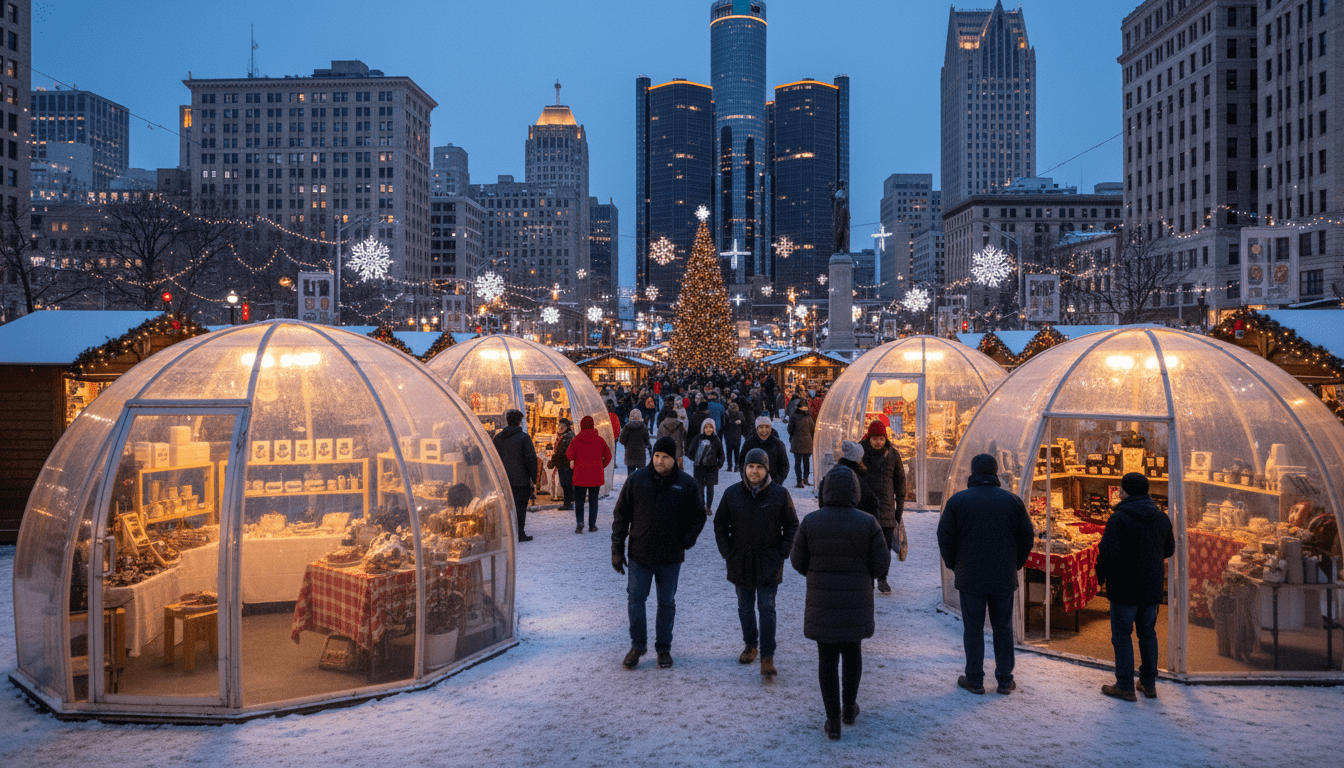
The transformation of downtown public spaces into hubs of commerce has officially begun this week, as major winter markets in Detroit return for the holiday season. The annual activation of Cadillac Square and the expanded programming at Eastern Market represent more than just festive decoration; they serve as critical economic incubators for local entrepreneurs seeking to bridge the gap between pop-up retail and brick-and-mortar stability.
Organized largely by Bedrock Detroit in partnership with the Quicken Loans Community Fund, and paralleled by independent efforts at the historic Eastern Market, these seasonal marketplaces have become a staple of the city’s fourth-quarter economic strategy. Officials state that the initiative is designed to drive foot traffic into the central business district while providing a low-barrier entry point for Detroit-based small business owners.
Downtown Detroit Markets Return to Cadillac Square
The centerpiece of the city’s seasonal retail strategy is the return of the Downtown Detroit Markets to Cadillac Square. The installation features the signature glass-enclosed stalls, offering vendors a climate-controlled environment to sell goods ranging from apparel to artisanal home decor. According to Bedrock Detroit, the selection process prioritizes local makers, with a significant percentage of vendors being minority- or woman-owned businesses.
“The goal is to create a density of activity that benefits everyone,” said a spokesperson for the downtown development team. “When we activate the parks with the winter markets in Detroit, we see a ripple effect that boosts nearby restaurants, parking structures, and permanent retailers.”
For many participants, the markets serve as a proof-of-concept phase. Several past vendors have successfully transitioned from the temporary glass huts to permanent storefronts within the Detroit development pipeline, utilizing the capital and brand awareness generated during the high-traffic holiday season. Data from previous years indicates that hundreds of thousands of visitors pass through these activations between November and January, providing exposure that independent digital storefronts struggle to match.
Eastern Market Expands Holiday Programming
While downtown focuses on the polished, curated experience at Cadillac Square, the historic Eastern Market is leveraging its agricultural roots to support food entrepreneurs and crafters. The Eastern Market Corporation has announced its schedule for the holiday markets, which include special Tuesday and Sunday dates to alleviate the congestion of the traditional Saturday market.
According to the Eastern Market Corporation, the holiday season is a make-or-break period for the hundreds of vendors who rely on the sheds for their primary income. The winter programming allows farmers to sell late-season crops and value-added products like jams and wreaths, extending their revenue stream beyond the growing season.
“The connectivity between our food system and the local economy is most visible during these winter months,” a representative from the market stated. “By maintaining these winter markets in Detroit, we ensure that the local food sovereignty movement doesn’t go into hibernation just because the temperature drops.”
Impact on Detroit Residents
For residents, the proliferation of these markets addresses a long-standing issue of retail density in the city. While Detroit has seen a resurgence in storefront occupancy, many neighborhoods still lack diverse shopping options. The centralization of these vendors creates a temporary shopping district that allows residents to keep their spending within the city limits, generating tax revenue that funds public services.
Furthermore, the focus on “shopping local” has tangible effects on the community. According to data from the Detroit local business sector, for every dollar spent at a locally owned business, significantly more remains in the local economy compared to spending at national chains. This multiplier effect is the economic engine driving the city’s support for these pop-up initiatives.
However, the markets also highlight the disparity in infrastructure. While downtown and the market district receive heavy investment for these events, neighborhood advocates continue to call for similar economic activation in commercial corridors outside the city center, such as the Avenue of Fashion or Southwest Detroit.
Background & Data
The concept of the winter market as an economic driver is not unique to Detroit, but the city has adapted the model to fit its specific revitalization needs. The Detroit Economic Growth Corporation (DEGC) has long supported initiatives that lower the barrier to entry for retail.
- Vendor Retention: Statistics show that businesses participating in managed marketplaces are 20% more likely to survive their first three years than those starting in isolation.
- Visitor Volume: Downtown Detroit partnerships estimate over 2 million visitors to the downtown parks during the winter season, heavily influenced by the draw of the markets and the adjacent ice rink at Campus Martius.
- Minority Entrepreneurship: Programs specifically targeting Detroit residents ensure that the economic benefits of the winter markets in Detroit are equitable, with mandates often requiring a minimum of 50% Detroit-based business representation.
What Happens Next
The markets at Cadillac Square are scheduled to run through early January, while Eastern Market’s holiday programming will conclude just before the New Year. Following the closure, city planners and the DEGC will review sales data and foot traffic patterns to determine future retail zoning and support packages for the spring.
As the city continues to navigate economic headwinds, the success of this year’s winter markets in Detroit will serve as a bellwether for consumer confidence and the resilience of the local small business ecosystem. The transition from temporary stall to permanent brick-and-mortar remains the ultimate metric of success for this seasonal experiment.