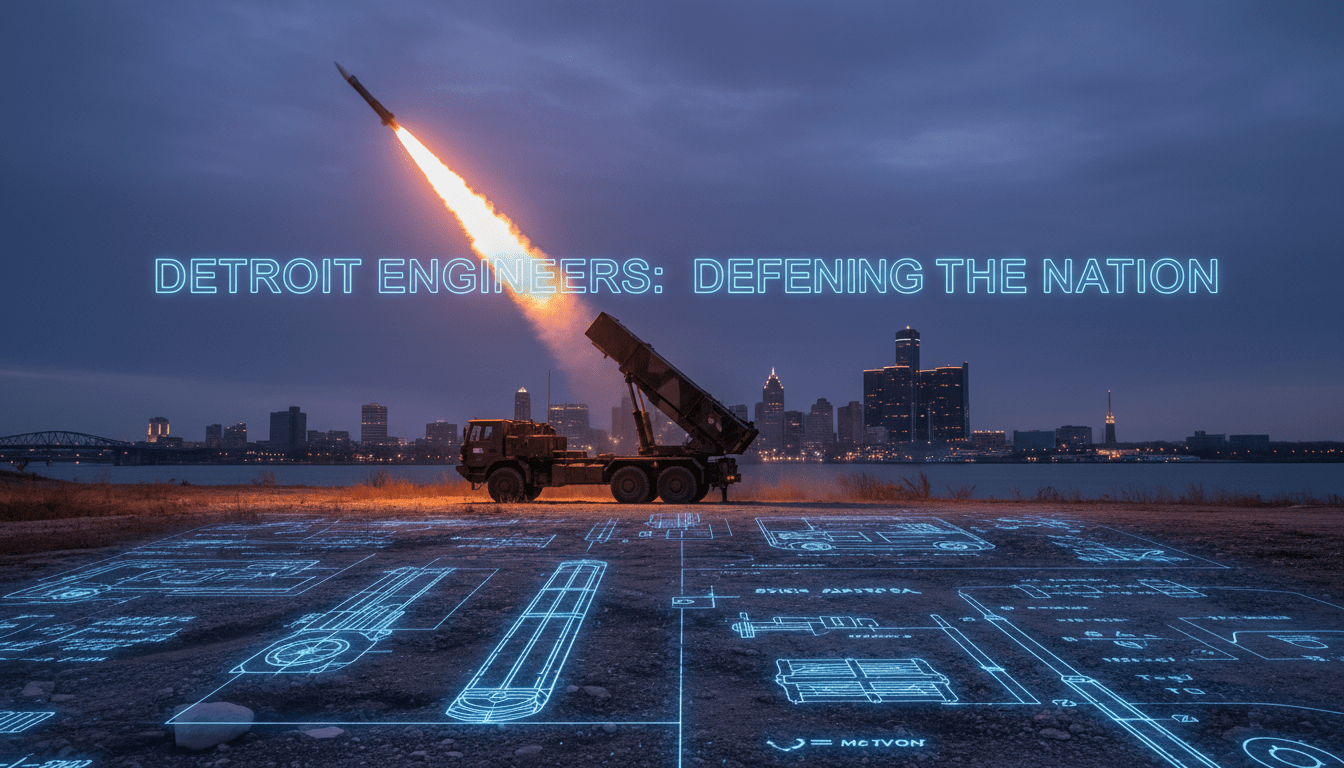
WARREN, Mich. — The United States Army has officially debuted its next-generation Long-Range Precision Strike Missiles (PrSM) during a major joint exercise dubbed "Operation Epic Fury." While the live-fire demonstrations are taking place at testing ranges thousands of miles away, the logistical and engineering heartbeat of this new capability resides right here in Metro Detroit, specifically at the Detroit Arsenal in Warren.
Operation Epic Fury marks a significant milestone in the Army’s modernization efforts, showcasing the PrSM’s ability to hit targets over 400 kilometers away with pinpoint accuracy. For the defense community in Southeast Michigan, however, the successful fielding of this system highlights the enduring critical role of the U.S. Army Tank-automotive and Armaments Command (TACOM) and the broader Detroit defense industry.
The Detroit Connection to Modern Warfare
While the missiles themselves are manufactured by aerospace giants often based elsewhere, the platforms required to launch them—the M142 High Mobility Artillery Rocket System (HIMARS) and the M270 Multiple Launch Rocket System (MLRS)—are heavily tied to the automotive and engineering expertise concentrated in Macomb County.
According to the U.S. Army, the PrSM is designed to replace the aging Army Tactical Missile System (ATACMS). Crucially, it doubles the firing capacity of current launchers; a HIMARS vehicle that could carry one ATACMS can now carry two PrSMs. This capability upgrade relies entirely on the vehicle integration and lifecycle management overseen by TACOM, headquartered at the Detroit Arsenal.
"The integration of advanced munitions onto existing mobility platforms is a complex engineering challenge that leverages the unique automotive skillset found in Detroit," said defense analyst Michael Ross via a recent industry report. "When you see a HIMARS launch a PrSM in Operation Epic Fury, you are watching a system that is sustained and managed by the workforce in Warren, Michigan."
Impact on Detroit Residents and Economy
For residents of Metro Detroit, particularly those in Macomb County’s "Defense Corridor," the success of Operation Epic Fury signals continued stability and potential growth. The defense sector remains a pillar of the local economy, insulating the region from some of the volatility seen in the consumer automotive market.
Data from the Macomb County Department of Planning & Economic Development indicates that the defense industry supports thousands of jobs in the region, ranging from logistical specialists to mechanical engineers. The successful deployment of the PrSM ensures that the launch vehicles—the trucks and tracked chassis managed here—will remain in service and require sustainment for decades to come.
Local business owners in Warren and Sterling Heights, who supply everything from small machined parts to logistics support for the Arsenal, see these high-profile military successes as a green light for future contracts. When the Army prioritizes a system like the PrSM, funding flows down to the maintenance and modernization of the vehicle fleets that carry them.
Understanding the Technology Behind Operation Epic Fury
Operation Epic Fury was designed to test the limits of the Army’s long-range fires in a contested environment. The PrSM offers extended range and survivability, allowing U.S. forces to strike critical targets while staying outside the range of enemy counter-fire. This aligns with the Pentagon’s focus on Multi-Domain Operations.
Reports from the field indicate that the new missiles performed flawlessly, integrating seamlessly with the targeting systems aboard the M142 HIMARS. This seamless integration is where Detroit’s engineering legacy shines. The Detroit Arsenal is the only active Army installation in Michigan and serves as the primary center for the Army’s ground vehicle systems.
Ensuring that a 1990s-era chassis or a modern tactical truck can communicate with a 2024 missile system requires the kind of systems integration work that has become a specialty of the region’s defense contractors. Major players with a local footprint, such as General Dynamics Land Systems in Sterling Heights, are integral to the ecosystem that keeps these mobile platforms operational.
Stabilizing the Local Job Market
The timing of this debut is relevant for the local labor market. As the commercial auto industry navigates the complex transition to electric vehicles—a shift that has caused uncertainty for some suppliers—the defense sector offers a counter-balance. The Detroit economy benefits from this diversification.
"The defense base in Macomb County provides a layer of economic resilience," noted a representative from a local workforce development agency during a recent manufacturing summit. "Programs like the PrSM sustainment ensure that high-tech engineering jobs stay in Michigan."
Furthermore, the Army’s push for modernization involves not just new missiles, but autonomous vehicle technology and hybrid-electric tactical trucks, areas where Detroit is already leading the charge. The success of Operation Epic Fury serves as a proof-of-concept that the current fleet, managed out of Warren, is capable of adapting to future warfare needs.
What Happens Next?
Following the success of Operation Epic Fury, the Army is expected to ramp up production and deployment of the PrSM. For the Detroit Arsenal, this means an increased workload in logistics planning, fleet upgrades, and sustainment operations.
Residents can expect to see continued investment in the tech centers around Warren and Sterling Heights. While the missiles soar over distant test ranges, the checks are cashed, and the blueprints are drawn, right here in the Motor City’s backyard. As the military pivots to address near-peer threats, the Detroit development landscape within the defense sector looks increasingly robust.
The debut of these missiles confirms that as warfare evolves, the road to the battlefield still begins in Detroit.