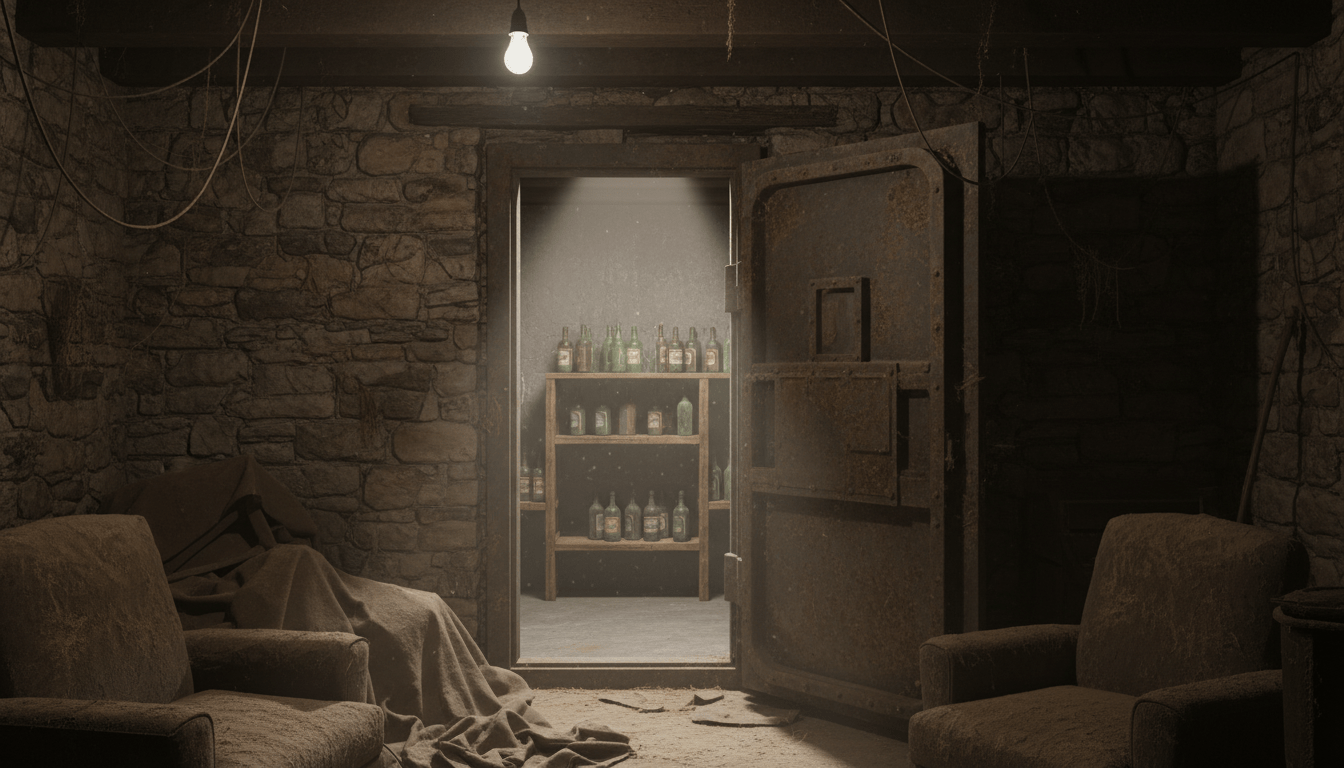
DETROIT — For Mark and Sarah Jennings, purchasing a historic home in Detroit’s North Rosedale Park was the culmination of a lifelong dream. The couple, who moved from the suburbs to the city last year, expected the typical challenges associated with renovating a century-old property: outdated wiring, plumbing issues, and drafty windows. They did not, however, expect to stumble upon a piece of the city’s criminal history hidden behind a false wall in their basement.
During a weekend demolition project aimed at expanding the laundry room, the couple discovered a heavy, industrial-grade steel door concealed behind rotting wooden shelving. The hidden door, painted to blend in with the foundation, opened to reveal a small, windowless concrete room that had remained untouched for decades. Inside, they found remnants of what local historians believe was a storage cache for illegal liquor dating back to the Prohibition era—a discovery that sheds light on a literal dark secret of the property’s past.
A Basement Discovery with Historical Roots
The home, often described by neighbors as an old farmhouse that predates the surrounding subdivision, was built in the early 1910s. According to the Detroit Historical Society, this timeline aligns perfectly with the rise of the temperance movement and the subsequent enactment of Prohibition. Detroit, sitting right across the river from Windsor, Canada, was a primary funnel for alcohol entering the United States, earning the Detroit River the nickname “the Detroit-Windsor Funnel.”
“It is not uncommon for homeowners in historic Detroit neighborhoods to find remnants of the 1920s,” said Dr. Alan Thomas, a local architectural historian. “While tunnels are the most famous myth, many homes had fortified basements, hidden chutes for coal that were repurposed for bottles, or concealed rooms used to hide supply from law enforcement or rival gangs like the Purple Gang.”
For the Jennings family, the basement discovery transformed a routine renovation into an archaeological dig. “We found wooden crates that had disintegrated, but the glass bottles were still there,” Sarah Jennings told DetroitCityNews.com. “It changes how you look at the house. It’s not just a building; it’s a witness to a very chaotic time in Detroit history.”
Impact on Detroit Housing and Renovation
This mystery home discovery highlights a growing trend in Detroit’s real estate market. As investment continues to flow into historic districts like Boston-Edison, Indian Village, and Rosedale Park, new owners are frequently uncovering architectural quirks that require careful navigation of city codes.
According to data from the U.S. Census Bureau, a significant portion of Detroit’s housing stock was built before 1940. This aging infrastructure presents both charm and challenges. The City of Detroit’s Buildings, Safety Engineering, and Environmental Department (BSEED) advises homeowners to proceed with caution when demolishing walls in older homes, not just for structural reasons, but because of the potential for finding hazardous materials—or historical artifacts.
“When residents encounter structural anomalies like sealed rooms or underground voids, we recommend stopping work and consulting a structural engineer,” a BSEED representative stated in a general advisory regarding historic renovations. “Preserving the structural integrity of these century-old foundations is critical.”
The Economics of Historic Preservation
The allure of the old farmhouse aesthetic and historic character is driving property values up in neighborhoods that were previously overlooked. Real estate agents note that stories of a hidden door or historical provenance can actually increase a home’s marketability, turning a dark secret into a unique selling point.
However, the cost of remediating these spaces can be high. For the Jennings, the cost to stabilize the hidden room and integrate it into their finished basement is estimated to be around $15,000. Despite the cost, they plan to preserve the space as a wine cellar, paying homage to its original purpose.
This resurgence in preserving Detroit’s architectural legacy is vital for the local economy. Recent reports on the Detroit housing market indicate that homes with retained original features sell faster than those that have been completely gutted and modernized. This suggests that buyers are looking for authenticity, even if it comes with a side of mystery.
What Happens Next?
The couple plans to document their renovation process online, joining a community of Detroit