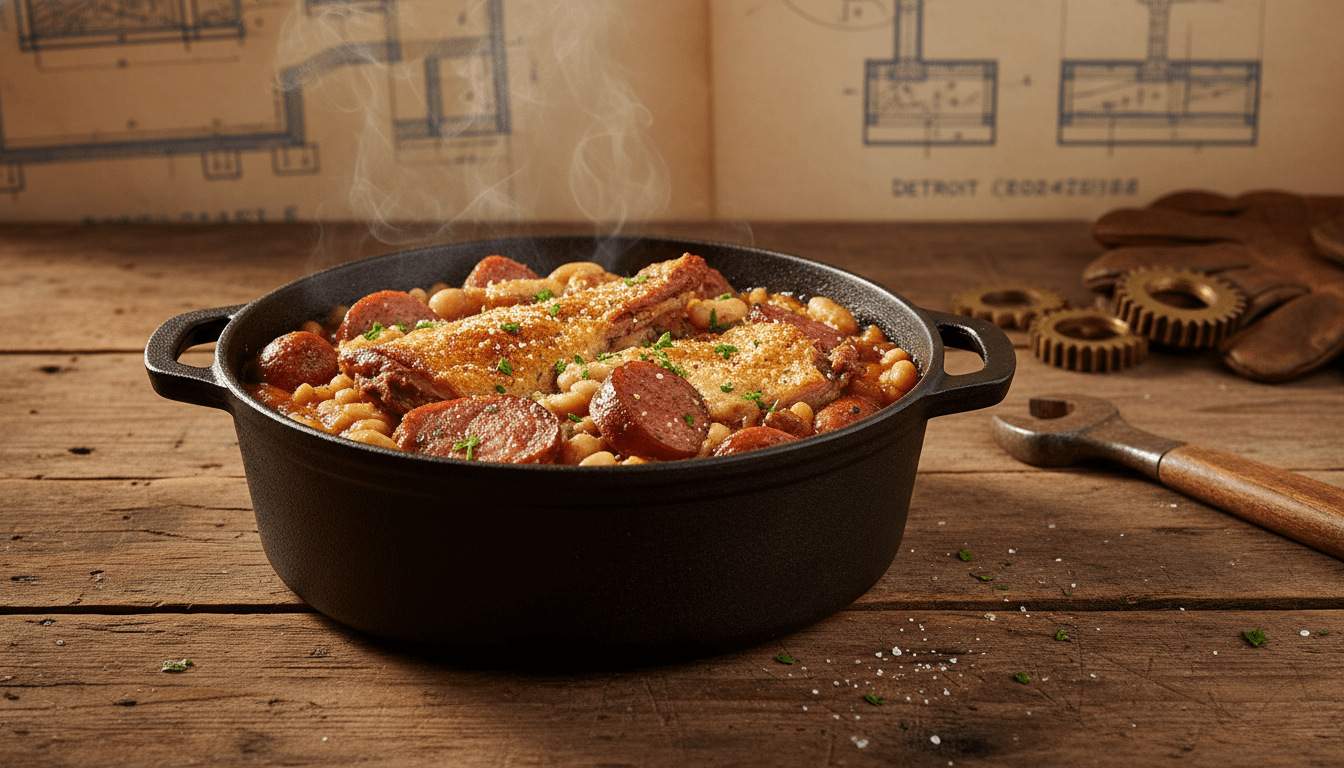
In the heart of Corktown, a new culinary movement is taking shape, blending the city’s industrial past with a modern approach to local cuisine. The Foundry Kitchen, one of the latest additions to the city’s vibrant dining landscape, has officially unveiled its flagship dish, ‘The Assembly Line Cassoulet.’ This creation is more than just a menu item; it is a meticulously researched tribute to the diverse workforce that built Detroit during the early 20th century. By combining traditional French techniques—a nod to Detroit’s 1701 founding—with ingredients historically available to factory workers, the Detroit restaurant is setting a new standard for how food can preserve urban heritage.
A Fusion of Cultural Heritage and Local Ingredients
The development of the dish involved months of research into the dietary habits of Detroit residents during the peak of the automotive boom. According to records curated by the Detroit Historical Society, the city’s culinary identity was forged by a melting pot of European immigrants and those who arrived during the Great Migration. The resulting dish features a base of Michigan-grown white navy beans, salt pork, and preserved greens, echoing the hearty, long-lasting meals prepared by laborers in the 1920s.
Chef Marcus Thorne, the creative lead behind the project, explained that the goal was to achieve a balance between historical accuracy and contemporary food innovation. “We wanted to create something that feels deeply rooted in the soil of Michigan but presented with the sophistication of a modern Detroit restaurant,” Thorne said. The dish utilizes a heritage breed of pork sourced from mid-Michigan farms, emphasizing the restaurant’s commitment to the regional supply chain.
Impact on Detroit Residents and Local Economy
The introduction of history-driven menus is part of a broader trend in the city’s hospitality sector that seeks to move beyond standard dining experiences. For residents, this trend offers a way to engage with the city’s narrative through a tangible, sensory medium. This focus on Detroit culture also has significant economic implications. By prioritizing local sourcing, establishments like The Foundry Kitchen are directly supporting the state’s agricultural economy. Data from the Michigan Department of Agriculture and Rural Development (MDARD) suggests that for every dollar spent on local food, a significant portion stays within the state, fueling further local economy growth.
Furthermore, these cultural dining experiences are proving to be a major draw for tourism. As Detroit continues to receive national accolades for its food scene, the integration of local history serves as a differentiator that attracts visitors looking for more than just a meal. This influx of “culinary tourists” supports jobs not only in the kitchens but also in surrounding service industries, contributing to the ongoing revitalization of neighborhoods like Corktown and Midtown.
Historical Context and Michigan Dining Trends
The evolution of Michigan dining has seen a marked shift toward transparency and storytelling. In previous decades, the focus was often on international trends; however, the current climate favors hyper-localism. Statistics from the National Restaurant Association indicate that consumers are increasingly seeking out “authentic” experiences that connect them to the history of their location. In Detroit, this is particularly potent given the city’s rich layers of manufacturing, music, and civil rights history.
The use of navy beans in the new dish is a specific historical callback. During the early 1900s, Michigan was the leading producer of navy beans in the United States, and they became a staple in the “worker’s lunchbox” because of their high protein content and shelf stability. By elevating these humble ingredients, the restaurant invites diners to reflect on the labor and grit that defined the city for a century. This approach to food innovation isn’t about fancy gadgets, but about rethinking the value of the materials that built the community.
Connecting the Past to the Future
As the city continues to evolve, the challenge for many small businesses is maintaining a sense of identity amidst rapid neighborhood development. For many local advocates, projects that honor Detroit culture are essential to ensuring that the city’s growth remains inclusive and grounded. The Foundry Kitchen has pledged a portion of the proceeds from its history-inspired menu to local youth culinary programs, ensuring that the next generation of Detroiters can continue this tradition of storytelling through food.
What Happens Next for Detroit’s Food Scene
Looking ahead, industry analysts expect more establishments to follow suit, using local history as a primary driver for menu design. The success of The Foundry Kitchen’s latest launch suggests that there is a high demand for dining experiences that offer educational value alongside high-quality flavor. As the summer season approaches, the restaurant plans to introduce a beverage program inspired by the Prohibition-era “Purple Gang” history, further cementing its role as a cultural hub in Corktown.
The broader impact of this Detroit restaurant initiative will likely be seen in how other cities look to Detroit as a model for cultural preservation through commerce. By proving that history is a viable and profitable theme for modern dining, Detroit is once again positioning itself as a leader in urban innovation. Whether you are a lifelong resident or a first-time visitor, the opportunity to “eat your way through history” is becoming a cornerstone of the Detroit experience.