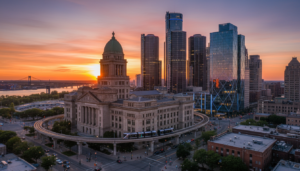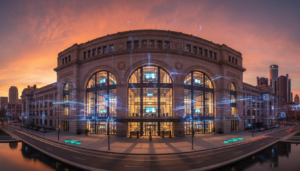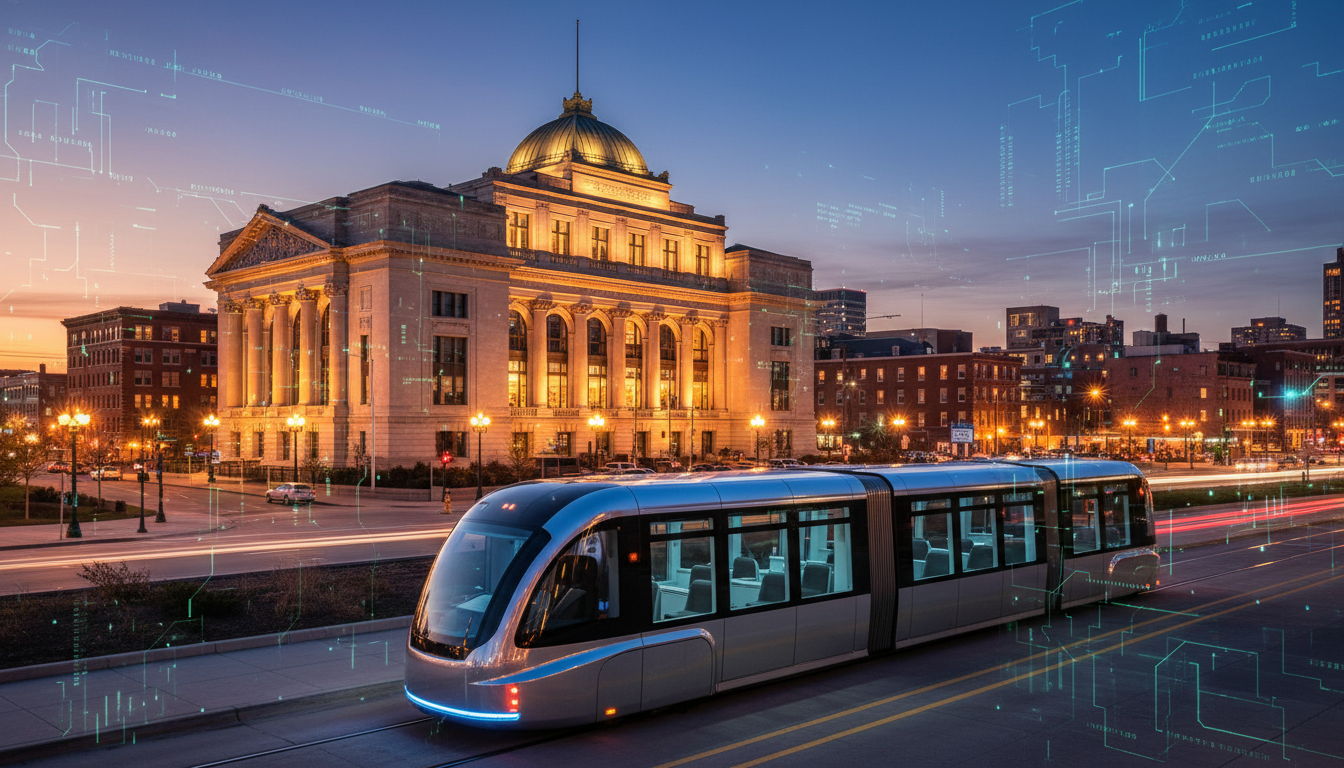
As the sun sets over the meticulously restored facade of Michigan Central Station in Corktown, the glowing lights from the Newlab innovation hub signal more than just a renovation project. They represent a fundamental shift in the city’s economic DNA. Heading into 2026, the Detroit tech scene is no longer a peripheral industry; it has become the central engine of the city’s post-industrial identity, moving beyond automotive manufacturing into the realms of advanced mobility, artificial intelligence, and climate technology.
For decades, the global narrative regarding Detroit focused on recovery. However, data from the 2025 annual economic outlook reports suggest that the conversation has shifted toward leadership in niche technology sectors. According to the Michigan Economic Development Corporation (MEDC), the state has seen a significant uptick in venture capital investment directed specifically toward Detroit-based startups, with a 15% year-over-year increase in funding rounds exceeding $10 million.
The Anchors of Detroit’s Innovation Economy
The maturation of the Detroit tech scene 2026 is anchored by several physical and institutional pillars. The most prominent is the Michigan Central innovation district, a 30-acre campus dedicated to the future of mobility. By early 2026, the district is expected to house over 100 startups, ranging from autonomous drone delivery services to developers of next-generation solid-state batteries.
Local officials note that this density of talent is intentional. “The goal was never just to build offices, but to create an ecosystem where a founder from Wayne State University can walk across the street and find a prototype partner or a venture capitalist,” said a representative from the Detroit Economic Growth Corporation (DEGC). This physical proximity is credited with accelerating the product-to-market cycle for many local firms.
Furthermore, Bedrock, the real estate arm of Dan Gilbert’s portfolio, continues to integrate high-tech infrastructure into the downtown core. This includes the expansion of high-speed fiber networks and 5G-enabled testing zones that allow software companies to pilot smart-city applications in real-time. This ongoing integration of technology into the urban landscape is a key component of Detroit’s real estate transformation, which has evolved to accommodate the specialized needs of tech tenants.
Emerging Companies and Sectors to Watch
While mobility remains the city’s calling card, 2026 marks the rise of diversified sectors. One of the most watched companies is a Detroit-based fintech firm focusing on inclusive banking software, which recently secured a major partnership with regional credit unions to expand digital access in underserved neighborhoods. Their success highlights a growing trend of “purpose-driven tech” within the city.
In the industrial tech sector, companies like Groundspeed and Majic Digital are redefining the factory floor. By utilizing machine learning to predict maintenance needs in aging manufacturing plants, these firms are helping legacy industries transition into the digital age. This synergy between the “Old Detroit” and the “New Detroit” is providing a competitive edge that Silicon Valley often lacks—a direct connection to the physical world of production.
Impact on Detroit Residents and the Local Workforce
Perhaps the most critical question for Detroiters is how this tech surge affects the average resident. The impact is increasingly visible in the local labor market. According to a 2025 report from the Brookings Institution, Detroit has seen a 20% growth in “new-collar” jobs—positions that require technical certification but not necessarily a four-year degree.
Programs like the Detroit at Work initiative have pivoted to offer coding boot camps and cybersecurity training specifically tailored to the needs of emerging companies in the Corktown and Midtown areas. For residents, this means pathways into high-paying sectors that were previously considered inaccessible. The revitalization of Corktown has also brought about community benefits agreements that mandate tech hubs provide public access to high-speed internet and STEM resources for local youth.
However, the rapid growth also presents challenges. Rising property values near tech hubs have sparked concerns regarding housing affordability. Local community leaders emphasize that for the Detroit tech scene 2026 to be truly successful, it must continue to prioritize inclusive growth that prevents the displacement of long-term residents.
Background and Data: The Numbers Behind the Growth
The statistical evidence for Detroit’s ascent is compelling. Data from the Michigan Economic Development Corporation (MEDC) indicates that since 2022, the city has added over 12,000 tech-related jobs. Furthermore, the 2024-2025 fiscal year saw a record $1.2 billion in venture capital flow into the city, a figure that analysts believe will be surpassed by the end of 2026.
This growth is supported by a robust academic pipeline. Wayne State University and the University of Michigan’s upcoming Center for Innovation in downtown Detroit are expected to produce a steady stream of graduates specialized in data science and robotics. This academic-to-industry pipeline is a critical factor in why national firms are increasingly choosing Detroit for their secondary headquarters or R&D centers.
What Happens Next
As we look toward the remainder of 2026, the focus will likely shift toward sustainability and global scaling. The City of Detroit is currently reviewing policy frameworks to encourage the adoption of green tech within municipal operations, providing a massive local market for home-grown environmental startups.
Industry experts suggest that the next phase of the Detroit tech scene 2026 will involve deeper international cooperation. With its proximity to Canada and the opening of the Gordie Howe International Bridge, Detroit is uniquely positioned to become a cross-border tech gateway, facilitating the exchange of goods, data, and talent across the North American corridor.
While hurdles such as infrastructure equity and regional transit remain, the trajectory is clear. Detroit is no longer just the city that put the world on wheels; it is becoming the city that writes the code for how the world moves, works, and grows in the 21st century.