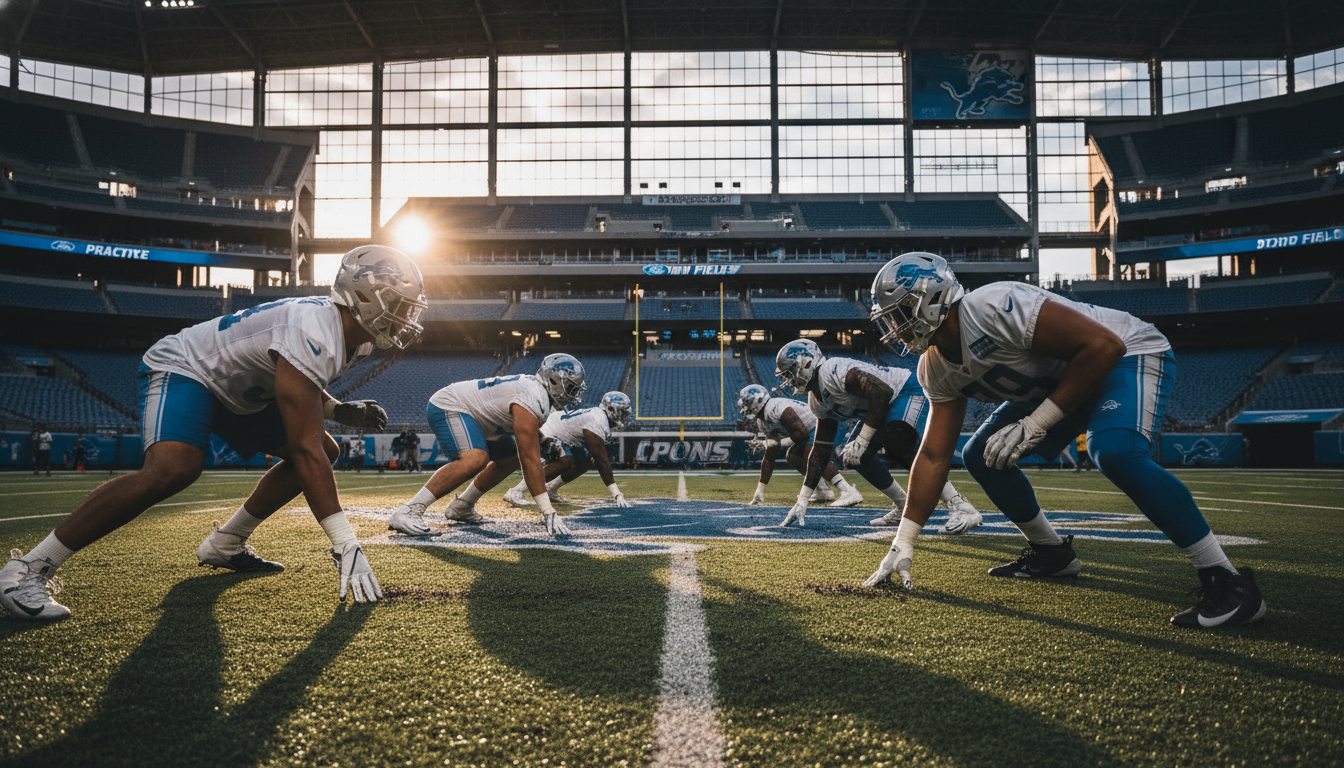
The transformation of the Detroit Lions from a perennial underdog to a legitimate Super Bowl contender has been a carefully choreographed process, but no element of the roster has received more attention or investment than the trenches. As the team prepares for the upcoming season, local analysts and team officials agree that the Detroit Lions offensive line rebuild is now effectively complete, providing the franchise with its most stable foundation in decades. Under the leadership of Executive Vice President and General Manager Brad Holmes, the organization has prioritized a blue-collar identity that mirrors the city’s industrial roots, focusing on size, strength, and intellectual versatility on the field.
A Multi-Year Strategic Investment
The journey to creating one of the league’s most feared units did not happen overnight. It began with the foundational selection of Penei Sewell in the 2021 NFL Draft and has continued through a series of high-stakes contract extensions and strategic veteran acquisitions. According to data from the Detroit Free Press, the Lions have committed more significant capital to their offensive front than almost any other department, a move that has paid dividends in both pass protection and run blocking efficiency. The core of the unit is anchored by veteran tackle Taylor Decker, Pro Bowl center Frank Ragnow, and the recently extended Sewell, who is now widely regarded as one of the premier offensive players in the game.
By securing these key assets through long-term deals, the Lions have avoided the volatility that often plagues NFL rosters. This continuity allows the coaching staff to implement more complex schemes, knowing that the communication between the five starters is nearly intuitive. The addition of veteran Kevin Zeitler this offseason was described by many as the final piece of the puzzle, filling the void left by departing free agents and ensuring that there is no weak link in the chain. This strategic depth is a far cry from the patchwork lines that Detroit fans endured for much of the previous decade.
Impact on Detroit Residents and the Local Economy
While the statistics on the field are impressive, the success of the Detroit Lions offensive line has a tangible impact on the people of Detroit. A winning football team is more than just a source of pride; it is a significant economic engine for the city’s downtown core. During the Lions’ recent playoff run, the increase in foot traffic within the Central Business District led to record-breaking weekends for local hospitality businesses. As noted in a report by the Detroit Economic Growth Corporation, successful sports franchises contribute millions in indirect revenue to local restaurants, bars, and retail shops.
For the residents of neighborhoods like Brush Park and Corktown, the stability of the Lions provides a sense of community momentum. The team’s hard-nosed playing style, spearheaded by the offensive line, has become a symbol of Detroit’s broader resurgence. Local business owners in the vicinity of Ford Field have noted that the optimism surrounding the team has encouraged further investment in the area. When the Lions are competitive, the entire city feels the energy, translating into higher attendance at public events and a general boost in civic morale. To learn more about how the city’s growth is being fueled by such cultural shifts, readers can explore our coverage on Detroit economic growth downtown and how it affects residential real estate.
Data and Performance Metrics
The efficacy of the Detroit Lions offensive line is not just a matter of subjective opinion; it is backed by rigorous data. According to statistics released by NFL.com and analyzed by Pro Football Focus, the Lions’ unit ranked in the top five for both pressure rate allowed and yards before contact in the running game during the previous season. This dual-threat capability is what makes the Lions’ offense so difficult to defend. By protecting quarterback Jared Goff and opening lanes for a dynamic backfield, the offensive line dictates the tempo of the game.
Furthermore, the financial commitment reflects the unit’s value. Data from the salary tracking site Over The Cap shows that Detroit has consistently ranked in the top quartile of the league for offensive line spending. This investment is a direct reflection of the “Grit” philosophy championed by Head Coach Dan Campbell. The organizational belief is that a game is won or lost at the line of scrimmage, and the current roster configuration is a testament to that creed. For those interested in attending games this fall to see the unit in action, check out the Ford Field events schedule for the latest updates on game day activities.
What Happens Next
With the starting five solidified and the depth chart bolstered by promising young talent, the focus for the Lions now shifts from construction to maintenance. The health of key players like Frank Ragnow will be paramount, as the physical toll of an NFL season is immense. However, the front office has shown a proactive approach to injury management and rotation, ensuring that the unit remains fresh for a potential deep postseason run. As training camp approaches, the chemistry within this group will be the primary storyline for sports journalists and fans alike.
The successful completion of the Detroit Lions offensive line rebuild serves as a blueprint for how a franchise can reinvent itself through disciplined drafting and fiscal responsibility. For a city that has long awaited a championship-caliber team, the strength of the offensive line provides the most convincing evidence yet that the Lions are no longer just participating in the league—they are aiming to dominate it. As the 2024 season nears, all eyes will be on the men in the trenches to see if they can lead Detroit to its first-ever Super Bowl appearance. For further reading on the intersection of Detroit sports and regional development, visit the official Detroit Free Press sports section for deep-dive reporting.