DETROIT — For over three decades, the shooting death of Michael “Mick” Bricker remained one of the most haunting cold cases in the history of the city’s vibrant 1990s music scene. The 41-year-old rock musician and owner of the popular “The Traxx” club on 8 Mile Road was gunned down in November 1993, leaving behind a grieving family and a community of artists searching for answers. This week, those answers finally began to materialize as federal and local authorities announced a major breakthrough in this Detroit crime case.
According to the Detroit Police Department (DPD) and the Federal Bureau of Investigation, a 58-year-old suspect, who had been living as a fugitive in Panama for years, was apprehended and extradited back to Michigan to face first-degree murder charges. The arrest marks the culmination of a multi-agency effort that spanned continents and decades, proving that even the coldest cases in Detroit can eventually find heat.
The Night the Music Stopped: The 1993 Shooting
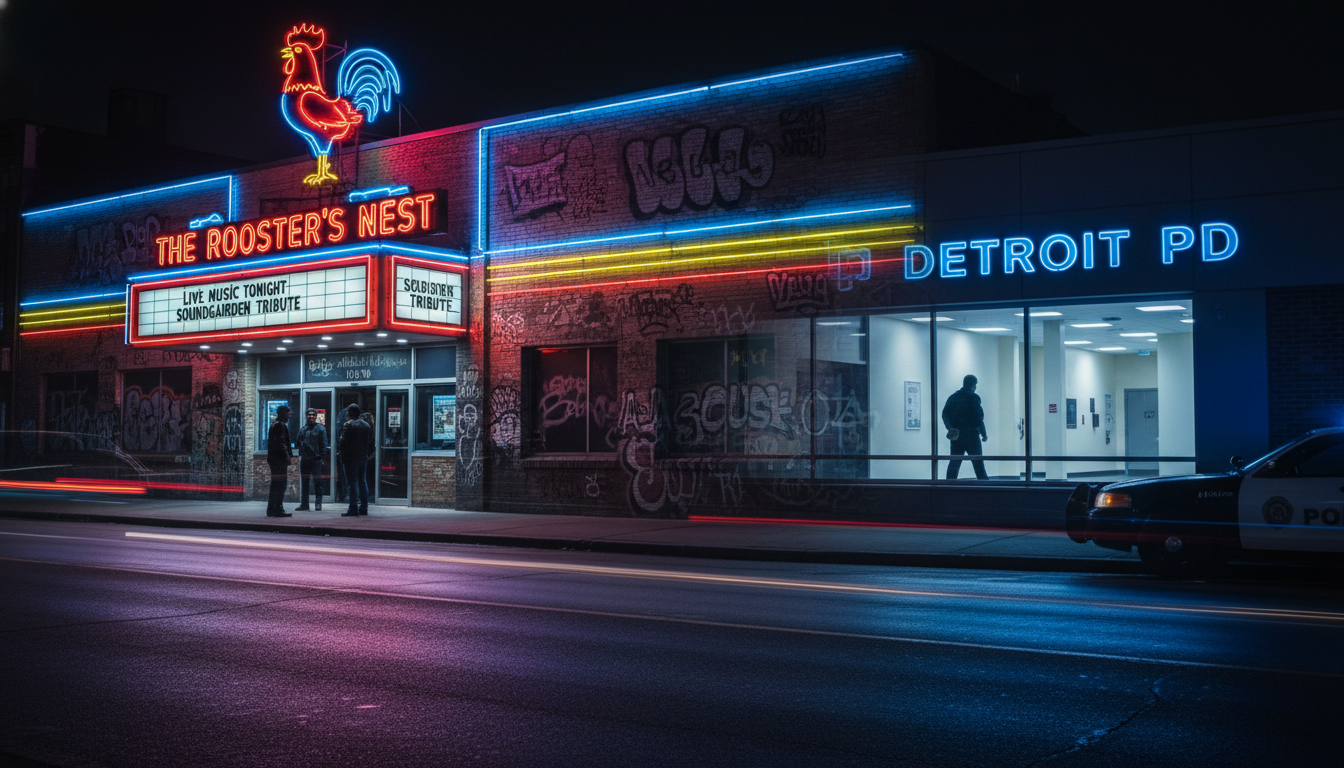
In the early 1990s, the intersection of 8 Mile Road and Evergreen was a hub for Detroit’s rock and alternative music community. Michael Bricker was at the center of it, known not only as a talented guitarist but as a savvy businessman who gave local bands a stage at The Traxx. On the night of November 14, 1993, that era came to a violent end. Bricker was closing his club when he was approached by an armed individual in what investigators initially believed was a robbery gone wrong.
Witnesses at the time described a brief struggle followed by multiple gunshots. Bricker died at the scene. Despite an intensive investigation by the DPD in the months following the Detroit musician killing, the trail eventually went cold. The suspect, identified years later through advancements in forensic technology and secret testimony, had vanished shortly after the incident.
A Breakthrough Across Borders
The resolution of this case is largely attributed to the work of the DPD Homicide Cold Case Unit, which was revitalized in recent years with federal grant funding. Investigators began re-examining evidence from the Bricker file in 2021, utilizing updated DNA profiling and reaching out to former associates of the primary suspect. According to the FBI’s Detroit Field Office, new information placed the suspect in Central America, where he had been living under an assumed identity.
The suspect, whose name is being withheld pending his formal arraignment in Wayne County, had reportedly established a quiet life in a coastal town in Panama. The process of tracking a fugitive in Panama required high-level cooperation between the U.S. State Department and Panamanian National Police. Local authorities in Detroit confirmed that the suspect was taken into custody without incident and arrived at Detroit Metropolitan Airport under federal escort late Tuesday evening.
Impact on Detroit Residents and the Music Community
For the residents of Detroit’s northwest neighborhoods and the surviving members of the 90s music scene, the arrest brings a profound sense of closure. “Mick was the heart of 8 Mile rock,” said one former local promoter who frequently worked with Bricker. “To know that someone didn’t just get away with it after thirty years means everything to the people who were there.”
The resolution of this Detroit crime case also highlights the shifting landscape of public safety in the city. For many Detroiters, cold cases represent a period of the city’s history marked by high crime rates and lower clearance levels. Seeing a 1993 murder solved in 2024 sends a message of persistence to families who are still waiting for justice in their own loved ones’ cases. The City of Detroit has recently emphasized its commitment to clearing the backlog of violent crime cases through the use of the National Integrated Ballistic Information Network (NIBIN) and enhanced forensic partnerships.
Background & Data: The Evolution of Cold Case Investigations
Data from the City of Detroit Police Department indicates that the city has made significant strides in closing violent crime cases over the last decade. While the 1990s saw some of the highest homicide rates in the city’s history, the current administration has funneled more resources into technological upgrades. In 1993, the technology required to link the suspect to the Bricker scene was in its infancy. Today, digital forensics and international database sharing have made it increasingly difficult for fugitives to remain hidden indefinitely.
Nationally, the success rate for solving cold cases remains low, often hovering below 20% according to academic studies on forensic outcomes. However, the Detroit Homicide Cold Case Unit has become a regional leader, often working alongside the Michigan State Police to revisit “unsolvable” files. The capture of a high-profile fugitive in Panama is expected to be a benchmark case for future international extraditions involving Michigan suspects.
What Happens Next
The suspect is currently being held at the Wayne County Jail. A preliminary examination is expected to take place within the next two weeks. Prosecutors from the Wayne County Prosecutor’s Office have stated they are confident in the evidence gathered, which includes both original witness statements and new forensic findings uncovered during the recent review of the Detroit musician killing.
For more updates on local justice and safety, readers can visit our sections on Detroit neighborhoods and ongoing Detroit crime case developments. As the legal proceedings move forward, the memory of Mick Bricker and the legacy of The Traxx continue to resonate in the city that never forgot his name.