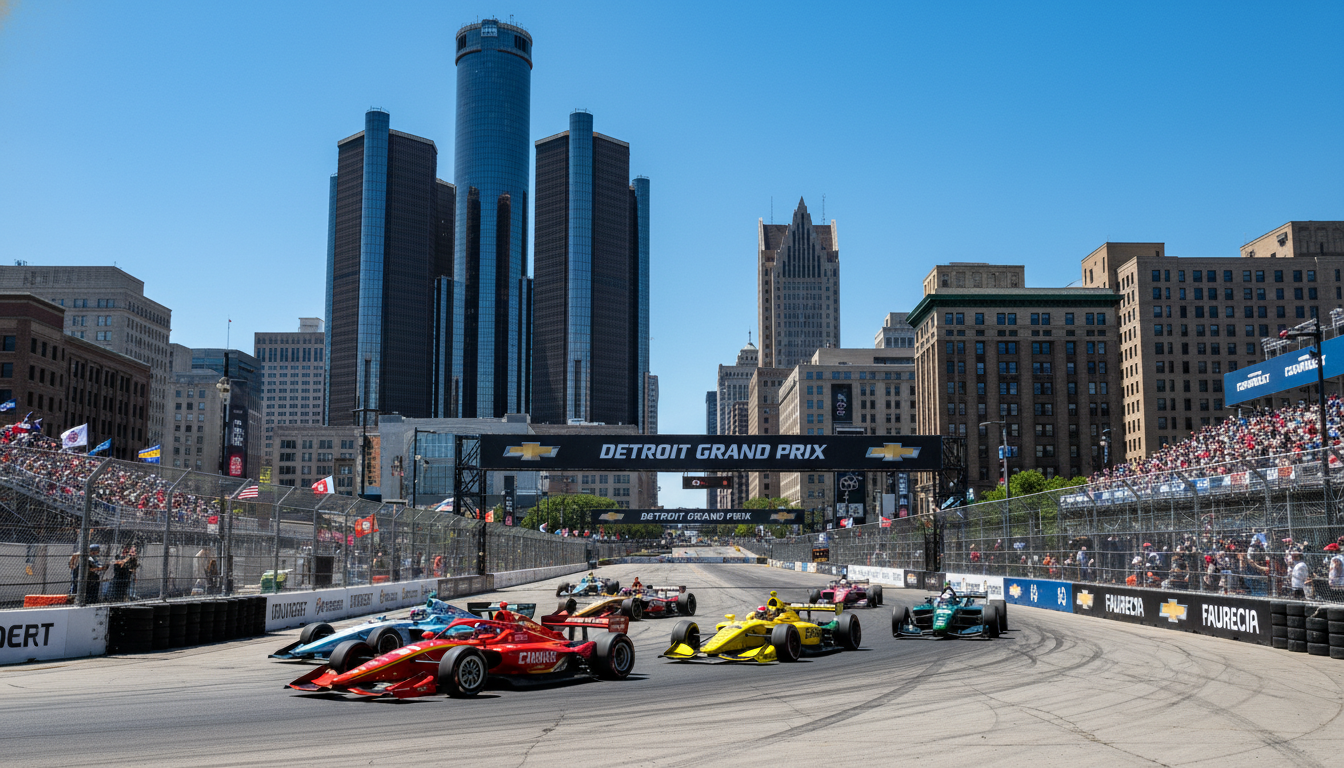
The roar of twin-turbocharged engines is set to harmonize with a nearly flawless meteorological outlook as the Detroit Grand Prix returns to the downtown street circuit this weekend. For racing enthusiasts and local residents alike, the Metro Detroit weather forecast is offering a rare stretch of atmospheric stability, characterized by mild temperatures and low humidity, according to the latest data from the National Weather Service.
A Detailed Weekend Outlook
Meteorologists at the National Weather Service (NWS) Detroit/Pontiac office indicate that a robust high-pressure system originating from the upper Great Lakes will dominate the regional weather pattern through Sunday. This system is expected to act as a barrier against the convective activity often seen in Southeast Michigan during the transition from spring to summer. According to NWS records, the early June window in Detroit can be volatile, yet this year’s setup suggests a departure from the norm of sudden thunderstorms.
For Friday’s practice and qualifying sessions, sky conditions are expected to remain mostly sunny with a high near 76 degrees. Northwest winds will persist at a gentle 5 to 10 mph, providing a cooling effect for the thousands of fans expected to traverse the 1.7-mile track. Saturday, which features the primary support races and final IndyCar qualifying, looks even more favorable. Forecasters predict a high of 79 degrees under clear blue skies. By the time the green flag drops for the main event on Sunday afternoon, temperatures are projected to peak at 81 degrees, slightly above the seasonal average but well within the comfort zone for outdoor spectators.
Impact on Detroit Residents and Spectators
The favorable Metro Detroit weather forecast is expected to have a significant impact on local logistics and the overall fan experience. With the race now firmly established in the downtown core rather than the more isolated Belle Isle, the interaction between the event and the city’s infrastructure is more pronounced. City of Detroit officials have noted that clear weather typically results in a higher volume of pedestrian traffic, particularly along the Woodward Avenue corridor and the Detroit Riverwalk.
For those living and working downtown, the lack of rain means that the temporary road closures and detours—standard for an event of this magnitude—will proceed without the added complication of drainage issues or weather-related delays in track maintenance. Public safety officials from the Detroit Police Department have advised attendees to remain mindful of the high UV index, which is expected to reach 8 or 9 during the peak afternoon hours. Spectators are encouraged to utilize the cooling stations located near the Hart Plaza fan zone and to stay hydrated, as the “heat island” effect of the downtown concrete can make temperatures feel several degrees warmer than the official NWS reading taken at the airport.
Technical Implications for Racing Teams
Weather is not merely a matter of comfort for the fans; it is a critical technical variable for the racing teams competing in the Chevrolet Detroit Grand Prix. The combination of direct sunlight and ambient temperatures in the low 80s will significantly influence track surface temperatures. In a street circuit environment where the pavement consists of a mix of aged asphalt and concrete patches, the heat absorption varies across the 1.7-mile loop.
Engineers from various IndyCar teams have noted that the predicted 81-degree high on Sunday could push track temperatures above 110 degrees. These conditions affect tire degradation and fuel mixtures. Unlike a rain-threatened race where teams must prepare for complex pit strategies involving wet-weather tires, the current forecast allows teams to focus exclusively on optimizing their “red” alternate and “black” primary Firestone tires for maximum grip on dry pavement. Historical data from the National Weather Service suggests that while Detroit can be humid, the projected dew points in the 50s this weekend will provide a dense, oxygen-rich air mixture that is ideal for internal combustion engine performance.
Economic Context and Local Business
The anticipated perfect weather is also a boon for the local economy. According to a previous report on downtown Detroit economic impact, outdoor events in the city see a nearly 30% increase in secondary spending at restaurants and retail shops when skies are clear. Local business owners in the Renaissance Center and along Jefferson Avenue have expressed optimism that the weekend forecast will drive record-setting foot traffic.
The Detroit Grand Prix organization has emphasized that the move to a downtown layout was designed to integrate the race with the city’s commercial heart. Clear weather is the final piece of that puzzle, ensuring that the “Free Zones” along the circuit remain packed with onlookers who might otherwise stay home during inclement conditions. This integration is a key part of the broader Detroit transportation updates and urban planning initiatives aimed at making the city a premier destination for international sporting events.
What Happens Next
As the weekend progresses, meteorologists will be monitoring a weak cold front currently situated over the Great Plains. While some models previously suggested this front might reach the Great Lakes by late Sunday, current trends show it slowing down significantly. This delay ensures that the racing program will likely conclude long before any cloud cover increases or precipitation risks emerge on Monday morning.
Residents are encouraged to download local weather alerts and stay informed of any minor shifts in the forecast, though the confidence in a dry, sunny weekend remains high. For those heading to the circuit, the message from organizers is clear: bring sunscreen, prepare for a vibrant atmosphere, and enjoy what may be the best weather weekend of the early summer season in the Motor City.