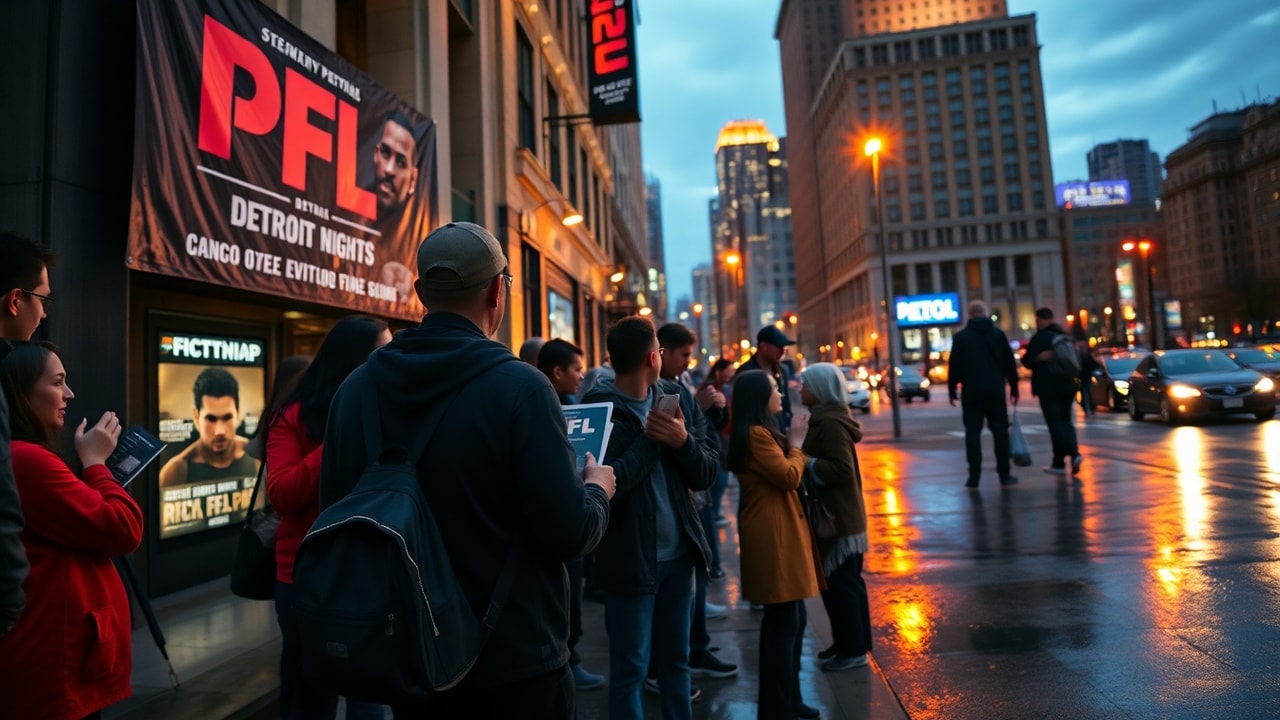
Detroit fans watching PFL on Saturday in the Motor City saw more than marquee mixed martial arts matchups—they also saw how the league distributes prize money. According to PFL’s published payout structure for the event, A.J. McKee earned a $100,000 winner purse while his opponent received $10,000 as part of the bout’s compensation.
For many residents, the Detroit stop of PFL is also about what major sporting events mean locally: how prize money, gate activity, and media attention can ripple into downtown commerce and how athletes’ earnings reflect the business side of modern combat sports.
PFL Detroit payouts: what McKee earned and what the opponent received
The PFL Detroit payout figures spotlight a stark pay difference between winner and opponent. Based on the league’s announced distribution for the event, A.J. McKee’s victory came with a $100K winner purse, while his foe’s share was set at $10K.
That 10-to-1 gap is consistent with PFL’s model of attaching meaningful, concrete payouts to results rather than relying solely on discretionary bonuses. In combat sports, where fighters’ pay can be influenced by sponsorships, appearance fees, and bargaining power, the published numbers offer a rare window into the league’s financial mechanics.
It’s also part of a wider pattern of PFL earnings across its seasonal tournament-style format. While the exact amounts can vary by round and event type, the league’s publicly stated structure underscores how advancement and performance translate into dollars—an element that matters to fighters and to how the sport markets itself to mainstream audiences.
Why the Detroit numbers matter beyond the cage
Detroit has been steadily positioning itself as a destination for major events, from concerts to championship sports. A PFL event brings a concentrated influx of visitors—fans traveling from Michigan and beyond, plus media and team staff—into a tight timeframe. That can translate into heightened demand for transportation, parking, food and beverage, and nearby retail.
Economists often describe these effects through the lens of local spending and “event-driven” demand. While not every dollar is directly attributable to a single event, the direction of travel and foot traffic tends to align with larger entertainment weekends.
According to data from the U.S. Census Bureau, consumer spending is a key driver of local economic output, and services like hospitality and food are among the sectors most sensitive to visitor volumes. In practice, that means a packed event night can shift sales for restaurants and bars, alter staffing needs, and increase short-term demand for ride services and parking.
Impact on Detroit residents
For Detroit residents, the local impact is often felt indirectly. Even when the biggest paycheck goes to a fighter, the event can still affect jobs and business revenue in the surrounding area.
Short-term work opportunities may include event-day roles—security, concessions staffing, ticketing support, and freelance labor through local vendors. Those are typically time-bound, but they can help stabilize part-time income during busy seasons.
Small businesses near the venue can also experience a measurable uplift during major fight cards. Patrons may arrive early, stay after the last bout, and purchase meals and drinks before heading to hotels or home. While individual shops will vary, the broader pattern tends to be strongest for establishments within walking or short-driving distance of event venues.
Still, residents may also weigh the costs: crowding around downtown areas, road and transit disruptions, and the use of municipal services required to support high-attendance nights. The balance between those tradeoffs and the benefits depends on how effectively event operators coordinate with local infrastructure and how much spending stays in local businesses.
Detroit’s ongoing emphasis on public safety and mobility during large events is frequently discussed in municipal reporting and planning. City partners typically manage traffic control and pedestrian flow to reduce friction and maintain access for residents who live and work near activity corridors.
Background & data: how PFL payouts fit into mixed martial arts salaries
In mixed martial arts salaries, payouts can vary widely based on league contracts, sponsorships, and whether a fighter competes in a tournament bracket. But a league’s published prize money structure helps establish a baseline expectation for fighter compensation tied to results.
In the case of PFL Detroit, the headline numbers—an A.J. McKee payout of $100K versus a $10K opponent payout—illustrate the risk-and-reward framework that PFL uses to structure competition. Instead of emphasizing only appearance or fight-night show money, the model places a heavier emphasis on performance outcomes.
That framework also plays into the way fighters plan for training cycles. Pursuing a higher placement means not just prestige, but higher potential earnings. For athletes, predictable prize money can help support the logistics of camps—coaching, strength training, nutrition, and medical needs—although the broader earnings picture can still differ fighter to fighter depending on endorsements and previous results.
Meanwhile, for fans tracking PFL earnings across the season, comparing events can offer context for what “making it” looks like under PFL’s system. For example, PFL San Diego payouts similarly reflect how the league translates results into prize money. While each event has its own card and matchups, the general approach remains recognizable to viewers following the tournament series.
Reporting on the business of combat sports has also highlighted how leagues compete for audience attention with clearer pay structures and more structured competition. That clarity can matter in a Detroit market where residents may be choosing between local entertainment options—sports, live music, and major events—on the same weekend.
What happens next for fighters and for Detroit’s event calendar
The payout figures are the immediate headline, but the broader storyline continues after the final bell. For fighters, wins can influence standings, future matchmaking, and long-term earning potential within the league’s format. For organizers, a successful Detroit event can reinforce confidence in returning to the city and in building relationships with local partners.
For Detroit’s audience and businesses, the question becomes how future events will be timed and coordinated so local commerce benefits while minimizing disruption. As more major sports and entertainment properties appear on the calendar, city planners and venue operators will likely keep refining strategies for traffic management, public transportation guidance, and after-hours crowd dispersal.
In short: Saturday’s PFL Detroit payouts did more than decide a winner. They provided a concrete snapshot of how modern mixed martial arts salaries can be shaped by a league’s prize structure—and offered another data point for Detroit’s evolving role as a stage for national-level sports entertainment.