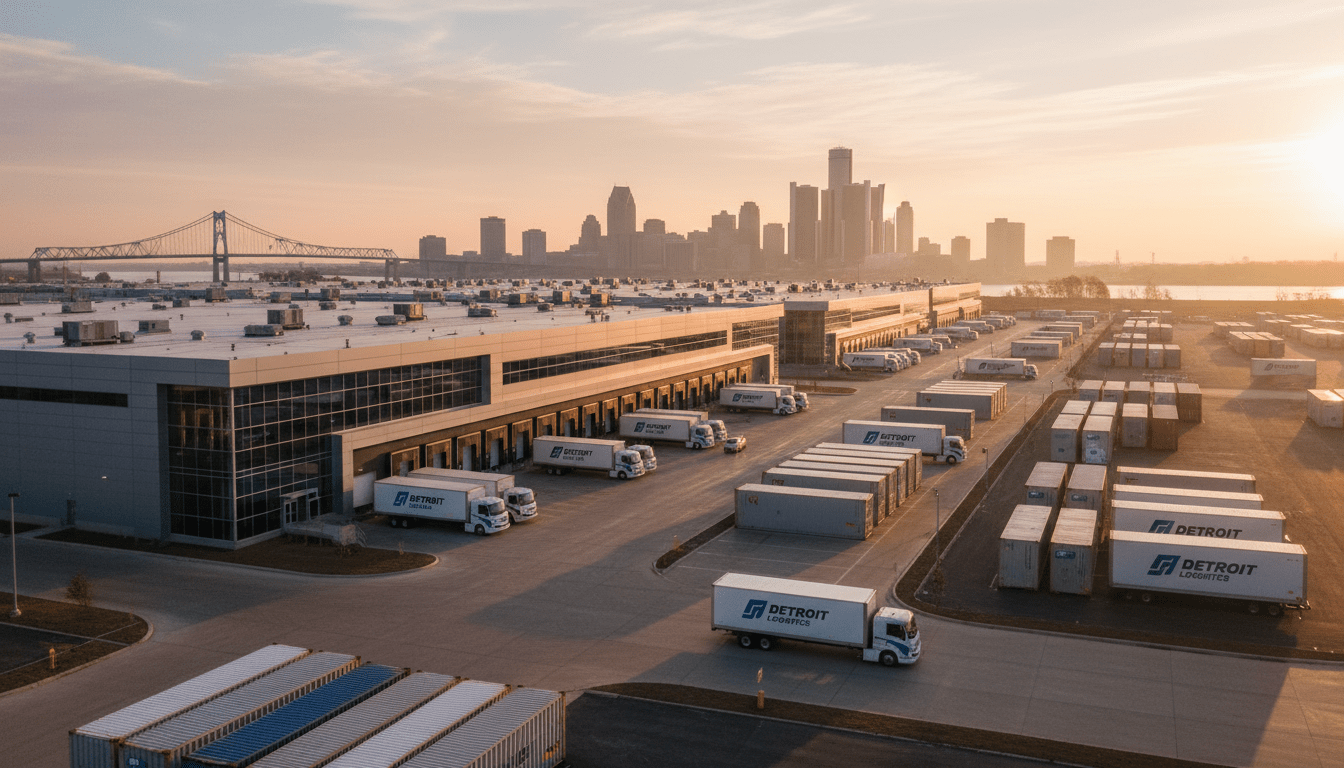
Detroit is undergoing a significant economic transformation, pivoting from its historical identity as solely a manufacturing giant to becoming a central node in modern global logistics. New data and strategic initiatives suggest that Detroit supply chain development is rapidly becoming one of the region’s most critical economic drivers, fueled by infrastructure projects like the Gordie Howe International Bridge and the automotive industry’s shift toward electric vehicles (EVs).
As global trade faces continuing volatility—ranging from geopolitical tensions to lingering post-pandemic disruptions—companies are increasingly looking to shorten their supply lines. Michigan, and Detroit specifically, is positioning itself as the solution. According to reports from the Michigan Economic Development Corporation (MEDC), the state is leveraging its geographic proximity to Canada and its existing industrial base to attract billions in logistics and warehousing investments.
Strategic Infrastructure Investments
The backbone of this shift is physical infrastructure. The most prominent project is the Gordie Howe International Bridge, slated to open in the near future. This massive undertaking is not just a transit point but a catalyst for the Detroit supply chain ecosystem. Officials from the Windsor-Detroit Bridge Authority have noted that the bridge will provide redundancy and speed for commercial traffic, which is vital for the “just-in-time” delivery models used by manufacturers.
Local logistics experts point out that Detroit is uniquely situated within a 500-mile radius of nearly half of the United States’ and Canada’s population. This density makes the city an ideal distribution hub. “We are seeing a shift where Detroit is viewed not just as a place where things are made, but as the command center for how things move,” said a representative from a regional logistics consulting firm during a recent industry roundtable.
Furthermore, the Michigan Economic Development Corporation has highlighted that the integration of rail, water, and road networks in Southeast Michigan provides a competitive advantage that few other inland regions can match. The Port of Detroit is also seeing renewed interest as businesses seek alternatives to congested coastal ports.
The EV Transition and Reshoring
The transition to electric vehicles is reshaping the Detroit supply chain landscape fundamentally. Unlike traditional internal combustion engines, EVs require battery supply chains that are heavily dependent on raw materials and specialized component manufacturing. Automakers like GM and Ford are working to “nearshore” these supply chains to reduce reliance on overseas production.
This trend is bringing suppliers closer to assembly plants in Detroit. Data from recent commercial real estate reports indicates a surge in demand for industrial space in Metro Detroit, driven by battery component manufacturers and logistics providers who need to be within short driving distance of the major auto plants. This consolidation is creating a dense, highly efficient supply network that strengthens the region’s economic resilience.
For more on how the automotive shift is influencing local economics, read our coverage on the evolving Detroit auto sector.
Impact on Detroit Residents
For the residents of Detroit, this boom in logistics and supply chain development translates directly into employment opportunities. However, the nature of these jobs is changing. While traditional warehousing jobs remain, there is a growing demand for “new collar” roles involving supply chain management software, robotics maintenance, and data analysis.
Local workforce development agencies are responding to this shift. Programs are emerging across the city designed to train Detroiters in logistics technology. “The goal is to ensure that the people living in these neighborhoods are the ones filling these high-demand roles,” stated a program director from a Detroit-based workforce non-profit. These jobs often offer more stability and higher wages than traditional retail or service industry positions.
Residents in Southwest Detroit, in particular, are seeing the physical changes firsthand, with new distribution centers replacing vacant lots. While this brings concerns regarding truck traffic and air quality—issues the City of Detroit is actively attempting to mitigate through designated truck routes—it also brings tax revenue and economic activity to historically underinvested neighborhoods.
Technology and Innovation
The modern Detroit supply chain is increasingly digital. Local startups and established tech firms are collaborating to bring Artificial Intelligence (AI) and blockchain transparency to logistics. Detroit is becoming a testing ground for autonomous trucking technologies, given its weather conditions and road variety.
University researchers from Michigan State University, known for its top-tier supply chain management program, frequently collaborate with Detroit businesses to optimize routes and reduce carbon footprints. This synergy between academia and industry is creating a knowledge hub that attracts talent from across the country.
You can learn more about local tech initiatives in our section on Detroit startups and innovation.
Background & Data
Statistics from the U.S. Bureau of Transportation Statistics highlight the importance of the Detroit-Windsor corridor. It remains the busiest international commercial land border crossing in North America. Approximately 25% of all merchandise trade between the United States and Canada crosses the Ambassador Bridge alone. As the Detroit supply chain infrastructure expands with the new bridge, these volumes are expected to stabilize and grow, insulating the local economy from coastal port strikes or bottlenecks.
According to the Detroit Regional Chamber, the logistics and supply chain sector contributes billions annually to the regional economy, a figure that is projected to grow as federal infrastructure spending continues to roll out.
What Happens Next
Looking ahead, the focus for Detroit will be on sustainability and resilience. The “Green Supply Chain” is becoming a priority, with companies looking to reduce emissions through electric delivery fleets and energy-efficient warehousing. City planners and business leaders are currently discussing how to further integrate Detroit’s logistics capabilities with its revitalized neighborhoods to ensure inclusive growth.
As the Gordie Howe International Bridge nears completion and the EV battery belt continues to develop, Detroit is poised to reclaim its status not just as a builder of cars, but as the essential heart of North American commerce.