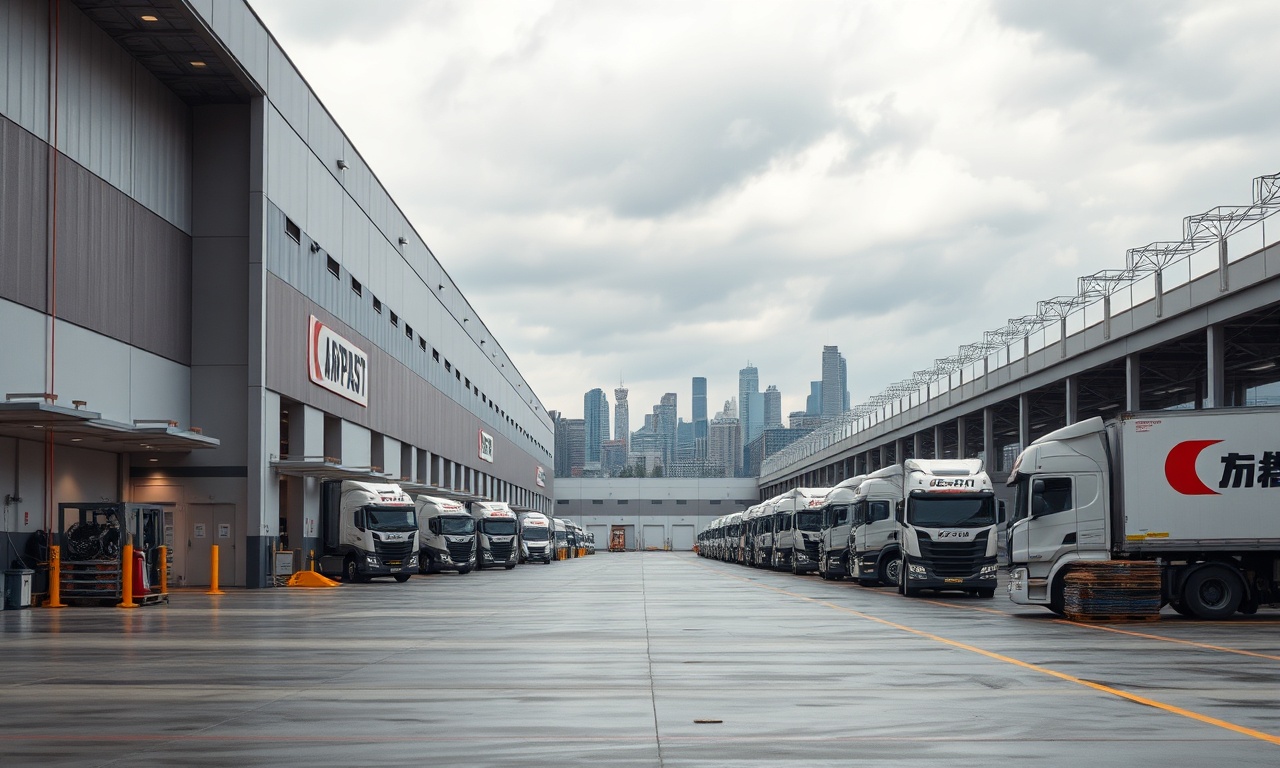
Nagase, a Japanese materials and chemical logistics company, is building a new Detroit-area hub designed to strengthen its role in the auto supply chain—an expansion that analysts say could shift investor expectations about how quickly and efficiently Japanese automotive suppliers can expand in Michigan.
Company officials have tied the move to meeting demand from North American vehicle production and improving the flow of materials for customers in the region. For Detroit-area suppliers and workers, the hub’s arrival signals continued industrial investment even as automakers and component makers navigate pricing volatility, electrification transitions, and supply-chain restructuring.
As Nagase’s presence grows, the story is not only about facilities; it’s also about auto strategy—how companies organize manufacturing support, inventory, and logistics to reduce delays. That matters to investors who evaluate future margins based on delivery reliability, lead times, and the ability to reconfigure supply networks.
Nagase Detroit hub and the evolving investor narrative
According to a company statement reviewed by local business media, the new facility—part of Nagase’s broader operations footprint in North America—aims to bring certain functions closer to customers and streamline distribution. While Nagase has historically served automotive manufacturers through a mix of relationships and logistics channels, the Detroit hub is positioned as a more direct platform for serving the region.
“When a supplier invests in location-specific infrastructure, it often changes the investor narrative from ‘global network’ to ‘local execution,’” said Mark Szydlowski, a Michigan supply-chain consultant who tracks industrial development and distribution trends. “Investors tend to look for measurable improvements in service levels—faster response, better inventory placement, and smoother replenishment.”
That framing connects the Nagase Detroit hub to how capital markets assess risk. For an auto supply chain, reduced friction between inbound materials and outbound orders can translate into lower working-capital requirements and fewer production interruptions—two themes that consistently influence investor perception.
Detroit operations: what the hub could change on the ground
Local impacts often show up first in day-to-day operations: warehousing workflows, inbound freight scheduling, and customer service coverage. A hub can also affect staffing needs, from logistics coordination and quality control support to warehouse roles tied to receiving, packaging, and inventory management.
In Michigan, where auto production is concentrated across the state and supplier ecosystems stretch from southeastern Michigan to the broader Midwest, logistics reliability is a competitive advantage. By anchoring a facility in the Detroit region, Nagase is effectively positioning itself to support customers that rely on predictable material flow to keep line schedules on track.
“Michigan’s industrial growth depends on companies being able to deliver consistently,” said Christine Prusa, an economist with the Federal Reserve Bank of Chicago who has discussed regional manufacturing and supply-chain dynamics in public research and commentary. “Firms that invest in distribution and operations can be better positioned when demand shifts or when shipping constraints arise.”
In other words, the Detroit operations piece of Nagase’s strategy is less about a single warehouse and more about how quickly the supply chain can adapt to customer needs.
How the Japanese auto supply chain factor fits
Nagase is listed on the Tokyo Stock Exchange under the ticker TSE:8012 Nagase. For investors, that listing matters because it ties corporate strategy to a long-term public-market story—how management interprets global demand, manages costs, and expands in key industrial corridors.
While U.S. operations are often discussed in terms of contracts and local employment, Japanese automotive suppliers also face the challenge of coordinating standards and processes across borders. A dedicated hub can help keep quality expectations consistent while improving speed and reducing variability in transportation.
“Japanese auto supply chains tend to emphasize process control and reliability,” said Laura Perez, a representative for a Detroit-area manufacturing trade association, referencing common themes in supplier readiness and logistics planning. “When distribution is centralized or better aligned to customer locations, it can reduce lead-time uncertainty.”
The hub’s timing also arrives as the broader Japanese auto supply chain continues to adjust to changes in vehicle platforms, materials sourcing, and the mix of internal-combustion and electrified production.
Michigan industrial expansion and what residents should watch
Detroit-area expansions don’t happen in isolation. They connect to site selection, workforce availability, and the region’s transportation and industrial infrastructure. Local officials and economic development organizations frequently track indicators such as job creation, capital investment, and training partnerships.
According to data from the U.S. Census Bureau, Michigan’s manufacturing sector has remained a major share of employment and output relative to many other states—reinforcing why logistic and industrial decisions often carry broader economic spillover. For residents, the practical question is whether expansions translate into stable, long-term employment and whether workforce pathways exist for local hires.
Potential local benefits associated with facilities like Nagase’s include:
- Jobs tied to logistics and operations, including warehouse roles, shipping/receiving, inventory management, and coordination support
- More freight activity in the surrounding industrial corridor—sometimes bringing additional tax base and supplier opportunities, but also requiring careful traffic and infrastructure planning
- Training and recruitment pipelines if partners develop onboarding programs for new roles
But residents may also ask about constraints: whether the facility increases truck traffic in already congested routes, how local roads and intersections will be managed, and whether the roles created align with the skills available in nearby communities.
Background & data: why logistics investment is a strategy, not an afterthought
Auto strategy increasingly reflects the logistics reality of modern manufacturing. Even when production plants are fixed, the flow of parts and materials is dynamic—affected by supplier performance, customs and documentation needs for internationally sourced inputs, and the operational limits of trucking capacity.
From an investor standpoint, the location of distribution capabilities can influence operational resilience. A hub closer to customers can help reduce delivery delays, improve forecasting of incoming demand, and support more flexible inventory plans—features often evaluated in corporate earnings narratives and investor presentations.
Detroit’s industrial ecosystem has a long history of supplier clusters, and recent years have renewed attention on how quickly firms can recover from disruptions. The region’s significance to the auto industry makes logistics investment especially visible, because disruptions can ripple outward from assembly plants to tiered suppliers.
In that context, the Nagase Detroit hub reads as a step in an ongoing strategy: keeping distribution and customer support capabilities tightly aligned with where North American vehicle production takes place.
What happens next
In the near term, the most important developments will likely be operational—when the hub ramps up, how quickly staffing is finalized, and what specific service improvements Nagase implements for automotive customers.
Local stakeholders will also be watching for the usual markers of industrial expansion success: workforce training relationships, coordination with regional transportation partners, and whether the investment leads to additional supplier activity around the industrial corridor.
For investors, a key storyline will be whether the hub improves margins and customer retention by reducing operational friction. For residents, the measure of impact may be simpler: the number and quality of jobs created, the practicality of commute and training pathways, and how well the region manages associated freight traffic.
As Nagase continues to build out its footprint tied to TSE:8012 Nagase, the Detroit hub is likely to remain a focal point for both corporate strategy and regional economic expectations—one facility at a time, but tied to a much larger question: how reliably can the auto supply chain move in the years ahead.