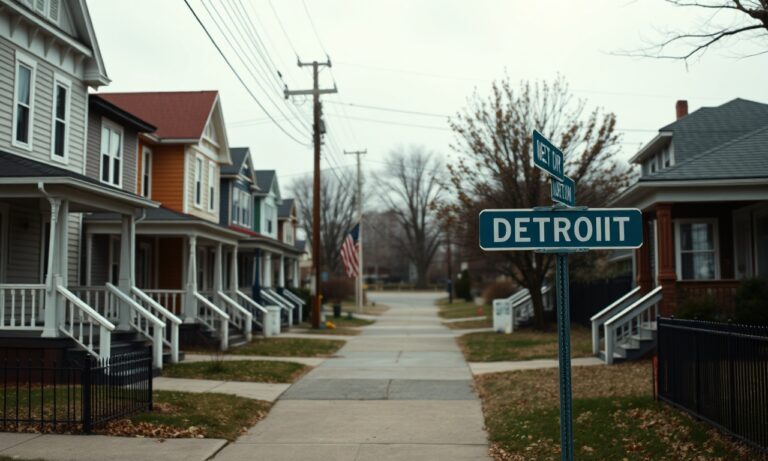
As the Detroit real estate market continues its trajectory of stabilization and growth, the City of Detroit and the Department of Housing and Urban Development (HUD) are doubling down on efforts to ensure long-time residents remain part of the city’s resurgence. With property values rising in neighborhoods that were once dotted with vacancies, the demand for Detroit affordable housing has reached a critical juncture in 2025.
The conversation has shifted from simply demolishing blight to strategically infilling neighborhoods with mixed-income developments. However, a persistent economic hurdle known as the “appraisal gap”—where the cost to renovate or build a home exceeds its post-construction market value—remains a primary barrier for developers and aspiring homeowners alike. In response, city officials and local non-profits are deploying new financial tools designed to bridge this divide.
The Current State of the Market
According to data released by the University of Michigan’s Poverty Solutions, while home values in Detroit have seen significant appreciation over the last five years, rising costs of construction materials and labor have complicated the delivery of low-to-moderate-income housing. The median home price in several key neighborhoods has risen, yet for many residents, wages have not kept pace with these housing costs.
Officials from the City of Detroit Housing & Revitalization Department have emphasized that the administration’s goal is to preserve existing affordable units while aggressively pursuing the creation of new ones. The city has leveraged federal funds, including the Low-Income Housing Tax Credit (LIHTC), to incentivize developers to allocate units for residents earning between 30% and 80% of the Area Median Income (AMI).
Recent reports indicate that without intervention, the displacement risks in rapidly gentrifying areas like the Cass Corridor and Southwest Detroit could increase. Consequently, the preservation of “naturally occurring affordable housing” (NOAH) has become a policy priority.
Impact on Detroit Residents
For the average Detroiter, these high-level economic shifts have tangible consequences. Long-term renters are facing increased competition for quality units, while prospective first-time homebuyers often find themselves priced out of renovated stock or unable to secure mortgages for homes requiring significant repairs.
The impact is particularly acute for families who have remained in the city through its bankruptcy and subsequent recovery. Local community advocacy groups have pointed out that while downtown development grabs headlines, the need for safe, lead-free, and energy-efficient housing in neighborhoods like Brightmoor and the East Side is immediate.
To address this, the Detroit Land Bank Authority continues to evolve its strategy. By bundling properties and offering compliance extensions, they aim to get more deeds into the hands of residents rather than speculators. Furthermore, the city’s down payment assistance programs are being retooled to offer greater support to buyers navigating high interest rates.
Residents interested in Detroit neighborhood revitalization efforts are encouraged to attend local district meetings where specific housing allocation plans are often discussed before implementation.
Addressing the Appraisal Gap
One of the most significant challenges in the Detroit affordable housing sector is the appraisal gap. In many neighborhoods, a developer might spend $150,000 renovating a home that will only appraise for $120,000 upon completion. This negative equity prevents banks from issuing construction loans and discourages private investment.
To combat this, the city has been utilizing funds from the American Rescue Plan Act (ARPA) to subsidize these gaps. By covering the difference between cost and value, the city makes it financially viable for developers to rehabilitate vacant structures rather than letting them deteriorate further.
According to a report by the Urban Institute, addressing the appraisal gap is essential for wealth creation in Black communities. Homeownership remains the primary vehicle for generational wealth in the United States, and stabilizing valuations in majority-Black cities like Detroit is a crucial step toward economic equity.
The Role of HUD and Federal Grants
Federal support remains a cornerstone of the city’s strategy. The U.S. Department of Housing and Urban Development (HUD) recently announced continued support for Choice Neighborhoods Implementation grants in Detroit. These grants focus not just on housing, but on connecting residents to services, education, and local business development opportunities.
These federal partnerships allow for large-scale redevelopments, such as the transformation of the former Douglass Diggs projects, which aim to replace obsolete public housing with vibrant, mixed-income communities that do not segregate low-income residents from the rest of the neighborhood.
The Land Value Tax Proposal
Another major policy discussion influencing the real estate landscape is the proposed Land Value Tax plan. Championed by the mayor’s office, this revenue-neutral tax shift would reduce taxes on improvements (buildings) while increasing taxes on land. The objective is to punish land speculation—where owners sit on vacant lots waiting for prices to rise—and reward development.
Proponents argue that this tax structure would significantly lower property tax bills for the vast majority of Detroit homeowners, making monthly payments more affordable and reducing the risk of tax foreclosure. By lowering the tax burden on the structure itself, homeowners would be incentivized to improve their properties without fear of a punitive tax hike.
While the proposal requires state legislative approval and a voter referendum, it represents a bold attempt to fix a broken property tax system that has historically contributed to the cycle of blight and tax forfeiture.
What Happens Next?
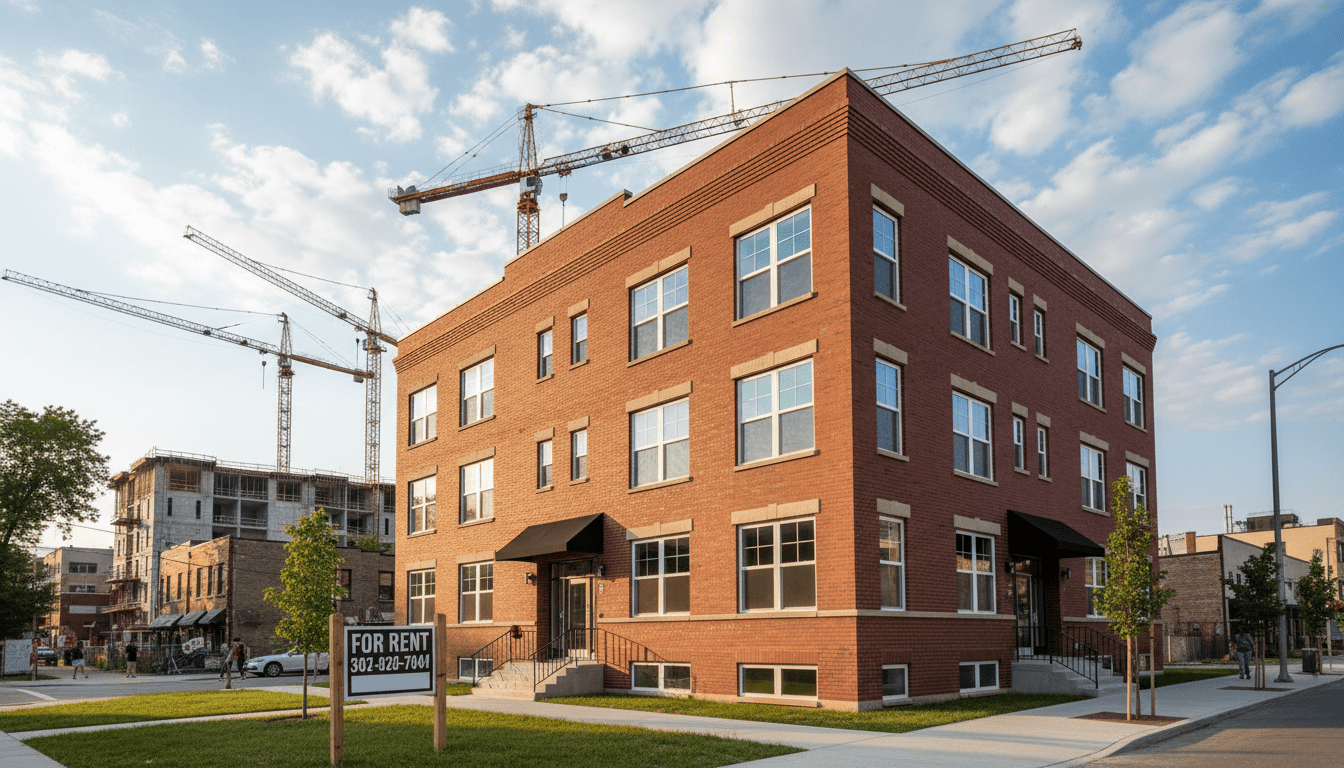
Looking ahead to the remainder of 2025 and into 2026, the focus will likely remain on execution. With financing structures in place and a clear mandate to prioritize density and affordability, the construction cranes visible across the skyline tell only half the story. The real measure of success will be the occupancy rates of these new affordable units and the stabilization of home values in the city’s middle neighborhoods.
For investors and developers, the message is clear: Detroit is open for business, but the model has changed. Projects that incorporate community benefits and affordable set-asides are finding faster paths to approval. For residents, the expansion of resources—from home repair grants to financial counseling—offers a pathway to stability, provided they can navigate the complex web of available programs.
As the city continues to refine its approach to Detroit affordable housing, the collaboration between public entities, private developers, and philanthropic organizations will define the next decade of urban living in the Motor City.