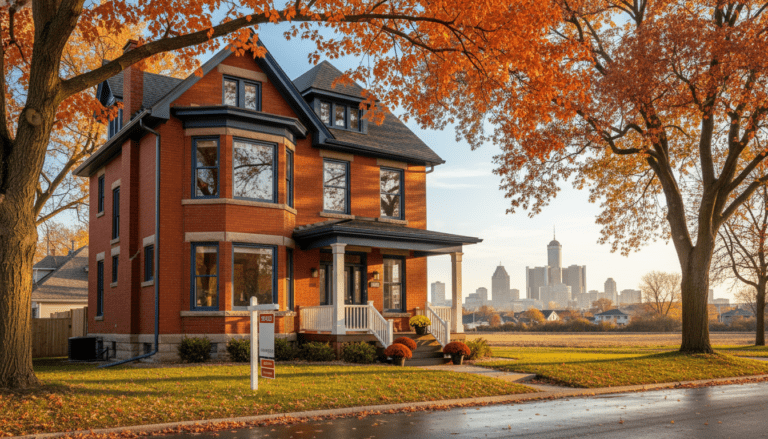
Detroit’s “Life Remodeled” plan—an approach aimed at rethinking how homes are built, renovated and managed in neighborhoods—has moved beyond city borders. What started as a local framework for aligning housing, services and design standards is now attracting national attention as other cities look for practical models to address affordability, aging housing stock and neighborhood-level inequities.
In recent months, planners, housing officials and development groups from outside Michigan have cited Detroit’s work as they search for ways to modernize zoning, streamline permitting and reduce barriers to safer, more adaptable housing. The spread is not a single announcement but a growing pattern: conferences, policy convenings and peer-to-peer discussions where Detroit is referenced as a “working example” of community-driven redevelopment.
From neighborhood housing redesign to national replication
While “Life Remodeled” is often described as a housing redesign strategy, its influence comes from how it connects multiple moving parts—design goals, code and permitting expectations, and the people who will live with the outcomes. Rather than focusing only on new construction, Detroit’s approach has been used to frame how existing housing can be rehabilitated, how vacant properties can be stabilized and how residents can be supported through changes that affect daily life.
“Detroit has been experimenting with policy and process changes that make redevelopment more realistic on the ground,” said one official at a major Michigan housing nonprofit who works with city partners on community-based housing initiatives. “That combination—practical tools plus resident-facing goals—is what other cities say they want to understand.”
Detroit’s “Life Remodeled” plan also fits into a broader housing moment nationally. Communities are facing rising construction costs, a shortage of affordable units and the legacy challenges of vacant and deteriorating properties. In Detroit, those challenges have long been documented, from blighted parcels to uneven access to stable, quality housing.
Housing researchers and policy analysts have pointed to the importance of integrated strategies that treat housing as both a physical product and a neighborhood system. Nationally, that perspective has been increasingly emphasized as cities evaluate how to scale redevelopment without displacing residents.
Impact on Detroit Residents
For Detroit residents, the practical question has often been simple: what changes in everyday life? Supporters of Detroit’s redevelopment model say the plan’s emphasis on housing redesign is intended to reduce the time and uncertainty that can come with redevelopment projects, particularly where code compliance, property condition and neighborhood infrastructure overlap.
According to data published by the U.S. Census Bureau, Detroit’s population and housing patterns have shifted significantly over the past decade, with neighborhoods experiencing different trajectories in occupancy and household stability. Those patterns make neighborhood-level planning especially important when cities attempt community transformation through housing improvements.
Detroit’s local partners also argue that “Life Remodeled” matters because redevelopment can be designed to be more adaptable to different household needs—such as aging in place or accommodating changing family sizes. In practical terms, that can influence how rehabilitation standards are defined, how site layouts are planned, and what features are prioritized when homes are rebuilt or substantially renovated.
“The best redevelopment work is the kind that residents can see themselves in,” said a Detroit-based community development leader involved in neighborhood planning efforts. “Detroit’s innovation has been in trying to translate design and policy into something people experience—safety, stability, and a home that works better over time.”
Background & data: why Detroit became a reference point
Detroit’s emergence as a template is tied to both its urgency and its track record. The city has dealt with long-running challenges that many jurisdictions face in different forms: an aging housing stock, uneven property maintenance, historic disinvestment and ongoing affordability pressures.
Municipal officials have said redevelopment needs to be aligned with the realities of neighborhoods—parcel-by-parcel conditions, infrastructure capacity and the availability of financing. According to recent reporting and municipal planning documents, Detroit has pursued a mix of approaches including property stabilization, targeted investment and partnerships meant to speed up turnaround time for homes that have been vacant or underutilized.
At the same time, Detroit innovation has been visible in how the city and local organizations collaborate on the “how” of redevelopment. Experts describe an approach where policy goals are translated into processes that can be implemented by builders, nonprofits and property owners, rather than remaining only on paper.
City-level work also intersects with federal and state housing policy. Researchers at the U.S. Department of Housing and Urban Development have repeatedly emphasized that achieving neighborhood stabilization typically requires coordinated efforts across housing, community development and resident services. Detroit’s “Life Remodeled” framing aligns with that broader guidance by treating redevelopment as an interconnected ecosystem.
What national observers want to learn
For cities looking to replicate Detroit’s outcomes, the interest typically centers on three themes.
First: practical housing redesign standards. Other jurisdictions are studying how Detroit structures design expectations and rehabilitation priorities in ways that can be consistently applied.
Second: community transformation through implementation. “National replication” is rarely about copying a document word-for-word. Cities want a method for coordinating stakeholders—local government, neighborhood organizations and builders—so redevelopment decisions can move faster and match community priorities.
Third: process alignment. Permitting, code compliance and property readiness are major obstacles. Detroit’s model is often described as a way to reduce friction among these steps, making it easier to produce durable outcomes rather than stop-and-start projects.
Detroit redevelopment in the broader housing conversation
Detroit’s reputation has also been shaped by the larger conversation about what “redevelopment” should accomplish. Many Americans have seen redevelopment efforts elsewhere produce mixed results—new construction without community benefits, or renovations that improve one property while leaving adjacent blocks with fewer investments.
Detroit’s “Life Remodeled” plan has been increasingly referenced as a counterpoint: a redevelopment strategy intended to be anchored in neighborhood life. That framing has made it relevant to policymakers working on affordability, vacancy reduction and housing quality—issues that are driving state and federal policy discussions.
Local advocates caution that no single plan can solve housing insecurity by itself. Still, they say Detroit’s influence is visible in how other places are asking more targeted questions: Who is involved? What does implementation look like? How are residents’ needs incorporated? And how will the benefits be sustained?
What Happens Next
Detroit is likely to see continued interest from national partners, especially as organizations compare redevelopment models that can operate at scale. For residents, the near-term implications depend on project pipelines—how quickly vacant or underused properties move toward renovation, and how housing improvements connect to broader neighborhood investments.
Officials and community partners say the next phase is about translating attention into sustained delivery: maintaining resident trust, tightening project timelines and keeping housing redesign aligned with local needs. The goal is not simply to replicate Detroit’s approach elsewhere, but to reinforce the local foundation that makes Detroit’s model work.
“This isn’t a one-time policy moment,” said the community development leader. “The value is in what Detroit continues to build—process, partnerships and trust—so that redevelopment actually improves people’s lives.”
Background & Data
The U.S. Census Bureau has documented major shifts in household formation, occupancy and demographic trends across U.S. cities, including Detroit. Those patterns influence planning assumptions about housing demand and neighborhood stabilization. In parallel, the U.S. Department of Housing and Urban Development has emphasized the need for coordinated community development strategies when cities pursue neighborhood revitalization.
As Detroit’s Life Remodeled model draws national attention, analysts say the key measure will be implementation: whether community transformation goals translate into durable housing outcomes and whether the work remains connected to the people who live in the neighborhoods being redesigned.