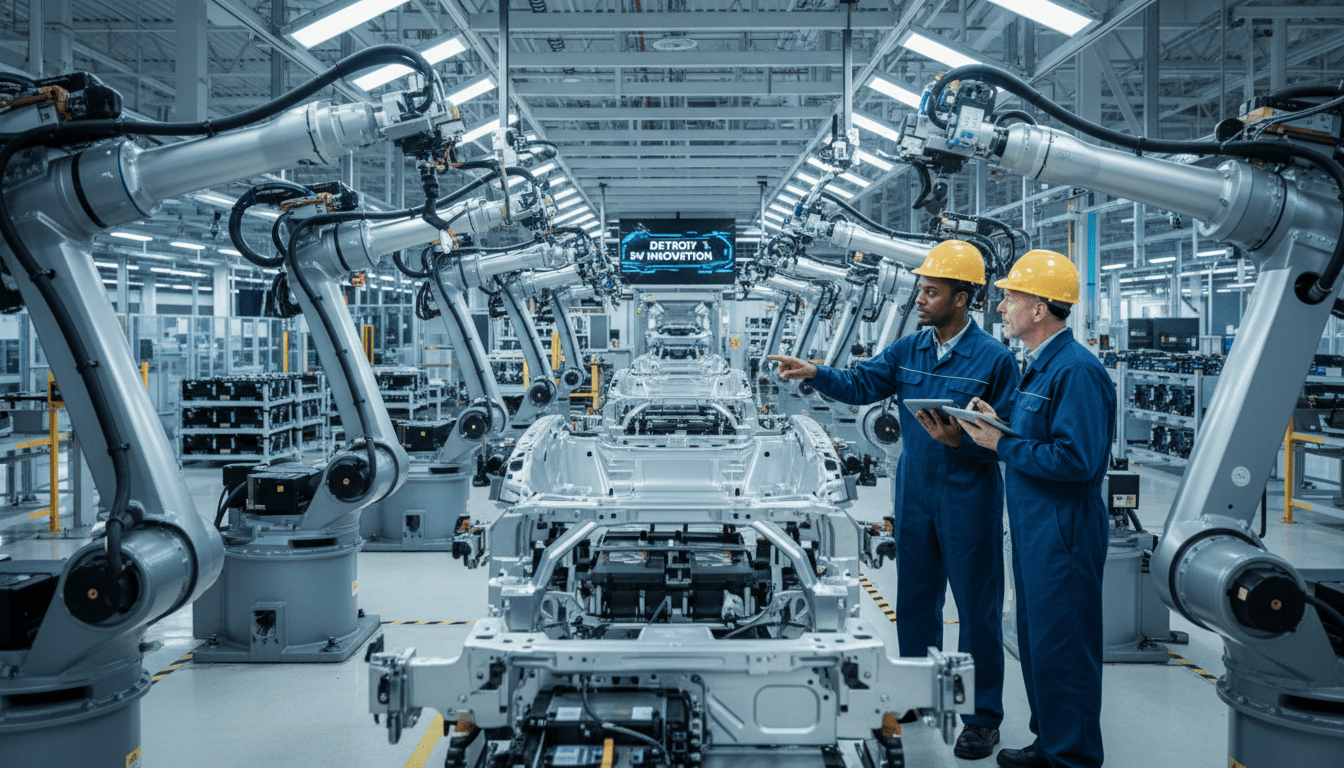
As the automotive world crosses the threshold into 2026, the fervor that once defined the transition to electrification in Detroit has settled into a more pragmatic, high-stakes reality. For the Motor City, the aggressive targets set earlier in the decade have met the friction of economic headwinds, consumer hesitation, and infrastructure bottlenecks. While the electric vehicle industry remains the central pillar of Detroit’s long-term economic strategy, the roadmap has been redrawn.
General Motors and Ford Motor Company, the anchors of the regional economy, are entering the new year with revised strategies that prioritize profitability and affordability over sheer volume. The shift comes as federal mandates tighten, yet consumer adoption rates in the Midwest continue to lag behind coastal markets. For Detroit residents, this evolving landscape brings a complex mix of environmental promises, employment uncertainties, and shifts in local infrastructure development.
The State of Production in 2026
Entering 2026, the narrative inside Detroit’s boardrooms has shifted from a race for market share to a quest for margin sustainability. According to data released by the Michigan Economic Development Corporation (MEDC), battery plant investments in the state have solidified, yet production timelines for several EV models have been adjusted to align with fluctuating demand.
At GM’s Factory ZERO, the hum of production continues, but the mix of vehicles rolling off the line reflects a market that is demanding more versatility. Industry analysts note that while pure battery-electric vehicle (BEV) sales continue to grow year-over-year, the pace has decelerated compared to the exponential growth seen in 2022 and 2023. Consequently, Detroit automakers have arguably successfully pivoted to include a robust lineup of plug-in hybrids—a bridge technology that was once thought to be phasing out faster.
“The expectation that 2026 would be the year of mass conversion was optimistic,” said Dr. Alan Sterling, an automotive analyst based in Southeast Michigan. “What we are seeing now is a stabilization. The industry is focusing on the ‘messy middle’ of the transition, ensuring that the supply chain is robust enough to handle the next decade, not just the next quarter.”
Employment and the Local Economy
For the Detroit workforce, the state of the electric vehicle industry is directly tied to job security. The transition to EVs requires fewer parts and, theoretically, fewer workers than internal combustion engine vehicles. However, the anticipated job losses have been mitigated by the onshoring of battery production and the expansion of technology hubs like Ford’s Michigan Central Station.
The United Auto Workers (UAW) continues to play a pivotal role in negotiating the terms of this transition. Entering 2026, labor agreements have secured protections for workers in battery joint ventures, a critical win that has kept wages competitive in the region. However, anxiety remains in the supply base. Smaller Tier 2 and Tier 3 suppliers in the metro Detroit area, particularly those specializing in exhaust systems and traditional powertrains, face the most significant pressure to diversify or dissolve.
Local economists warn that while the headline numbers for EV investment are massive, the trickle-down effect to local neighborhoods is uneven. Read more about the 2026 Detroit economic forecast here. The disparity between high-tech engineering roles and traditional manufacturing jobs is widening, prompting the City of Detroit to launch new workforce development initiatives aimed at retraining residents for high-voltage systems maintenance and software integration.
Infrastructure: The Grid and Charging Access
One of the most pressing issues for the environment and the consumer adoption of EVs in 2026 remains the charging infrastructure. While the Biden-Harris administration’s National Electric Vehicle Infrastructure (NEVI) program has deployed funds, the visibility of functional chargers in Detroit neighborhoods remains inconsistent.
DTE Energy has ramped up its grid modernization efforts to accommodate the increasing load. Reports from the utility provider indicate that residential charging installation in Metro Detroit has increased by 15% over the last year. However, for residents living in multi-unit dwellings or older neighborhoods with limited off-street parking, charging remains a logistical hurdle.
“We are seeing a ‘charging divide’ emerge,” said Maria Gonzales, a community advocate with the Detroit Green Energy Coalition. “Downtown and the suburbs are getting fast chargers, but the neighborhoods where working-class Detroiters live are still waiting. If the electric vehicle industry wants mass adoption, they cannot leave these communities behind.”
Environmental Impact on Detroit Residents
Despite the industrial challenges, the environmental benefits of the transition are beginning to manifest in local air quality data. The Michigan Department of Environment, Great Lakes, and Energy (EGLE) reported a slight reduction in particulate matter in corridors with high EV fleet adoption, such as last-mile delivery zones where electric vans from Rivian and BrightDrop have replaced diesel trucks.
For Detroit, a city that has historically struggled with high asthma rates due to industrial pollution and heavy trucking traffic, the electrification of commercial fleets offers a tangible health benefit. The city’s bus fleet transition is also well underway, with the Detroit Department of Transportation (DDOT) operating a larger percentage of electric buses in 2026 than ever before.
However, the environmental conversation also includes the issue of battery disposal and recycling. As the first generation of modern EVs approaches the end of their lifecycle, local environmental groups are calling for stricter regulations on battery waste management to prevent local landfills from becoming hazardous waste sites. See our report on local transportation sustainability efforts.
What Happens Next?
Looking ahead through 2026, the focus for Detroit automakers will be the introduction of the “affordable EV”—the $25,000 to $30,000 vehicle capable of mass-market penetration. Without this, the industry risks hitting a ceiling where only affluent suburbanites can afford to participate in the green revolution.
Competition from international markets remains fierce. Detroit is no longer just competing with Japan and Germany, but also navigating the influx of cost-competitive technologies from China, which are reshaping global standards. For Detroit City News readers, the takeaway is cautious optimism: the electric future is still arriving, but the speed limit has been lowered to ensure the wheels don’t come off along the way.
For more detailed statistics on national energy trends, visit the U.S. Department of Energy.