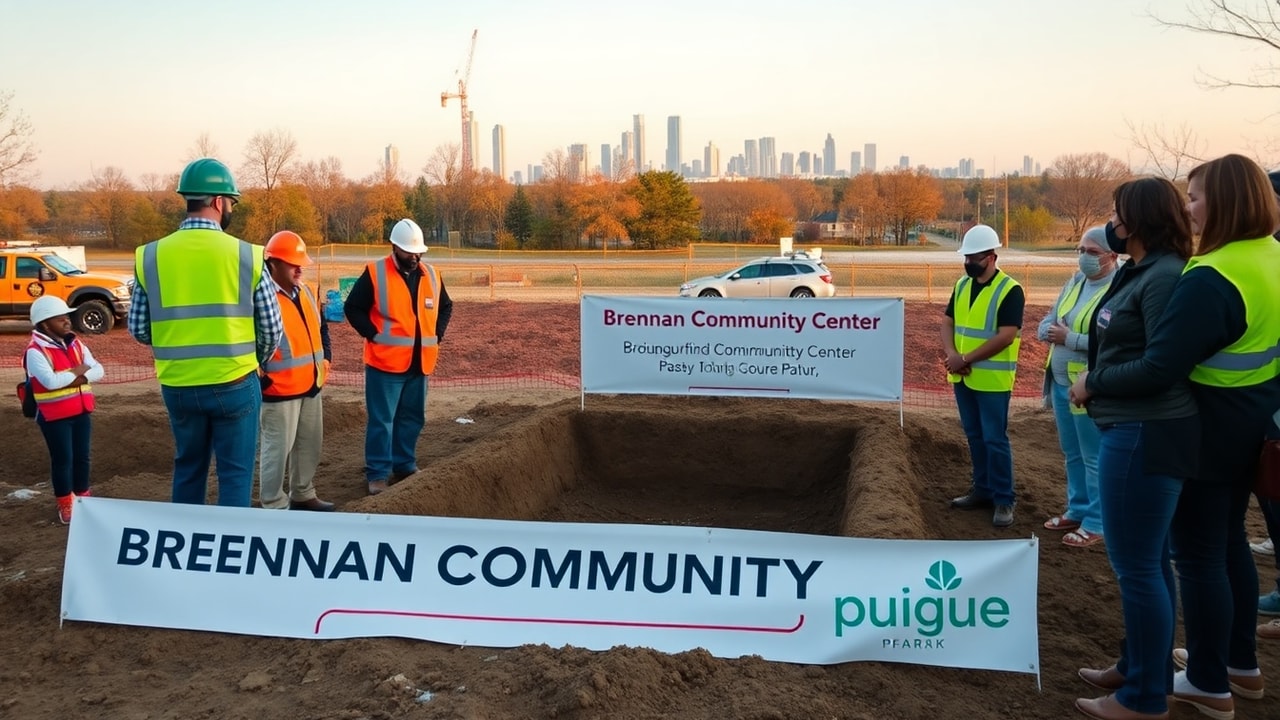
Detroit has broken ground on a new Brennan Community Center at Rouge Park, part of the city’s effort to expand neighborhood recreation and programming in southwest Detroit. The project, officials say, will replace and upgrade community space for youth and families and create a stronger hub for services near the Rouge River corridor.
The groundbreaking marks a major step for the site, where community groups and residents have long advocated for updated facilities. The City of Detroit is partnering with philanthropic and community stakeholders on the center, which is expected to support year-round activities ranging from after-school programs to senior services.
Detroit, Tom Gores join push for Brennan Community Center at Rouge Park
Speaking at the event, Detroit leaders highlighted the role of the new center in improving access to safe, structured activities. “This is about building a stronger community where residents can gather, learn, and grow,” said City of Detroit officials during remarks at the ceremony, underscoring that the center will serve as a focal point for local programming.
Funding and support for the project have been tied to the broader redevelopment of civic spaces in Detroit, including efforts from local philanthropy. Tom Gores and associated partners have been publicly linked to community investment initiatives, and officials at the groundbreaking pointed to that backing as a key factor in moving the project forward.
In addition to leadership from the city, community partners emphasized that the center is designed around resident needs—program spaces, meeting rooms, and areas intended for recreation and education. Organizers said they are working to align staffing and programming with what families in the area already ask for, including youth enrichment and community events.
Impact on Detroit Residents
For residents in southwest Detroit, the Brennan Community Center is expected to help address longstanding gaps in accessible public programming and safe indoor space. Community centers often serve as critical infrastructure for families—hosting tutoring, fitness classes, cultural events, and workshops that are difficult to organize without dedicated facilities.
According to the U.S. Census Bureau, demographic and socioeconomic conditions vary widely across Detroit neighborhoods, and residents rely on local institutions for resources that may be less available through private services. While the Census Bureau’s national-level reporting does not evaluate a single project site, it consistently documents that access to community resources is uneven across neighborhoods, making local centers particularly important.
City officials said the new center at Rouge Park is also intended to strengthen the connection between recreation spaces outdoors and programming indoors. By locating the center within the broader park area, officials expect it to become a place where families can participate in activities close to home rather than traveling elsewhere for services.
Residents who have pushed for upgraded community space say the facility matters beyond programming. Community centers can reduce barriers for families by providing structured activities at convenient times, including after school and during evenings and weekends.
Background & Data
Detroit has invested in neighborhood amenities over the years, including parks, recreation upgrades, and community spaces, as part of efforts to improve quality of life citywide. Projects like the Brennan Community Center are part of a broader pattern: cities often pursue community facilities to support both youth development and community cohesion.
The City of Detroit has previously described its approach to neighborhood improvement as focused on access—ensuring residents can use civic resources such as parks and community rooms without the constraints that come from aging facilities or limited operating capacity. In reporting and planning documents, city leaders have also tied recreation and community programming to broader goals such as public health, youth engagement, and safer community spaces.
In this case, the Brennan Community Center at Rouge Park is expected to be a key piece of that strategy for the surrounding area. When community facilities are upgraded, it can also affect local organizations that deliver programming, since they gain more reliable space and equipment for classes, events, and meetings.
What Happens Next
Now that Detroit has broken ground, the project will move into the construction phase, with officials describing the next steps as final site development, building work, and preparation for staffing and programming. While exact completion timing can vary with construction schedules, city leaders said the goal is to bring residents a new community hub as efficiently as possible.
Organizers emphasized that community input will continue after construction begins. Residents and local partners are expected to weigh in on programming priorities—such as youth education supports, wellness initiatives, and community gatherings—so the center can start operations with services tailored to the neighborhood.
As the project progresses, officials said they will also coordinate with partners managing Rouge Park and surrounding activities to keep the area accessible and minimize disruptions during construction.
Local partners and public investment in neighborhood services
Community centers don’t operate in isolation. They depend on partnerships with schools, nonprofits, and city departments. At the groundbreaking, leaders pointed to the center’s potential to strengthen those networks in southwest Detroit by providing a consistent space for collaboration.
In the years since Detroit has worked to expand investment in community-based services, local organizations have increasingly framed centers as multipurpose sites—where families can access learning resources, where residents can meet for community issues, and where youth programs can connect participants with mentors.
For Detroit residents watching the project, the central question is how quickly the center can deliver practical benefits: safe places to gather, programs that reflect local needs, and opportunities for residents to take part in community decisions.
With the Brennan Community Center moving from planning into construction, Detroit is signaling a renewed commitment to neighborhood infrastructure—anchored at Rouge Park and supported by public and private investment, including Tom Gores and aligned partners.