In a recent analysis of the national economic landscape, prominent financial commentator and Fox Business host Larry Kudlow directed significant attention toward the Motor City, highlighting what he perceives as a robust resurgence in the region. While national headlines often focus on coastal financial hubs, Kudlow’s commentary underscores a shifting narrative: the Detroit economic boom is becoming impossible to ignore.
Kudlow, the former Director of the National Economic Council, has frequently discussed the intersection of policy and manufacturing. His recent sentiments regarding Detroit align with a broader set of data points suggesting that Michigan’s largest city is not merely recovering from its historic bankruptcy but is actively entering a new phase of industrial and commercial growth. However, for locals on the ground, distinguishing between macroeconomic headlines and the reality of daily living costs remains crucial.
Analyzing Kudlow’s Perspective on Detroit
Larry Kudlow’s optimism regarding Detroit is largely rooted in the revitalization of the American manufacturing sector. In recent segments, Kudlow has pointed to the aggressive moves by legacy automakers—General Motors, Ford, and Stellantis—to modernize their fleets and infrastructure. He argues that pro-business policies and a renewed focus on domestic production are creating a ripple effect that benefits regional economies like Detroit.
Kudlow specifically noted the resilience of the workforce in the Midwest. Unlike the purely tech-driven volatility seen in Silicon Valley, Detroit’s economy is anchored in tangible assets and production. This sentiment is echoed by recent investment figures. According to data from the Detroit Regional Chamber, the region has seen billions in committed capital for electric vehicle (EV) battery plants and assembly line retooling over the last 24 months.
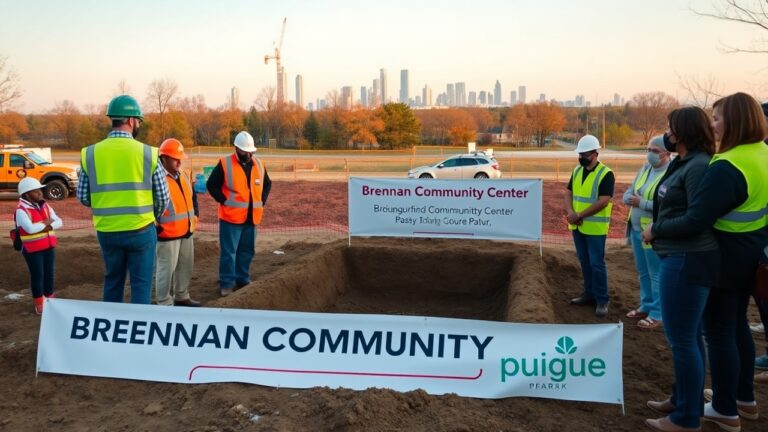
While Kudlow’s analysis often leans heavily into the benefits of supply-side economics, the visible cranes dotting the Detroit skyline offer physical corroboration to his claims. From the massive Hudson’s site development to the renovation of Michigan Central Station by Ford, the capital injection into the city is palpable.
The Data Behind the Detroit Economic Boom
Is the hype supported by hard numbers? To verify the extent of the Detroit economic boom, one must look at federal and local statistics. Reports from the U.S. Bureau of Labor Statistics (BLS) indicate that unemployment rates in the Detroit-Warren-Dearborn statistical area have reached historic lows in the post-pandemic era, hovering near figures not seen since the late 1990s.
Furthermore, the City of Detroit’s financial health has stabilized significantly. A decade after filing for the largest municipal bankruptcy in U.S. history, Detroit has achieved investment-grade status from Moody’s Investors Service. This upgrade allows the city to borrow money at lower interest rates, freeing up capital for neighborhood improvements and infrastructure projects.
Local economists warn, however, that while the “boom” is real, it is uneven. The downtown core and Midtown areas have seen exponential property value growth, while outlying neighborhoods face a slower pace of redevelopment. Nevertheless, the trend line remains positive.
For more on how these macro trends are affecting local job markets, read our in-depth coverage on Detroit’s evolving employment landscape.
Impact on Detroit Residents
For the average Detroiter, Larry Kudlow’s high-level praise translates into mixed realities. On one hand, job availability is up. The demand for skilled tradespeople—electricians, welders, and construction managers—is at an all-time high, driven by the very manufacturing renaissance Kudlow describes. This has led to wage growth in specific sectors, providing more financial stability for families involved in the trades.
“We are seeing more help wanted signs than we have in twenty years,” said Marcus Turner, a local small business owner in the Corktown district. “The traffic is back, the lunch crowds are back. It feels like money is moving through the city again.”
However, the Detroit economic boom also brings challenges. As property values rise, long-term residents in rapidly gentrifying areas face increased property taxes and rent. While the city has implemented programs to help legacy residents stay in their homes, the pressure is undeniable. Additionally, while manufacturing remains strong, inflation on goods—a national issue—continues to eat into the wage gains celebrated by financial analysts like Kudlow.
The Automotive Context
It is impossible to decouple Kudlow’s comments from the automotive industry. The transition to Electric Vehicles (EVs) is the engine driving much of this speculation. Detroit is currently in a race to remain the automotive capital of the world against rising competition from the southern United States and China.
Kudlow has frequently critiqued government mandates regarding EVs, yet he acknowledges the massive capital flowing into the sector. For Detroit, this means that factories are not closing; they are evolving. The General Motors Factory ZERO, straddling Detroit and Hamtramck, serves as a prime example of this evolution, employing thousands to build the next generation of Hummers and Silverados.
This industrial pivot ensures that the region remains relevant. See our report on commercial real estate developments tied to the auto industry to understand the physical footprint of these changes.
What Happens Next?
Larry Kudlow’s spotlight on Detroit serves as a reminder that the national perception of the city is changing. No longer viewed solely as a cautionary tale of rust-belt decline, Detroit is being cited by financial pundits as a case study in resilience.
Moving forward, the sustainability of this boom depends on diversification. City leadership is actively attempting to attract tech startups, fintech firms, and green energy companies to reduce reliance on the cyclical auto industry. If these efforts succeed, the “boom” Kudlow describes may evolve into long-term stability.
As the city prepares for upcoming political cycles and budget assessments, the eyes of national analysts remain fixed on Michigan. Whether the growth benefits every neighborhood equally remains the critical test for local leadership, but the consensus from voices ranging from local organizers to Larry Kudlow is clear: Detroit is back in business.