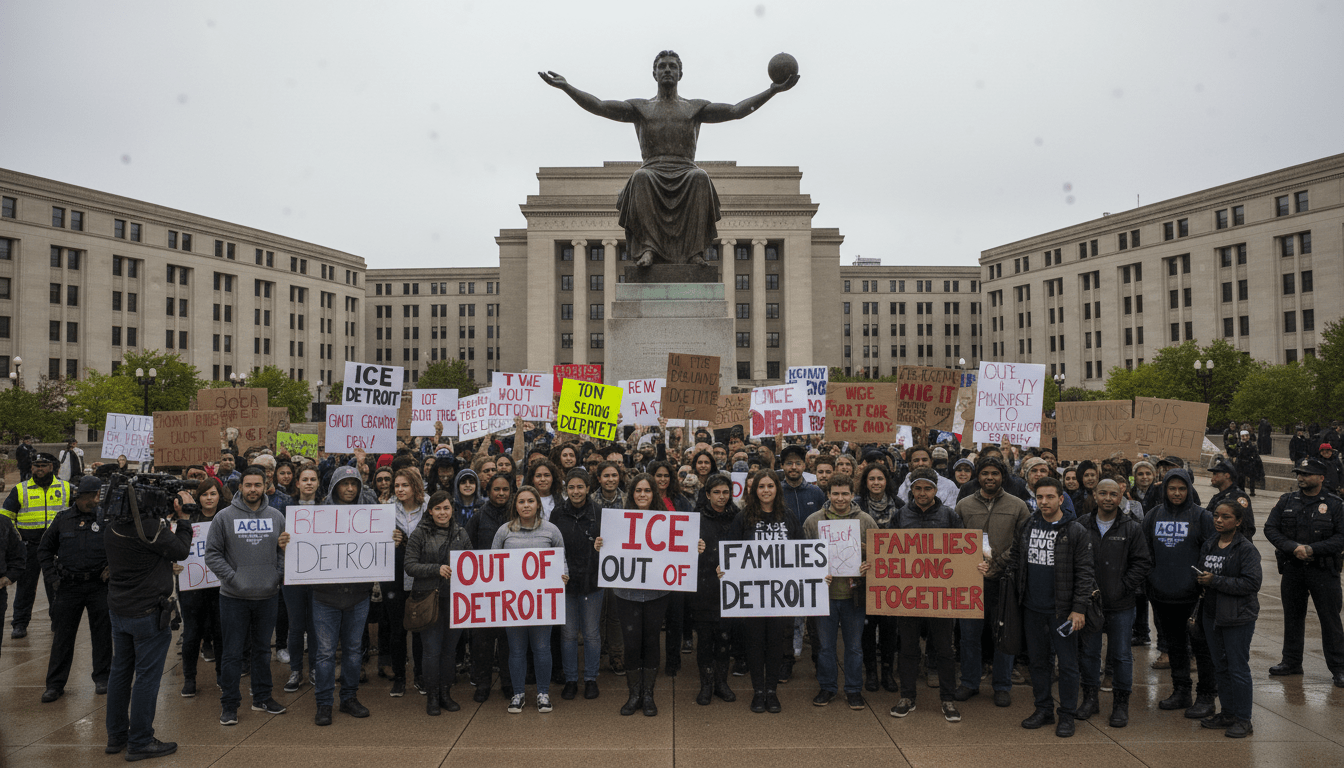
DETROIT — A coalition of local advocacy groups, community leaders, and concerned residents gathered in downtown Detroit this week to launch a renewed campaign demanding the complete removal of U.S. Immigration and Customs Enforcement (ICE) operations from the city. Under the banner “ICE Out of Detroit,” the organizers held a press conference and rally near the Coleman A. Young Municipal Center, urging city officials to strengthen protections for Detroit’s immigrant communities.
The demonstration comes amidst rising concerns regarding the interaction between local law enforcement and federal immigration authorities. While Detroit has long been considered a “Welcoming City,” activists argue that loopholes in local ordinances still allow for cooperation that undermines trust within the city’s diverse neighborhoods. The rally featured speakers from organizations such as the Michigan Immigrant Rights Center (MIRC) and Detroit Action, who called for an immediate end to the sharing of resident data with federal agencies.
The Demands: Ending the “Pipeline to Deportation”
At the core of the “ICE Out of Detroit” campaign is the demand for a strict severance of ties between the Detroit Police Department (DPD) and ICE. Organizers stated that despite existing policies intended to limit cooperation, instances of information sharing and joint task force operations continue to put undocumented residents at risk of deportation for minor infractions.
“We are here to say that Detroit must be a true sanctuary for all its residents, regardless of status,” said a spokesperson for the Detroit Hispanic Development Corporation during the press conference. “When local resources are used to do the work of federal immigration enforcement, it tears families apart and drains our city’s resources.”
The activists outlined a specific set of policy requests for the Detroit City Council and the Mayor’s office:
- Prohibit Information Sharing: A complete ban on city employees asking for or sharing immigration status with federal agents.
- End Task Force Participation: withdrawal of local officers from joint federal task forces that may engage in immigration enforcement.
- Deny Access to City Facilities: Barring ICE agents from accessing city jails or administrative buildings without a judicial warrant.
According to reports from the ACLU of Michigan, entanglement between local police and federal immigration enforcement often leads to racial profiling and constitutional violations. The organization has long argued that local police should focus on public safety rather than civil immigration matters, which fall under federal jurisdiction.
Impact on Detroit Residents and Neighborhoods
The presence of ICE in Detroit has profound implications for the daily lives of residents, particularly in neighborhoods with high immigrant populations such as Southwest Detroit. Community leaders emphasized that the fear of deportation creates a chilling effect, discouraging residents from engaging with essential city services.
“When people are afraid that a call to 911 could result in a family member being taken away, the entire city becomes less safe,” stated a representative from a local neighborhood association. This lack of trust hinders police investigations, as witnesses and victims of crime may hesitate to come forward.
For more on how community safety intersects with local policy, read our coverage on Detroit neighborhoods and community policing efforts.
Beyond public safety, the economic impact is significant. Immigrant-owned businesses are a staple of Detroit’s revitalization. Small business owners in the Vernor Highway corridor have reported that rumors of ICE activity can result in immediate drops in foot traffic and revenue. Creating a stable environment free from the threat of sudden raids is viewed by economic development experts as crucial for sustaining local commerce.
Background & Data on Immigration Enforcement
Detroit’s relationship with immigration enforcement is complex. In 2007, the Detroit City Council passed an ordinance preventing police from asking about immigration status during routine stops. However, federal data suggests that enforcement actions in the region have fluctuated over the last decade.
According to data tracked by the Transactional Records Access Clearinghouse (TRAC) at Syracuse University, immigration court filings in Michigan have seen various spikes corresponding with shifts in federal administration priorities. The data underscores the activists’ argument that without rigid local protections, federal waves of enforcement will continue to impact Detroit families.
The economic contribution of immigrants in the region is substantial. Data from the New American Economy indicates that immigrants in the Detroit metro area contribute billions of dollars to the local GDP and support thousands of jobs. The “ICE Out of Detroit” movement frames their demands not just as a human rights issue, but as an economic necessity for the city’s continued growth.
For further reading on the city’s economic landscape, see our report on Detroit economy and small business growth.
What Happens Next
Following the rally, organizers marched to the steps of the City Council to deliver a petition signed by thousands of Detroit residents. The City Council is expected to review the demands in upcoming sessions, though no official vote on new ordinances has been scheduled yet.
The Detroit Police Department has previously maintained that they do not enforce federal immigration laws. However, clarification on the extent of cooperation in joint task forces remains a point of contention. As the “ICE Out of Detroit” campaign gains momentum, city officials will likely face increased pressure to clarify Detroit’s stance as a sanctuary city in practice, not just in name.
Residents looking to get involved or learn more about the city’s current policies can attend the next public City Council meeting or visit the Department of Civil Rights, Inclusion, and Opportunity website for official resources.