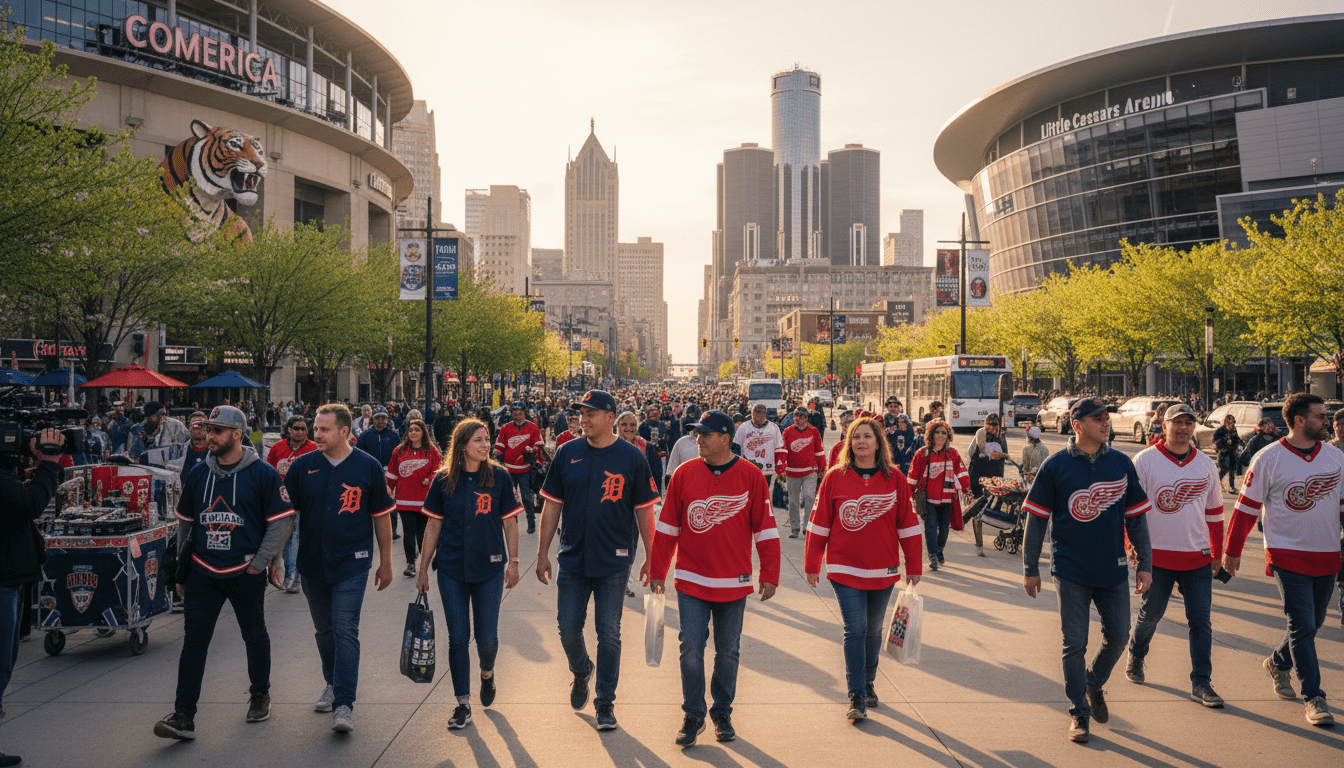
As the winter frost finally recedes from the Woodward Corridor, the anticipation for Detroit sports spring 2026 has reached a fever pitch. Downtown Detroit is preparing for one of its busiest athletic seasons in recent memory, driven by a converging schedule that sees the Detroit Tigers returning to Comerica Park while the Red Wings and Pistons navigate the critical final stretches of their respective regular seasons at Little Caesars Arena.
For city officials and business owners, the upcoming weeks represent more than just games on a calendar; they signal a massive economic mobilization for the District Detroit area. With Opening Day scheduled for early April and playoff implications looming for the city’s winter teams, the hospitality and transit sectors are bracing for hundreds of thousands of visitors.
Tigers Opening Day 2026: A Renewed Optimism
The centerpiece of the spring calendar remains the Detroit Tigers Home Opener. After a promising finish to the 2025 campaign, the franchise enters the 2026 season with heightened expectations. The maturation of the team’s young core has reinvigorated a fanbase that has been hungry for sustained success.
According to ticket sales data released by Ilitch Sports + Entertainment, presale figures for the opening homestand are tracking 15% higher than the previous year. This surge suggests that the rebuilding phase is viewed as complete in the eyes of many locals, who are ready to pack Comerica Park.
“There is a palpable difference in the energy this year,” said Marcus Johnson, a long-time season ticket holder from Corktown. “In previous years, Opening Day was just a party. In 2026, it feels like the start of a competitive window. The city feeds off that confidence.”
The Tigers organization has also planned extensive festivities around the park, including the expansion of the gathered fan zones and live music stages that utilize the Columbia Street promenade, effectively linking the baseball stadium with the activity at the Fox Theatre and Little Caesars Arena.
Economic Impact on The District Detroit
The convergence of Detroit sports spring 2026 events is projected to generate significant revenue for local commerce. The Detroit Metro Convention & Visitors Bureau notes that spring sports tourism is a vital artery for the downtown economy, supporting not just the venues, but the ecosystem of restaurants, hotels, and retail shops that surround them.
Local restaurateurs are already adjusting staffing levels to accommodate the influx. Sarah Miller, general manager of a popular gastropub on Woodward Avenue, explained the logistical challenge of overlapping game days.
“When you have a Tigers day game followed by a Red Wings night game, that is a ‘doubleheader’ for the hospitality industry,” Miller said. “We are doubling our inventory orders for the first week of April. It’s not just about the revenue; it’s about managing the flow of people moving between the venues.”
This economic boost extends beyond food and beverage. Hotel occupancy rates in the Central Business District are projected to exceed 90% during the opening weekend, a figure usually reserved for major conventions or festivals. This density is a testament to the city’s growing reputation as a destination for sports tourism.
Playoff Implications at Little Caesars Arena
While baseball returns to the diamond, the atmosphere inside Little Caesars Arena is tense for different reasons. Both the Detroit Red Wings and the Detroit Pistons are entering the final phase of their schedules, and the stakes for the 2026 postseason are high.
For the Red Wings, specifically, this spring represents a critical juncture. With the Atlantic Division race tighter than ever, every point secured in late March and April is pivotal. The potential for playoff hockey returning to Woodward Avenue has energized the fanbase, creating a dual-threat environment of excitement alongside the baseball festivities.
For detailed coverage on the city’s infrastructure projects supporting these events, read our report on Detroit’s evolving transit infrastructure.
Impact on Detroit Residents
While the economic forecast is sunny, the influx of visitors presents logistical challenges for Detroit residents, particularly those living in the Midtown and Downtown neighborhoods. The City of Detroit’s Department of Public Works has issued advisories regarding road closures and traffic patterns surrounding the stadiums.
Residents should expect:
- Increased Traffic Congestion: Heavy delays are expected on I-75 and the Lodge Freeway starting two hours prior to game times.
- Parking Scarcity: Surface lots and garages in the District Detroit area will likely implement dynamic pricing, with costs significantly higher during overlapping event days.
- Transit Alternatives: The QLine and People Mover will operate on extended hours to facilitate movement without cars. Officials are strongly encouraging locals to utilize the expanded regional transit options to mitigate gridlock.
“We love the energy, but the parking situation does get difficult for residents,” said Elena Rodriguez, a resident of the Brush Park neighborhood. “You learn to plan your grocery runs around the inning schedule. It’s the price you pay for living in the heart of the action, and honestly, seeing the streets full of people is worth the headache.”
Safety and Security Measures
In preparation for the Detroit sports spring 2026 surge, the Detroit Police Department (DPD) has collaborated with venue security to ensure a safe environment. DPD Chief James White (or the acting chief in 2026) has emphasized a high-visibility strategy.
New protocols include increased foot patrols in the corridors between parking areas and venues, as well as enhanced lighting in alleyways surrounding the entertainment district. The city is also leveraging real-time traffic monitoring to adjust signal timing, helping to flush traffic out of the downtown core efficiently post-game.
Future Outlook
The spring of 2026 serves as a barometer for Detroit’s capacity to host simultaneous major events. Following the successful hosting of the NFL Draft in 2024, the city has continued to refine its crowd management and hospitality capabilities.
As the Tigers take the field and the winter teams fight for playoff positioning, Detroit is showcasing its resilience and vitality. For the local economy, the hope is that this spring momentum carries through to the summer months, solidifying the city’s status as a premier sports capital in the Midwest.