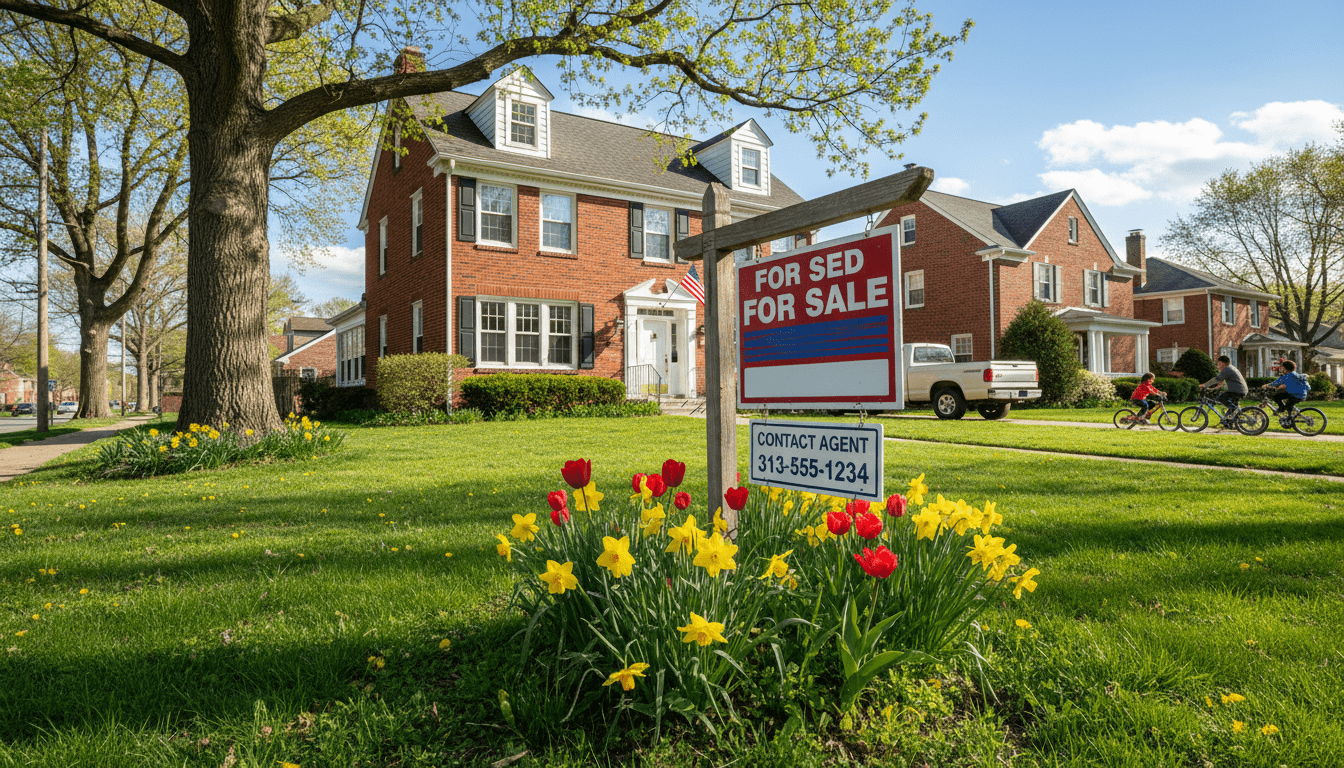
As winter begins to recede across Southeast Michigan, the Detroit home buying season 2026 is officially underway, bringing with it a complex mix of optimism and challenges for prospective homeowners. Real estate analysts and local agents report that activity has picked up earlier than usual this year, signaling a robust start to the spring housing market in Detroit.
While interest rates have stabilized compared to the volatility seen in previous years, inventory levels within the city limits remain a critical hurdle. Potential buyers are finding themselves in competitive situations, particularly for move-in ready homes in stabilized neighborhoods such as Bagley, University District, and the increasingly popular East English Village.
Spring Housing Market Trends in 2026
Data from early 2026 indicates that the traditional spring rush is no longer waiting for April showers. According to reports from the Detroit Association of Realtors, listing views and open house attendance surged in late February, suggesting significant pent-up demand.
Market analysts attribute this shift to buyers acclimating to the “new normal” of mortgage rates, which have settled into a predictable range after years of fluctuation. However, the primary driver of the 2026 market remains the scarcity of quality stock. While new developments are breaking ground, the supply of renovated, single-family historic homes cannot keep pace with the growing interest from both local first-time buyers and returning expatriates.
“The inventory shortage is the defining characteristic of the Detroit home buying season 2026,” said a representative from a local housing advocacy group during a recent town hall. “We are seeing multiple offers on properties that are priced correctly, a trend that was less prevalent in the cooler months of 2025.”
Impact on Detroit Residents
For longtime Detroit residents, the evolving market presents a double-edged sword. Rising property values are increasing equity for existing homeowners, contributing to generational wealth building—a key goal of city administrators. However, for renters looking to transition to ownership, the barrier to entry is rising.
Affordability remains a central topic of discussion. While Detroit homes are still significantly more affordable than the national average, the cost of rehabilitation and rising insurance premiums are factors that buyers must calculate into their monthly budgets. The Detroit neighborhood revitalization efforts have successfully improved amenities in many areas, but they have also led to increased competition for properties that were once overlooked.
Local housing counselors emphasize the importance of preparation. Residents are encouraged to secure mortgage pre-approvals well in advance, as the window to make an offer on a desirable home is shrinking. The days of lingering listings in prime neighborhoods appear to be over for this cycle.
Incentives and Assistance Programs
To combat affordability concerns, the City of Detroit and various non-profit partners are continuing to push aggressive homebuyer assistance programs. The Detroit Down Payment Assistance Program remains a vital tool for residents. According to the City of Detroit official website, these programs are designed to help legacy residents compete against cash-heavy investors.
In 2026, the focus has shifted slightly toward aiding with “appraisal gaps”—situations where the agreed-upon purchase price exceeds the bank’s appraised value of the home, a common issue in rapidly appreciating neighborhoods where comparable sales data (comps) lags behind current market fervor. By bridging this gap, the city hopes to ensure that financing doesn’t fall through for qualified local buyers.
Furthermore, local banks have introduced specific loan products aimed at the spring housing Detroit market, offering lower down payment requirements for buyers purchasing in specific census tracts targeted for redevelopment.
Neighborhoods to Watch
While Downtown and Midtown remain premium markets, the real story of the 2026 season is happening in the neighborhoods.
- Bagley & Fitzgerald: These areas continue to see strong demand due to their stock of brick colonials and proximity to the Livernois Avenue of Fashion.
- East English Village: Offering a distinct architectural charm, this neighborhood is drawing buyers priced out of the Grosse Pointes but seeking similar amenities.
- Southwest Detroit: With continued commercial development, residential interest is expanding outward from the Hubbard Farms hub.
Real estate data suggests that “turnkey” properties in these areas are selling within 10 to 14 days of listing, provided they are priced in alignment with recent comps.
The Investor Landscape
Another factor influencing the buy home Detroit spring landscape is the changing behavior of investors. Unlike the bulk-buying frenzy of the mid-2010s, the investor profile in 2026 is more nuanced. There is a higher concentration of small-scale developers focusing on high-quality renovations rather than slumlords holding vacant properties.
This shift is partly due to stricter code enforcement and the implementation of rental registry requirements. While this improves the quality of housing stock, it also means that the days of picking up livable homes for rock-bottom prices are largely in the past. Retail buyers are now competing with flippers who have the capital to purchase distressed properties cash, renovate them, and list them at a premium.
Looking Ahead: The Remainder of 2026
As the season progresses, experts predict that inventory may loosen slightly as sellers who were on the fence decide to capitalize on current valuations. However, demand is expected to remain high through the summer months.
For those looking to navigate the Detroit home buying season 2026, the consensus is clear: education and speed are paramount. Understanding property tax assessments is also crucial, as recent updates to the assessment process have changed the financial calculus for many properties. Readers can learn more about how these changes affect monthly payments in our report on Detroit property tax assessments 2026.
Ultimately, the 2026 spring market reflects a city in transition—balancing the need for investment with the imperative of inclusivity for its residents.