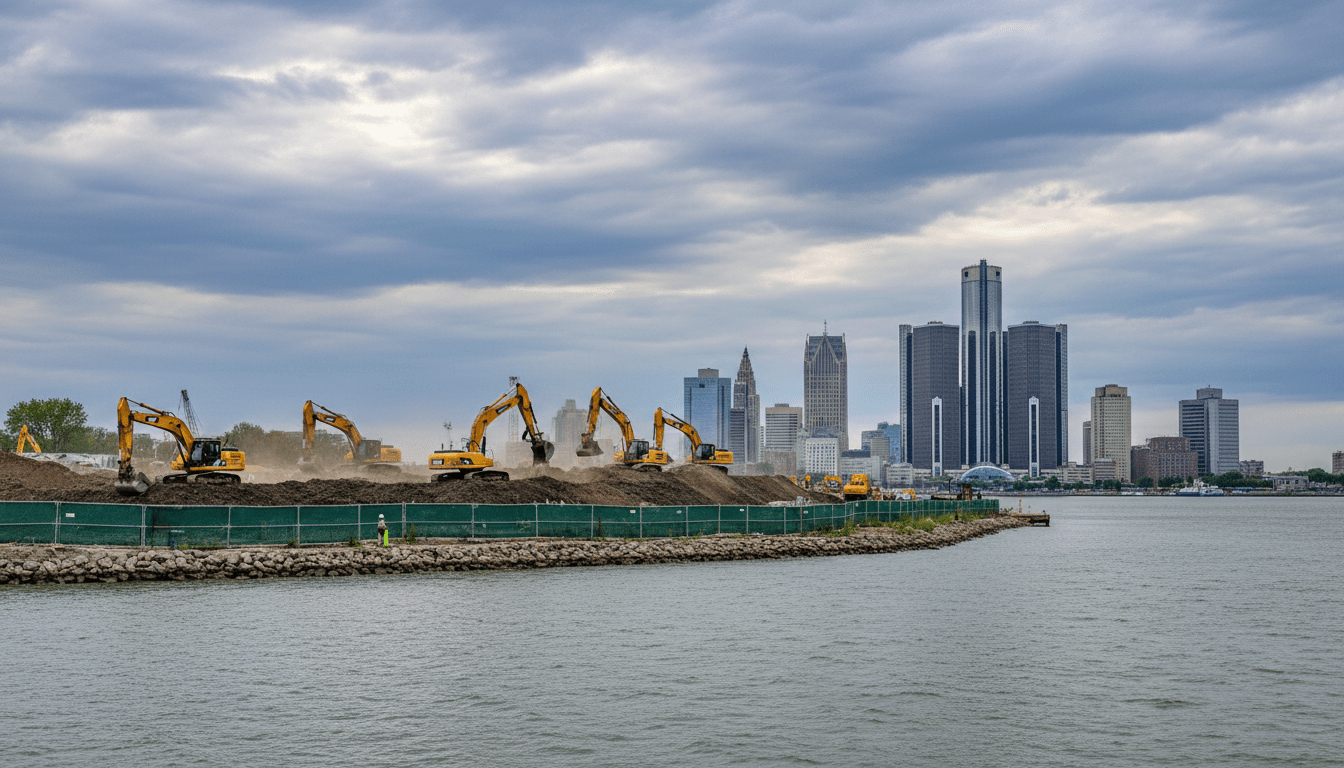
As the construction of the highly anticipated Ralph C. Wilson Jr. Centennial Park enters its critical phases, a coalition of local environmental advocates is raising new questions regarding the remediation standards applied to the historic industrial sites along the water. While the Detroit Riverfront Conservancy has been widely praised for transforming the city’s shoreline into a world-class destination, concerns linger regarding the "cap and cover" strategies used to manage decades of industrial soil contamination.
The Detroit Riverfront, once the engine of American manufacturing, is currently undergoing one of the most significant urban reclamations in the country. However, groups including members of the Detroiters Working for Environmental Justice and local neighborhood associations are urging city officials and the Michigan Department of Environment, Great Lakes, and Energy (EGLE) to ensure that the rush to complete the 22-acre park does not compromise long-term public health.
The core of the challenge involves the former Uniroyal Tire Company site, a parcel of land that sat vacant and contaminated for decades before being incorporated into the broader riverwalk expansion. Environmental groups are arguing that current climate data, specifically rising water levels in the Great Lakes system, requires a re-evaluation of how subterranean toxins are contained.
The Balance Between Development and Safety
The transformation of the West Riverfront into the Ralph C. Wilson Jr. Centennial Park is a centerpiece of Detroit’s ongoing development boom. The project promises sports coves, vast lawns, and interactive water features. However, the site’s history is steeped in heavy industrial use, leaving a legacy of heavy metals and volatile organic compounds (VOCs) in the soil.
According to documents filed with EGLE, the primary remediation strategy involves removing the most dangerous hotspots of contamination and placing a clean soil cap—a barrier of several feet of clean dirt and geotextiles—over the remaining impacted soil. This is a standard, federally approved method for brownfield redevelopment.
However, local activists argue that Detroit’s unique hydrology requires more caution. "We are seeing 100-year flood events happening every decade," said a representative from a local Jefferson-Chalmers community group during a recent town hall. "If the water table rises significantly, we need assurances that these capped contaminants won’t migrate into the river or up into the clean soil layer."
Officials from the Detroit Riverfront Conservancy have consistently maintained that all work meets or exceeds state and federal safety requirements. In previous statements, the Conservancy has highlighted their close partnership with the EPA and state agencies to ensure the site is safe for recreation.
Impact on Detroit Residents
For residents living in the adjacent neighborhoods, the stakes are high. The riverfront is not just a tourist attraction; it is the backyard for thousands of Detroiters who have limited access to green space. The promise of the new park is a massive quality-of-life improvement, but it relies on trust in the environmental cleanup.
"I want to take my grandkids there to play on the grass," said Martha Lewis, a resident of the nearby Gold Coast neighborhood. "But I remember what factories used to be there. I just want to know for sure that the dirt is safe, not just covered up."
The controversy highlights a broader tension in Detroit: the need for rapid economic revitalization versus the meticulous, often expensive process of undoing a century of environmental damage. Impact on nearby neighborhoods often includes rising property values, which is a double-edged sword, but the immediate concern remains health safety.
Background & Data: The Cost of Cleanup
Remediating the Detroit Riverfront is an expensive undertaking. According to data from the U.S. Environmental Protection Agency (EPA), millions of dollars from the Great Lakes Restoration Initiative have already been funneled into the Detroit River Area of Concern to remove toxic sediments. The Ralph C. Wilson Jr. Foundation committed $50 million specifically for the park’s development and endowment, a portion of which goes toward site preparation.
However, total excavation—digging up all contaminated soil and hauling it to a hazardous waste landfill—is often cost-prohibitive for projects of this scale. Estimates for total removal can run into the hundreds of millions, potentially stalling development for decades. The "capping" method is a compromise that allows land to be returned to public use safely and quickly, provided the cap is maintained.
City of Detroit records indicate that the site will be subject to ongoing monitoring. This includes regular testing of groundwater and soil vapor to ensure the containment measures hold up over time. Yet, environmental challengers want these monitoring protocols to be more transparent and accessible to the public via real-time data dashboards.
What Happens Next
The Detroit Riverfront Conservancy is pushing forward with construction, aiming for a grand opening of the park in 2025. In response to community feedback, planners have increased the number of trees and rain gardens in the design, which serve as "green infrastructure" to help manage stormwater runoff naturally.
Environmental groups are expected to present a formal request to the City Council later this month, asking for an independent environmental audit of the final grading phase before the park opens. While it is unlikely to halt construction, the pressure may lead to stricter post-construction monitoring requirements.
As Detroit continues to redefine its relationship with the river, the scrutiny on these projects serves as a reminder: the path from industrial rust belt to green recreational hub is complex, and the community intends to hold developers accountable every step of the way.