The landscape of Detroit is undergoing a visible transformation, not just in its skyline, but in its energy infrastructure. As the city moves toward the 2026 calendar year, the municipal government and local utility partners are accelerating a series of ambitious initiatives designed to pivot the historic “Motor City” into a regional leader for green energy. These projects, ranging from large-scale solar arrays to localized grid modernization, represent a fundamental shift in how Detroit manages its environmental footprint and its economic future.
According to the City of Detroit’s Office of Sustainability, the next two years are critical for achieving the milestones laid out in the Detroit Climate Strategy. This roadmap prioritizes reducing greenhouse gas emissions and increasing the city’s resilience to extreme weather. Central to this strategy is the expansion of renewable energy sources, which local officials say will provide both environmental benefits and long-term cost savings for municipal operations.
The Rise of Solar Neighborhoods
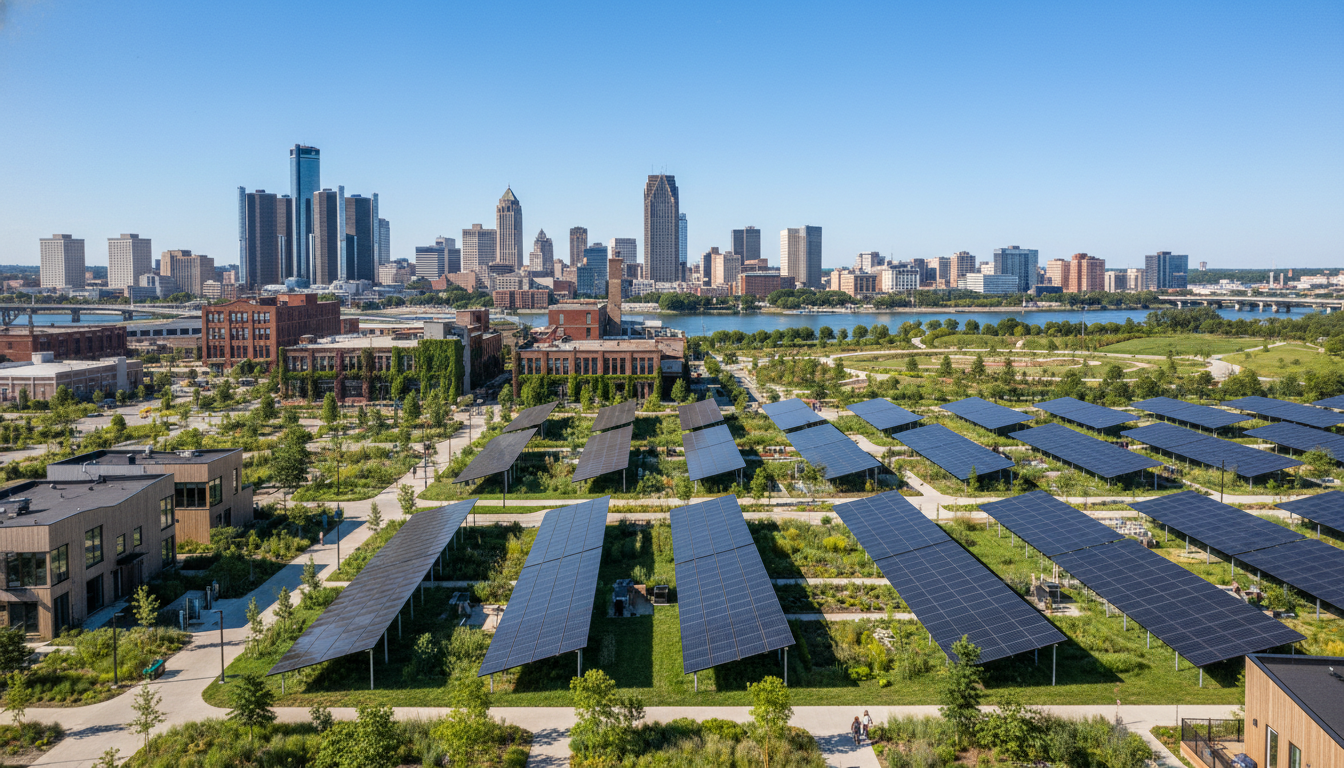
Perhaps the most discussed component of the 2026 outlook is the implementation of the “Solar Neighborhoods” initiative. This program seeks to repurpose approximately 250 acres of vacant, city-owned land into solar arrays. Unlike traditional industrial solar farms, these installations are designed to exist within city limits, specifically in neighborhoods where land has remained underutilized for decades. The project aims to generate enough clean electricity to power all city-owned buildings, effectively neutralizing the municipal government’s carbon footprint.
The administration of Mayor Mike Duggan has emphasized that this project is as much about neighborhood stabilization as it is about green energy Detroit initiatives. By converting blighted areas into managed solar fields, the city intends to reduce maintenance costs and provide community benefits. Data from the City of Detroit indicates that residents living adjacent to these solar fields will receive financial incentives, such as energy efficiency home repairs, as part of the land-use agreement. This approach seeks to ensure that the transition to renewable energy directly benefits the people living in the affected areas.
Impact on Detroit Residents
For the average Detroiter, the shift toward sustainability is expected to manifest in two primary ways: improved air quality and reduced energy burdens. Detroit has historically faced some of the highest energy costs in the country relative to household income. A report from the Michigan Department of Environment, Great Lakes, and Energy (EGLE) highlights that low-income households in urban centers often spend upwards of 10% of their income on utilities.
Local advocacy groups, such as the Detroiters Working for Environmental Justice, have pointed out that the increase in renewable energy Detroit sources could stabilize long-term pricing by reducing reliance on volatile fossil fuel markets. Furthermore, the 2026 goals include the expansion of community-based weatherization programs. These programs are designed to work in tandem with new energy sources, ensuring that homes are efficient enough to maximize the benefits of a cleaner grid.
Additionally, the transition is expected to spark local job creation. The installation and maintenance of solar arrays and EV charging stations require a skilled workforce. Several local non-profits are already partnering with community colleges to provide vocational training focused on green technologies, ensuring that the labor needed for Detroit’s sustainability projects comes from within the city limits.
Grid Modernization and EV Infrastructure
Beyond solar power, the city is working closely with DTE Energy to modernize the electrical grid. A modernized grid is essential for supporting the influx of electric vehicles (EVs) expected by 2026. As Detroit’s automakers—Ford, GM, and Stellantis—continue to shift their production toward electric fleets, the city’s infrastructure must keep pace. This includes the installation of hundreds of new public charging stations across various Detroit neighborhoods to ensure that EV ownership is accessible to all residents, not just those with private garages.
DTE Energy’s “CleanVision” plan, which has been filed with the Michigan Public Service Commission, outlines a faster retirement of coal-fired plants and a significant increase in wind and solar investments. By 2026, the utility aims to have integrated more smart-grid technology that can better manage peak demand and reduce the frequency of power outages, a recurring issue that has frustrated residents in recent years.
Background & Data on Detroit Sustainability
The push for a greener Detroit is backed by significant federal and state support. The Inflation Reduction Act (IRA) has provided a windfall of tax credits and grants that the city is utilizing for Detroit infrastructure developments. According to data from the U.S. Census Bureau and federal energy reports, Detroit is among the top Midwestern cities currently applying for federal environmental justice grants.
Historically, Detroit’s energy was dominated by coal and natural gas. However, the 2023 Michigan clean energy legislation mandates that utilities reach 100% clean energy by 2040. The 2026 milestones serve as the first major checkpoint in this multi-decade transition. Currently, renewable energy accounts for roughly 15% of the regional energy mix, a number that is projected to rise significantly as the solar neighborhoods come online.
What Happens Next
As 2025 progresses, Detroiters can expect to see more public hearings regarding the placement of solar arrays and the rollout of new transit initiatives. The Detroit Department of Transportation (DDOT) is also expected to increase its fleet of electric buses, further reducing the carbon output of the city’s public sectors.
For more detailed information on municipal energy plans, residents can visit the City of Detroit Office of Sustainability website. The path to 2026 is paved with logistical challenges, particularly regarding land rights and grid capacity, but the momentum suggests that Detroit is committed to shedding its heavy-industry past in favor of a more sustainable, electrified future. The success of these projects will likely serve as a blueprint for other post-industrial cities looking to reinvent themselves in the age of climate change.