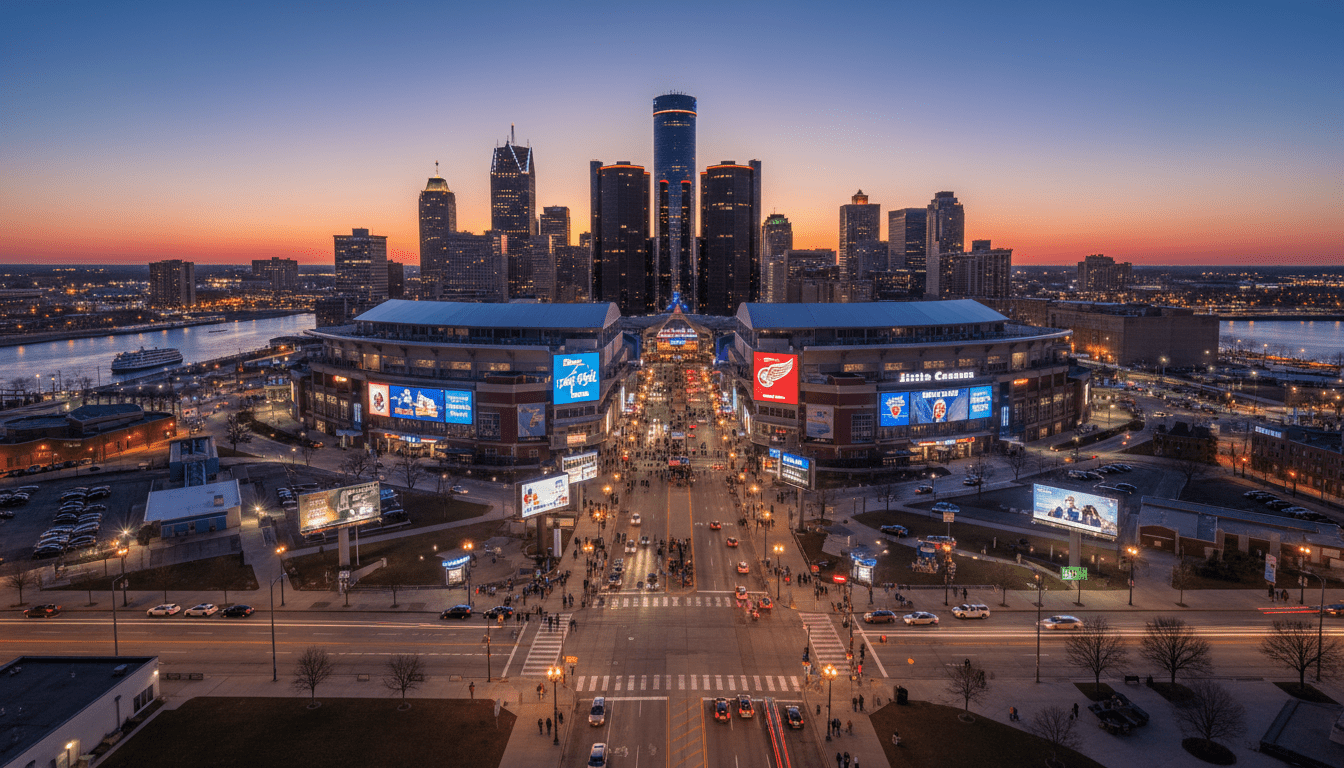
The professional sports landscape in Detroit is currently navigating a period of dramatic divergence, with the city’s four major franchises finding themselves at vastly different stages of their respective competitive cycles. While the Detroit Red Wings and Detroit Tigers have shown significant signs of resurgence, offering the fanbase renewed hope for postseason consistency, the Detroit Pistons remain mired in a challenging rebuilding phase that has tested the patience of the local market.
This shift in momentum is more than just a matter of wins and losses; it represents a critical juncture for the Detroit sports market. As downtown venues like Little Caesars Arena and Comerica Park become focal points for urban revitalization, the performance of these teams directly influences foot traffic, local hospitality revenue, and the overall economic sentiment of the Woodward Corridor.
The Red Wings’ Steady Ascent Under Yzerman
The Detroit Red Wings have entered a phase of heightened expectations following several years of a methodical ‘Yzer-plan’ rebuild led by General Manager Steve Yzerman. According to official NHL attendance data, the Red Wings have maintained one of the highest arena capacity percentages in the league, reflecting a fanbase that senses a return to the ‘Hockeytown’ glory days. The addition of veteran leadership alongside a core of young talent like Moritz Seider and Lucas Raymond has positioned the team as a legitimate playoff contender in the Atlantic Division.
Reporting from the Detroit Free Press indicates that the organization’s focus has shifted from merely accumulating draft capital to fine-tuning a roster capable of sustained postseason runs. The economic impact of a successful Red Wings team is substantial for downtown business owners, who rely on the 41-game home schedule to drive traffic to bars and restaurants in The District Detroit.
Tigers Provide a Summer Spark
On the diamond, the Detroit Tigers recently defied preseason projections with a late-season surge that captivated the city. Led by American League Cy Young contender Tarik Skubal and a rotation of versatile young arms, the Tigers have transitioned from a developmental squad to a team that expects to win. This turnaround has revitalized interest in Comerica Park, which saw a notable uptick in television ratings and gate receipts during the latter half of the 2024 season.
As the front office looks toward future free-agent acquisitions, the Tigers are increasingly viewed as a model for how the Detroit sports market can respond to a winning product. The synergy between the Tigers and Red Wings—both owned by Ilitch Companies—creates a year-round economic engine for the city’s core. Local analysts suggest that the Tigers’ success has provided a blueprint for organizational patience and scouting efficacy.
Pistons Face a Critical Crossroads
In contrast to the upward trajectory of their neighbors, the Detroit Pistons are grappling with the fallout of a historically difficult period. Following a season marked by a record-breaking losing streak, the franchise has undergone a total leadership overhaul. The hiring of Trajan Langdon as President of Basketball Operations and J.B. Bickerstaff as Head Coach signals a move away from the previous regime’s strategy.
The Detroit sports market has remained cautious regarding the Pistons’ prospects. While Cade Cunningham remains a foundational piece, the team must prove it can translate high draft picks into a cohesive winning culture. Data from the NBA suggests that market engagement often fluctuates more sharply with basketball than other sports, making the current rebuilding effort a high-stakes endeavor for the Gores ownership group.
Impact on Detroit Residents and Local Economy
The performance of these teams has tangible consequences for Detroit residents. Beyond the emotional highs and lows of fandom, the sports industry is a major employer in the city. From stadium operations and security to the seasonal staff at nearby hotels, thousands of jobs are tied to the health of the Detroit sports market. When teams are winning, the increased demand for metro Detroit tourism results in higher hotel occupancy rates and tax revenue for municipal services.
According to the City of Detroit’s economic reports, the concentration of four major sports teams within a walkable downtown radius is a unique competitive advantage for the city. Residents in neighborhoods like Midtown and Corktown see the secondary effects through improved infrastructure and increased investment in public transit options, such as the QLine, which services the arena district.
Background and Data: Market Resilience
Despite the varying success rates of the teams, the Detroit sports market remains one of the most resilient in the United States. A study by the University of Michigan’s sports management faculty noted that Detroit fans exhibit a high level of ‘brand loyalty,’ continuing to support teams even during losing seasons. However, the study also found that the ‘vibrancy gap’ between a winning season and a losing one can account for millions of dollars in lost local spending.
Current data shows that the combined economic footprint of the four major teams exceeds $1 billion annually when accounting for direct spending, media rights, and ancillary developments. This makes the current rise of the Red Wings and Tigers particularly significant for the city’s post-pandemic recovery efforts.
What Happens Next
Looking ahead, the next twelve months will be pivotal for the city’s sports identity. The Red Wings are under pressure to break their playoff drought, while the Tigers are expected to be aggressive in the offseason to solidify their status as contenders. For the Pistons, the focus will be on establishing a defensive identity and improving their winning percentage to regain the trust of a skeptical fanbase.
For more updates on local developments, residents are encouraged to visit the official City of Detroit website for information on stadium-area infrastructure projects. As the seasons change, the eyes of the sporting world will remain on Detroit, a city that continues to define itself through the grit and determination of its athletes and its fans.