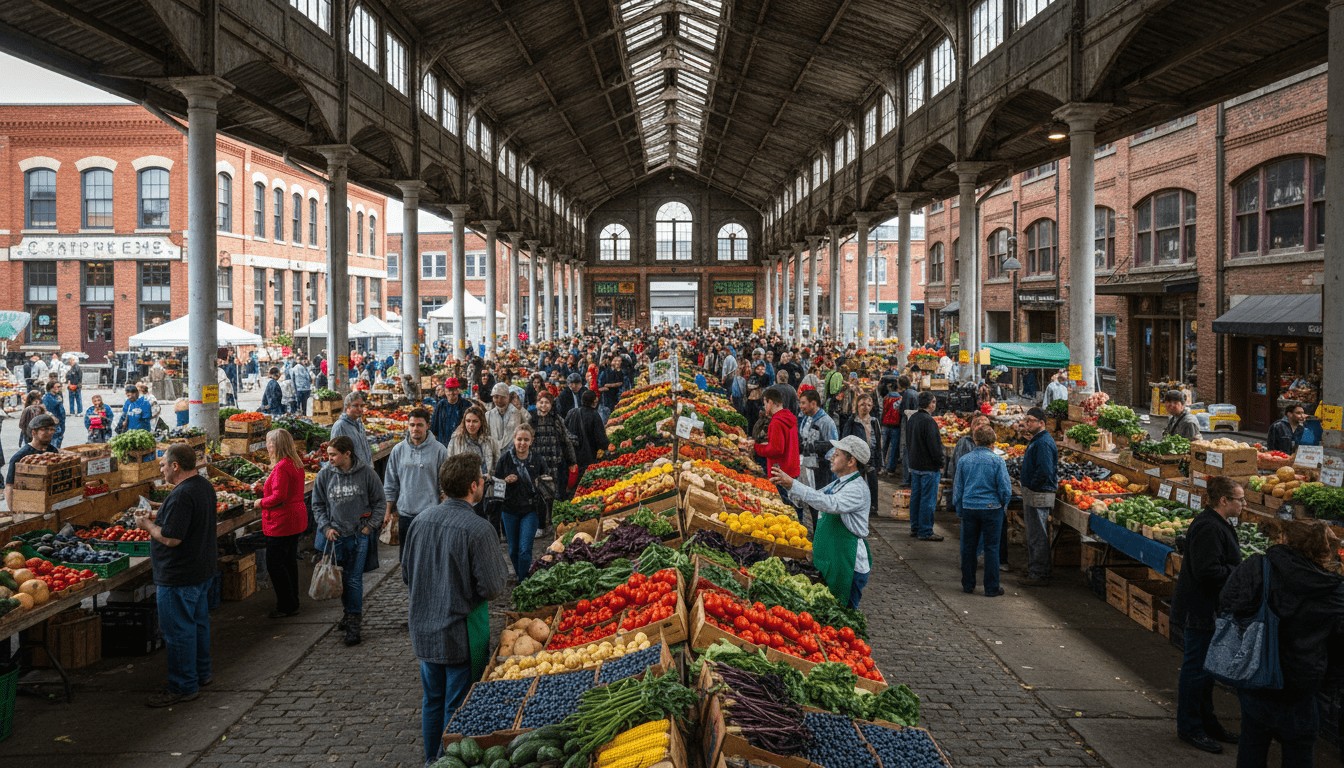
In a significant boost for the city’s culinary reputation, Detroit’s historic Eastern Market has been named one of the premier food destinations in the Midwest by several national travel and culinary publications. The recognition highlights the 150-acre district not just as a local grocery hub, but as a cornerstone of Michigan cuisine that attracts millions of visitors annually. As the largest historic public market district in the United States, Eastern Market has long served as the heartbeat of the city’s food economy, and this latest distinction cements its status as a vital city attraction.
A Growing Reputation for Michigan Cuisine
The Detroit market has evolved from a traditional wholesale distribution point into a multifaceted cultural destination. According to recent reports from the Eastern Market Partnership, the non-profit that manages the district, the market sees upwards of 40,000 visitors on a typical Saturday during the peak summer months. This influx of foot traffic is a primary driver for the regional food economy, providing a platform for hundreds of local vendors to showcase everything from seasonal produce to artisanal meats and specialty baked goods.
For many culinary experts, the appeal lies in the authenticity of the experience. Unlike highly manicured commercial spaces in other metropolitan areas, the Detroit market maintains a grit and history that resonates with modern travelers seeking genuine local experiences. The diversity of the offerings, which includes everything from generational family farms to new immigrant-led food startups, represents the broad spectrum of Midwest food traditions.
The Impact on Detroit Residents and Small Businesses
The benefits of this national recognition extend far beyond tourism. For Detroit residents, the market remains a critical point of access for fresh, affordable food. The Eastern Market Partnership has been instrumental in implementing programs like ‘Fresh Pick,’ which ensures that residents in underserved neighborhoods have access to Michigan-grown produce. According to the City of Detroit’s Economic Development Corporation, the market district supports thousands of jobs, ranging from logistics and food processing to retail and hospitality.
Local vendors often view the market as an incubator. “The Detroit market is where we tested our first recipes,” said one longtime vendor who recently expanded into a brick-and-mortar location in the nearby Detroit neighborhoods. This cycle of growth is essential for the city’s long-term economic health. When the market thrives, the surrounding local business ecosystem thrives with it, leading to increased property values and more robust community investment.
Data and Economic Context
The economic footprint of the market is substantial. Data from the Michigan Department of Agriculture and Rural Development (MDARD) suggests that food and agriculture contribute over $100 billion annually to the state’s economy. Eastern Market serves as the primary retail interface for this massive industry in Southeast Michigan. By connecting rural producers directly with urban consumers, the market reduces the carbon footprint of the local food supply chain while keeping more money within the state’s borders.
Furthermore, the district’s role in local business development cannot be overstated. According to the Eastern Market Partnership, the district is home to over 150 food-related businesses. These entities collectively form a food cluster that benefits from shared infrastructure, such as cold storage and distribution networks, which are often too expensive for individual small businesses to maintain on their own.
Infrastructure and the Future of the District
As the market’s popularity grows, city officials and district planners are looking toward the future. The ‘Eastern Market 2025’ strategy outlines several key initiatives aimed at preserving the district’s industrial character while making it more accessible to a growing population. These plans include improved pedestrian walkways, expanded parking solutions that do not infringe on the historic aesthetic, and increased residential options within the district to create a 24/7 community.
Transportation and infrastructure remain a high priority. The City of Detroit has been working to improve the Dequindre Cut Greenway, a non-motorized path that connects the market to the Detroit Riverfront. This connectivity has made the Detroit market a central node in the city’s evolving urban landscape, encouraging more residents to commute via bike or on foot, which aligns with broader city-wide sustainability goals.
Challenges Amid Growth
Despite the accolades, the district faces challenges common to rapidly developing urban areas. Rising rents in the surrounding area have raised concerns among some long-term residents and smaller vendors who fear being priced out of the very market they helped build. Maintaining a balance between high-end development and the market’s core mission of food accessibility is a delicate task for city planners and the Eastern Market Partnership board.
To address these concerns, the partnership has committed to maintaining a high percentage of stalls dedicated specifically to Michigan farmers. This ensures that even as the district becomes more polished and attractive to national tourists, its primary function as a working farmer’s market remains intact. The goal is to ensure that the Detroit market remains a place where all residents, regardless of socioeconomic status, can find high-quality, nutritious food.
What This Means for the Midwest Food Scene
Detroit’s success is also a win for the broader Midwest food scene. For decades, the region was often overlooked by coastal food critics, but the tide is turning. The recognition of the Detroit market as a top destination places it alongside famous markets in cities like Seattle or Philadelphia, proving that Michigan cuisine and Midwest food culture are world-class. As the market continues to evolve, it serves as a model for how legacy cities can leverage their historical assets to build a sustainable, inclusive, and vibrant modern economy.
Looking ahead, the fall harvest season is expected to bring record numbers to the district. With the national spotlight firmly fixed on Detroit, the market is poised for another year of growth, reinforcing its status as the premier city attraction for anyone looking to experience the true flavor of Michigan.