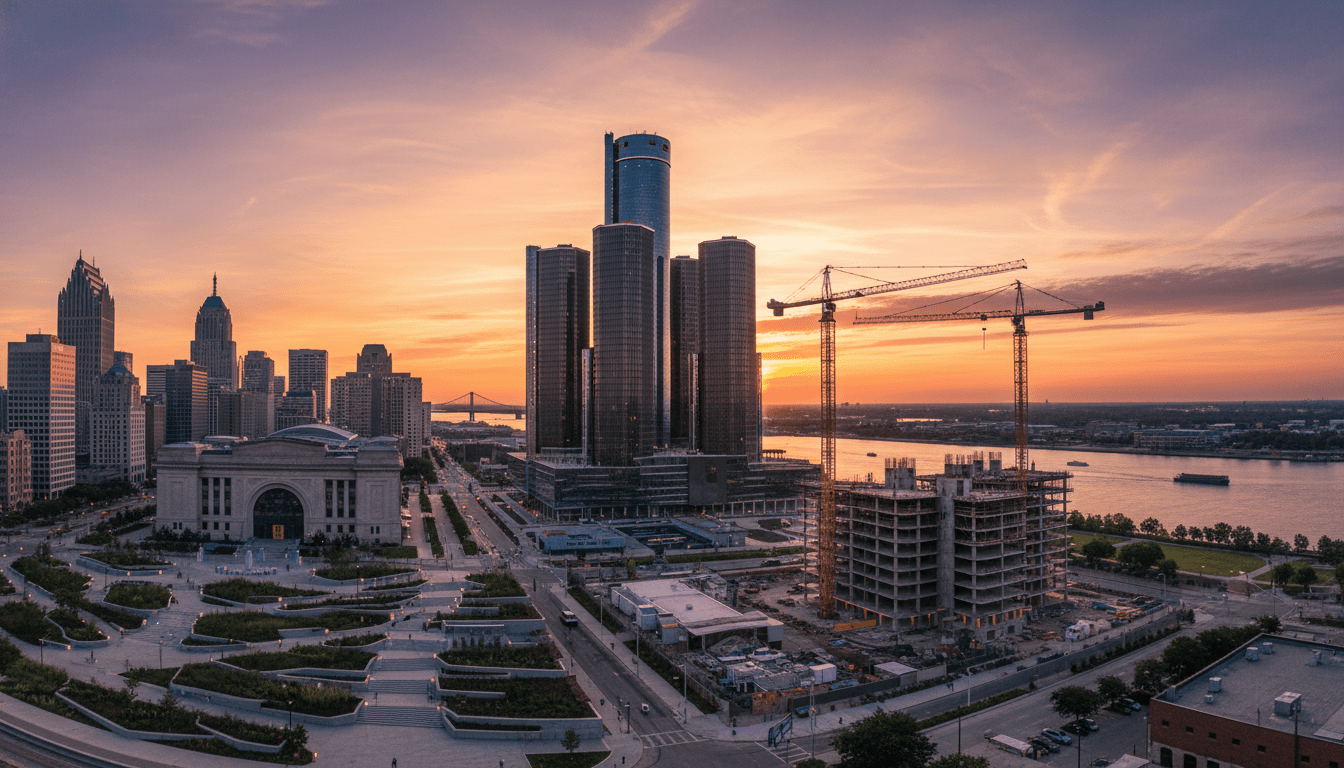
As the skyline of Michigan’s largest city continues its visible transformation, economists and city planners are shifting their focus toward a pivotal milestone: the Detroit economy 2026 outlook. Following the momentum generated by the 2024 NFL Draft and the completion of several high-profile downtown anchors, the city is transitioning from a period of recovery into a sustained phase of industrial and commercial maturation.
According to the City of Detroit’s latest financial reports, the municipal tax base has shown consistent growth, fueled largely by a resurgence in the manufacturing sector and an influx of white-collar professional services. The upcoming years are expected to capitalize on these foundations, with specific emphasis on the completion of the ‘District Detroit’ projects and the full operational integration of the Michigan Central innovation hub in Corktown.
Strategic Shifts in the Detroit Economy 2026
Data from the University of Michigan’s most recent Detroit Economic Outlook suggests that the city is poised to outpace many of its regional peers in terms of wage growth and employment stability through 2026. Researchers indicate that while the national economy may face headwinds, Detroit’s unique position—bolstered by billions in committed private investment—provides a buffer against broader market volatility.
A primary driver for the Detroit economy 2026 projections is the diversification of the local business landscape. While the automotive industry remains a cornerstone, the expansion of healthcare systems and financial services has created a more resilient economic environment. The Detroit Economic Growth Corporation (DEGC) has reported an uptick in small business applications, particularly in neighborhoods outside the 7.2-square-mile downtown core, indicating that the wealth generated in the center city is beginning to filter outward into residential corridors.
Impact on Detroit Residents and Local Neighborhoods
For the residents of Detroit, the 2026 forecast brings both opportunities and challenges. The rise in property values has significantly increased the net worth of long-term homeowners in areas like Bagely, University District, and East English Village. According to data from the U.S. Census Bureau, household income levels in several Detroit zip codes have seen their most significant percentage increases in three decades.
However, the City of Detroit has acknowledged the need to balance this growth with affordability. To mitigate the risk of displacement, the administration has doubled down on affordable housing mandates for new developments. “The goal is to ensure that the Detroit economy 2026 works for everyone, not just those moving into luxury lofts,” noted a representative from the Housing and Revitalization Department during a recent community meeting. Local residents are seeing the tangible effects through improved streetscapes, more frequent public transit options, and the rehabilitation of over 15,000 vacant structures since 2014, a trend expected to culminate in near-total blight elimination by late 2025.
The Landscape of Property Investment
Real estate analysts are closely monitoring the shift in Detroit property investment strategies. While speculative buying dominated the mid-2010s, the current market is defined by institutional investors and developers focused on long-term yields. The demand for multi-family housing remains at an all-time high, with occupancy rates in the downtown and Midtown sectors hovering near 95%.
Investors are increasingly looking toward the “North End” and “Northwestern” areas of the city, where infrastructure improvements are mirroring those seen in the more established Detroit neighborhood development projects. This geographic expansion of interest is critical for the stability of the Detroit economy 2026, as it creates a more contiguous map of economic activity. The expected completion of the Gordie Howe International Bridge in 2025 is also a major factor, with logistics and warehousing firms snatching up industrial land along the I-75 corridor in anticipation of increased trade volumes.
Infrastructure and Future Outlook
The state of Detroit’s infrastructure remains a central theme for the 2026 projections. The Michigan Department of Transportation (MDOT) has slated several major projects for completion over the next 24 months, including the total reconstruction of portions of I-94 and the enhancement of the Joe Louis Greenway. These projects are not merely aesthetic; they are viewed as essential conduits for commerce and talent attraction.
Looking ahead, the Detroit economy 2026 will likely be defined by how well the city integrates its new technological assets with its traditional industrial base. The “New Economy Initiative” and other local business programs are working to bridge the digital divide, ensuring that the local workforce is prepared for the high-tech manufacturing jobs being created at the Stellantis and GM Factory ZERO plants.
While risks such as interest rate fluctuations and global supply chain disruptions persist, the consensus among local stakeholders is one of cautious optimism. The structural changes implemented over the last decade have created a more transparent and business-friendly environment, making the 2026 economic landscape the most robust the city has seen in the modern era.