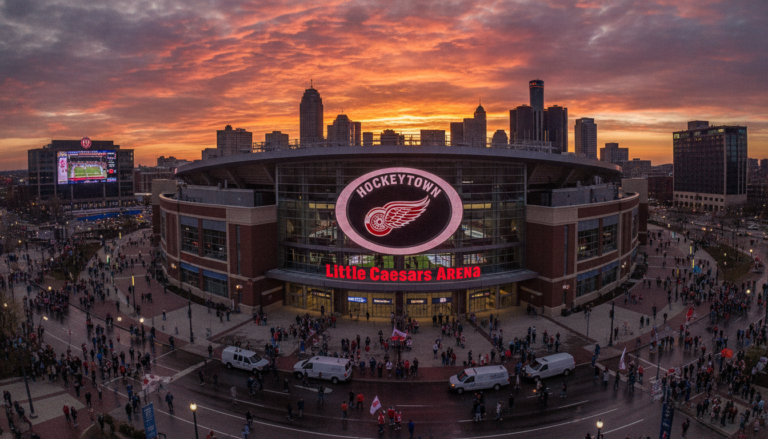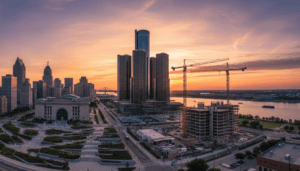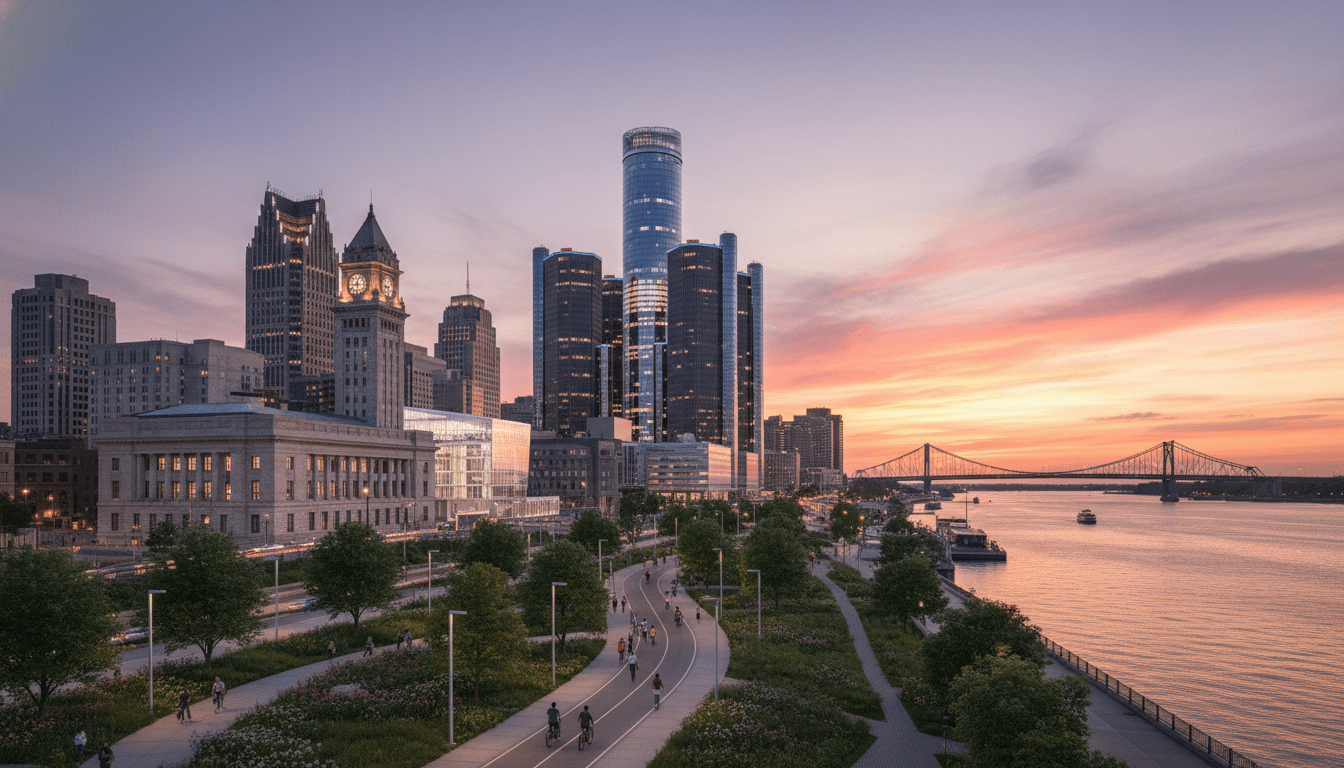
As the city of Detroit approaches 2026, the narrative of urban recovery has shifted toward one of sustained economic expansion. For years, the conversation surrounding the city focused on its emergence from bankruptcy, but new data suggests a fundamental change in the market’s maturity. From the completion of landmark skyscrapers to the stabilization of residential neighborhoods, the factors influencing the decision to invest in Detroit have evolved from speculative gambles to calculated strategic moves.
The Multi-Billion Dollar Skyline Transformation
Central to the renewed interest in the city is the unprecedented level of capital investment in the downtown core. According to the City of Detroit’s Planning and Development Department, several anchor projects are slated for full operational capacity by 2026. Bedrock’s Hudson’s Site development, a nearly $1.4 billion investment, is expected to reshape the city’s retail and residential landscape, providing a high-density anchor that hasn’t existed in decades.
Economic analysts point to these physical developments as indicators of long-term institutional confidence. When major corporations commit to multi-decade projects, it creates a ripple effect throughout the local economy. The Michigan Central innovation district, spearheaded by Ford Motor Company in Corktown, has already begun attracting a cluster of mobility and tech firms, shifting the city’s economic base toward high-tech research and development.
Impact on Detroit Residents and Neighborhoods
While the downtown skyline captures headlines, the most significant shift for those looking to invest in Detroit lies in the residential corridors. For long-term residents, the influx of capital has translated into rising property values and improved city services. However, the City of Detroit has implemented various community benefits agreements to ensure that growth does not lead to widespread displacement.
Local homeowners in areas like Bagely, Jefferson-Chalmers, and the University District have seen steady equity growth. According to data from the Detroit Land Bank Authority, the stabilization of the housing stock has moved beyond the ‘tipping point’ neighborhoods. For residents, this means increased access to home repair grants and a more robust local tax base to fund schools and public safety. Investors are increasingly looking at these stable residential zones rather than just the high-profile downtown corridor, recognizing the value in workforce housing.
Data-Driven Growth and Population Shifts
In a historic turn of events, data from the U.S. Census Bureau recently indicated that Detroit’s population has begun to stabilize and, in certain counts, show its first increase in decades. This demographic shift is a primary driver for the 2026 outlook. A growing population requires increased commercial services, fueling a demand for small businesses, grocery stores, and healthcare facilities.
Furthermore, the Southeast Michigan Council of Governments (SEMCOG) projections suggest that the regional economy is diversifying. While the automotive industry remains a cornerstone, the growth in healthcare, logistics, and insurance sectors provides a hedge against traditional manufacturing cycles. This economic resilience makes the decision to invest in Detroit more attractive to risk-averse institutional investors who previously bypassed the city.
Infrastructure as an Economic Engine
Infrastructure projects reaching milestones in 2026 are providing the literal foundation for this growth. The Joe Louis Greenway, a 27.5-mile looping trail system, is more than a recreational asset; it is a connectivity project designed to link disparate neighborhoods to employment hubs. Real estate trends show that properties within a half-mile of the greenway have seen increased interest and appraisal values.
“The connectivity offered by the Greenway is a game-changer for neighborhood accessibility,” noted a representative from a local community development corporation. “It allows for a non-motorized commute that connects residents to the waterfront and the inner-city core, making these areas significantly more viable for residential development.” You can find more details on these infrastructure updates on our dedicated development page.
The Role of Tech and Innovation Hubs
The 2026 landscape is also defined by Detroit’s emergence as a tech hub. The University of Michigan’s Center for Innovation, currently under construction in the District Detroit, is set to become a pipeline for talent. By 2026, the first waves of graduates and researchers are expected to begin scaling startups within the city limits. This academic presence provides a critical component of the ‘eds and meds’ economic model that has revitalized other Midwestern cities like Pittsburgh and Columbus.
External data from the Michigan Economic Development Corporation (MEDC) highlights that Detroit now ranks among the top cities in the nation for minority-owned business growth. The combination of lower entry costs compared to coastal cities and a highly supportive entrepreneurial ecosystem has made Detroit a magnet for the next generation of builders.
What Happens Next: The 2026 Outlook
Looking toward the remainder of the decade, the primary challenge for Detroit will be managing the pace of growth. City officials are currently focused on ensuring that the 2026 targets for affordable housing units are met. For those seeking to invest in Detroit, the focus is shifting toward sustainable, long-term holds rather than quick flips. The maturity of the market is evidenced by the presence of national REITs (Real Estate Investment Trusts) alongside local developers.
As the city prepares to host major national events and completes its current cycle of major construction, the window for early-stage investment is closing, replaced by a more stable, traditional urban market. The “Detroit comeback” narrative is effectively being retired in favor of a narrative of Detroit as a competitive, modern American metropolis with a clear path toward fiscal and social growth. Investors and residents alike are watching the 2026 markers as a sign that the city’s foundation is firmer than it has been in half a century.
For more information on city-led initiatives, visit the official City of Detroit Development portal.