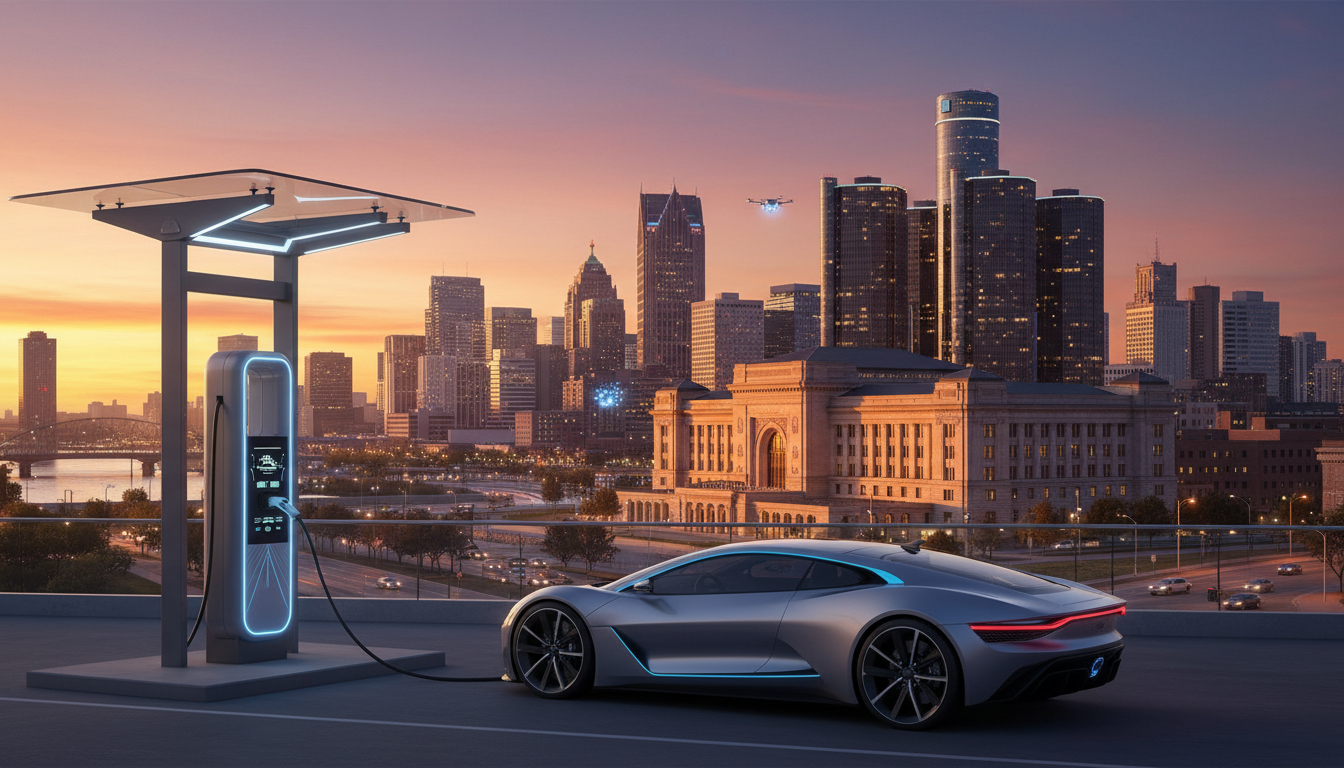
Detroit, the historic heart of the American automotive world, is currently navigating its most significant industrial evolution since the introduction of the assembly line. As the global automotive landscape pivots away from internal combustion engines, the EV industry in Detroit has become the primary catalyst for economic redevelopment, infrastructure upgrades, and workforce retraining. This shift is not merely a corporate trend but a fundamental restructuring of the city’s identity, supported by billions of dollars in public and private investment.
The Industrial Pivot: Billions in Investment
The transition to electric propulsion is being led by the city’s legacy automakers, who are transforming decades-old facilities into high-tech hubs. General Motors’ Factory ZERO, located on the border of Detroit and Hamtramck, stands as a prime example. The facility received a $2.2 billion investment to become the company’s first fully dedicated electric vehicle assembly plant. According to reports from the Michigan Economic Development Corporation (MEDC), such investments are critical for maintaining Michigan’s status as a global leader in automotive production. You can find more details on the official MEDC website regarding these strategic grants.
Similarly, Ford Motor Company has anchored its future in the Corktown neighborhood with the Michigan Central Innovation District. This 30-acre campus is designed to be a testing ground for the EV industry in Detroit, focusing on autonomous technology and sustainable mobility solutions. These projects are part of a broader trend of economic development updates that are reshaping the city’s skyline and tax base.
Impact on Detroit Residents: Jobs and Accessibility
For the average Detroiter, the rise of the EV industry in Detroit translates most directly into employment opportunities and environmental changes. The City of Detroit has partnered with local community colleges to create specialized training programs. These initiatives aim to transition workers who spent decades building traditional engines into roles focused on battery chemistry, high-voltage systems, and software integration.
According to the City of Detroit’s Office of Mobility Innovation, the goal is to ensure that the shift to green technology does not leave legacy workers behind. Beyond employment, the city is addressing “charging deserts” in residential neighborhoods. Many Detroiters living in multi-unit housing or homes without garages face barriers to EV ownership. The city is currently piloting curbside charging programs to ensure that the benefits of green cars are accessible to all residents, regardless of their housing situation. This focus on equity is a recurring theme in transportation infrastructure news across the region.
Infrastructure and Innovation in Corktown
Detroit is also home to groundbreaking infrastructure projects that are the first of their kind in the United States. In late 2023, the city debuted a wireless EV charging road in the Corktown district. This technology, developed by Electreon in partnership with the Michigan Department of Transportation (MDOT), allows specially equipped vehicles to charge their batteries while driving. This project serves as a lighthouse for the EV industry in Detroit, proving that the city is not just adopting existing technology but inventing new solutions for the global market.
Local officials emphasize that these pilot programs are essential for attracting tech talent. By turning Detroit’s streets into a living laboratory, the city is drawing engineers and software developers who might otherwise head to Silicon Valley. This influx of professional talent is stimulating local businesses, from restaurants to tech startups, creating a secondary economic boom tied directly to the automotive future.
Background & Data: The Economic Reality
Data from the U.S. Bureau of Labor Statistics and the Michigan Department of Treasury indicates that automotive manufacturing remains the largest single sector of the regional economy. However, the composition of this sector is changing. In 2023, investments in EV-related projects in Michigan reached record highs, with Detroit securing a significant portion of that capital. The federal Inflation Reduction Act has further accelerated this by providing tax incentives for domestic battery production, directly benefiting facilities located within the city limits.
Despite the optimism, challenges remain. The high cost of electric vehicles compared to traditional models continues to be a hurdle for widespread adoption among local consumers. Furthermore, the reliance on global supply chains for minerals like lithium and cobalt introduces volatility that local manufacturers must manage. Industry analysts suggest that while the growth of the EV industry in Detroit is inevitable, the pace will be dictated by consumer demand and the reliability of the regional power grid.
What Happens Next: The Road to 2030
Looking ahead, the city is preparing for a future where zero-emission vehicles are the standard rather than the exception. The Detroit Department of Transportation (DDOT) has already begun integrating electric buses into its fleet, reducing the carbon footprint of public transit and improving air quality in dense urban corridors. This move is aligned with the Detroit Climate Strategy, which aims to reduce greenhouse gas emissions citywide.
As the EV industry in Detroit continues to mature, the focus will likely shift from building the vehicles to maintaining the ecosystem around them. This includes secondary markets for battery recycling and the expansion of the public charging network. For a city that was once written off during the bankruptcy era, this electric resurgence represents more than just a change in technology—it is a revitalized blueprint for Detroit’s economic survival and growth in the 21st century.