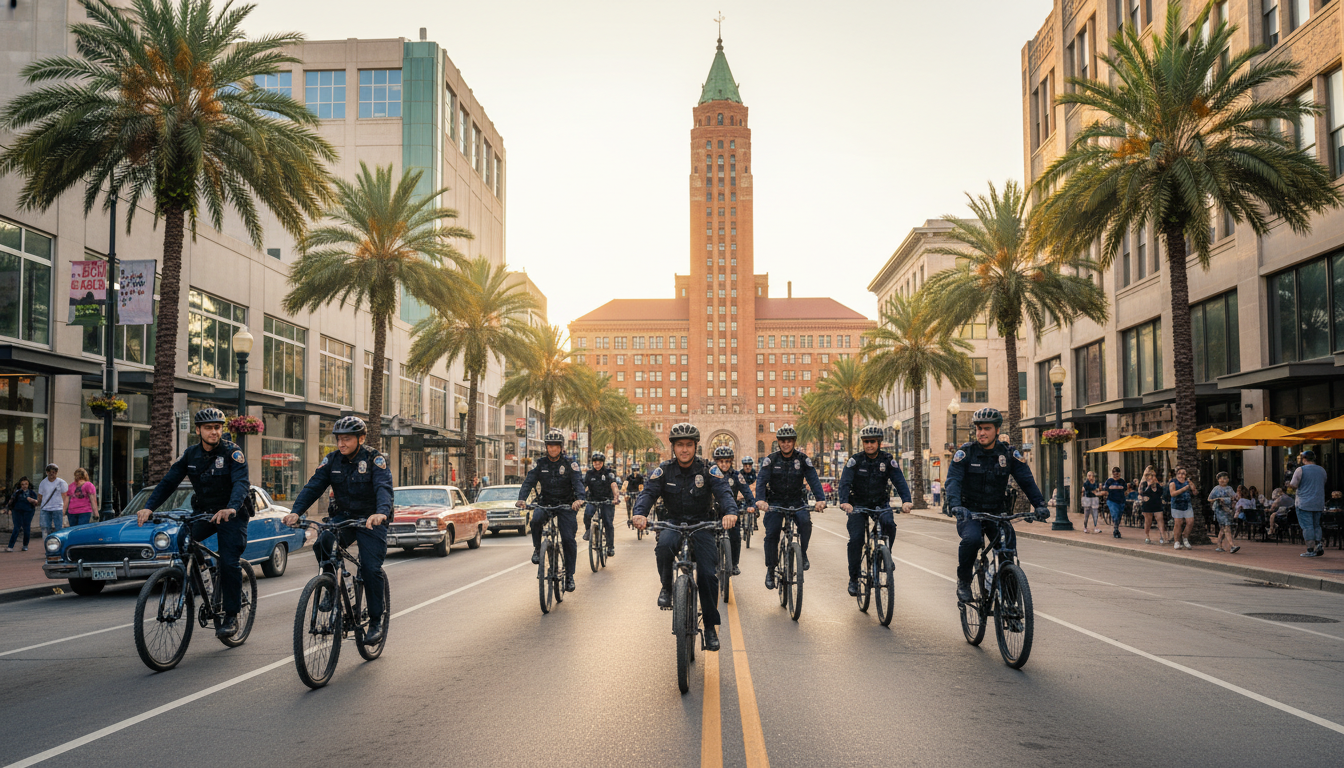
The visual landscape of downtown Detroit has undergone a noticeable transformation over the past year. From the high-traffic corridors of Woodward Avenue to the revitalized alleys of the Belt, the presence of the Detroit Police Department (DPD) has become a constant fixture. This strategic increase in visibility is not merely a cosmetic change but the cornerstone of a comprehensive public safety initiative aimed at stabilizing the city’s core and fostering a welcoming environment for both residents and tourists.
The Strategy Behind the Patrols
According to the City of Detroit and Chief of Police James E. White, the department has prioritized a “hot spot” policing model that concentrates resources in high-density areas. This approach, which intensified during the 2023 summer months and has continued through the 2024 season, utilizes a combination of traditional foot patrols, mountain bike units, and the deployment of the department’s mobile command centers. The goal is two-fold: to deter opportunistic criminal activity and to decrease emergency response times in the city’s busiest sectors.
Chief White has frequently stated in public briefings that the department’s focus is on “quality of life” issues, ranging from illegal drifting and drag racing to more serious violent offenses. By addressing lower-level disturbances, the DPD aims to prevent the escalation of conflict and create an atmosphere of order. Data from the Detroit Police Department indicates that this proactive stance has played a significant role in the overall downward trend of violent crime statistics over the last eighteen months.
Impact on Detroit Residents and Workers
For those who live and work in the central business district, the shift in Detroit crime patterns is a daily reality. Local business owners in the downtown area have reported a surge in foot traffic, attributing the growth to a renewed sense of security among patrons. “We see the officers every hour, and that presence makes a difference for our late-shift employees,” said one restaurant manager near Campus Martius Park. The perception of safety is critical for the ongoing Detroit development projects that are currently reshaping the skyline.
However, the impact of increased patrols is not viewed through a single lens. While downtown stakeholders praise the visibility, some community activists in outer Detroit neighborhoods express concern regarding the allocation of resources. The debate often centers on whether the concentration of police downtown results in a “displacement” of crime to areas with less surveillance. To combat this, the DPD has integrated the Real-Time Crime Center (RTCC), which uses a network of high-definition cameras and license plate readers to monitor safety across the entire city, not just the downtown core.
Background & Data: Analyzing the Numbers
Data provided by the City of Detroit Police Department reveals that 2023 saw a historic 18% decrease in homicides compared to the previous year, marking one of the lowest totals in decades. Furthermore, carjackings and non-fatal shootings also saw double-digit percentage drops. These statistics are often cited by city officials as evidence that the current policing strategy is working. Public safety advocates point out that while violent crime is down, property crimes, such as larceny and motor vehicle theft, remain a persistent challenge that the department is still working to address.
The success of the 2024 NFL Draft, which brought hundreds of thousands of visitors to the city without major incident, served as a stress test for the DPD’s downtown strategy. The event’s safety record has been used as a benchmark for future large-scale events, proving that the city can manage massive crowds through coordinated efforts between the Detroit police, state authorities, and private security partners like Bedrock.
The Role of Technology and Partnerships
A significant factor in the shifting crime rates is the “Project Green Light” initiative. This public-private partnership allows local businesses to stream high-definition video directly to the DPD’s monitoring centers. There are now over 1,000 participating locations across the city, providing a level of surveillance that acts as a force multiplier for officers on the street. This technology has been instrumental in identifying suspects in real-time and providing evidence that leads to higher closure rates for investigations.
External analysis from organizations like the Citizens Research Council of Michigan suggests that while policing is a primary factor, the improvement in Detroit crime metrics is also linked to broader socio-economic shifts, including rising employment rates and targeted investment in Detroit infrastructure. These factors combined create a more resilient urban environment where crime is less likely to take root.
What Happens Next
As Detroit moves into the latter half of the year, the department faces the challenge of maintaining these gains while navigating budget considerations and recruitment hurdles. The DPD continues to focus on community policing, attempting to build trust in neighborhoods while keeping the pressure on criminal elements in the downtown district. The city’s administration remains optimistic, citing the latest quarterly reports as a sign that Detroit is moving toward a safer, more sustainable future.
The ongoing dialogue between the Detroit police and the community will be vital in ensuring that the shift in crime rates is not a temporary fluctuation but a permanent change. For residents, the focus remains on ensuring that the safety felt in the shadows of the skyscrapers extends to every residential block in the city.