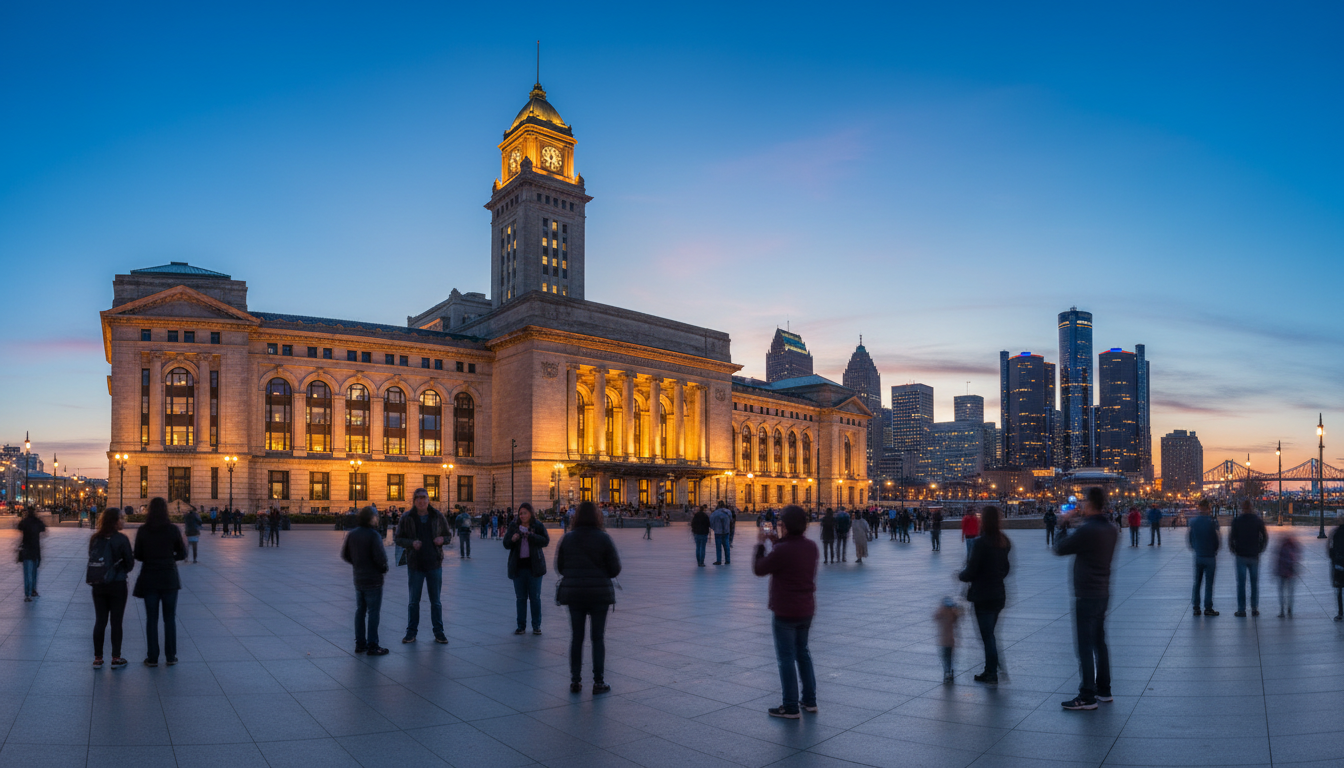
Detroit is currently witnessing a significant shift in its economic landscape as the city’s tourism sector experiences a robust period of growth. According to recent data released by Visit Detroit, the region’s primary tourism bureau, the metropolitan area has seen a marked increase in visitor volume over the past 18 months, driven largely by a renewed interest in the city’s architectural heritage and historic landmarks.
A Resurgence Driven by Heritage
For decades, Detroit was often viewed through a lens of industrial decline. However, a concerted effort by city planners, private developers, and local preservationists has reframed the narrative around the city’s physical history. The reopening of the iconic Michigan Central Station in Corktown earlier this year served as a catalyst, drawing thousands of visitors who previously may not have considered Detroit a primary travel destination. When you travel Detroit today, the mix of Art Deco skyscrapers and mid-century modern design provides a visual narrative that few other American cities can replicate.
City officials note that the influx of visitors is not limited to the downtown core. Historic sites such as the Motown Museum, the Guardian Building, and the Detroit Institute of Arts (DIA) have reported a steady uptick in ticket sales and tour bookings. According to the Michigan Economic Development Corporation (MEDC), Michigan travel as a whole has benefited from Detroit’s rebranding, with the city serving as an anchor for international travelers entering the state.
Impact on Detroit Residents and Local Economy
The growth in Detroit tourism is more than just a statistic for the hospitality industry; it has tangible effects on the daily lives of local residents. The increase in foot traffic has spurred the growth of small businesses in neighborhoods like West Village, Corktown, and the North End. As visitors explore beyond the standard tourist corridors, local cafes, boutiques, and galleries are seeing a diversified customer base.
From a labor perspective, the surge has led to a rise in service-sector employment. Data from the Bureau of Labor Statistics indicates that leisure and hospitality jobs in the Detroit-Warren-Dearborn area have stabilized and shown modest growth, providing entry-level and management opportunities for city dwellers. Furthermore, the city’s tax base benefits from hotel occupancy taxes, which are increasingly being funneled back into municipal services and neighborhood infrastructure projects.
Preservation as an Economic Engine
The strategy of leveraging historic sites for economic gain is a pivot from previous decades where demolition was often the first response to blight. Organizations like the Detroit Historical Society have emphasized that the city’s unique stock of pre-war architecture is a non-renewable resource that attracts high-spending cultural tourists. These visitors typically stay longer and spend more per day than the average business traveler, according to industry reports.
Local historians suggest that the authenticity of Detroit’s landmarks is what sets it apart from more “manicured” tourist destinations. The raw history found in places like the Packard Plant ruins or the meticulously restored Fisher Building offers a contrast that resonates with modern travelers seeking genuine experiences.
Data-Driven Success and Infrastructure Challenges
Statistical evidence supports the visible crowds on the street. Visit Detroit reported that the city hosted over 16 million visitors in the last fiscal year, with hotel occupancy rates in the downtown area consistently outperforming regional averages. This growth coincides with Detroit hosting high-profile national events, such as the NFL Draft, which provided a global platform to showcase the city’s revitalization.
However, the rapid growth in visitors has also highlighted areas where Detroit’s infrastructure must evolve. Residents have noted increased traffic congestion and a higher demand for reliable public transit. The expansion of the QLINE and improvements to DDOT bus routes remain critical components of the city’s long-term plan to ensure that tourism does not negatively impact the mobility of those who live and work in the city. You can read more about recent neighborhood development initiatives that aim to balance these needs on our dedicated community page.
What Happens Next for Detroit Tourism
Looking ahead, the city is preparing for several major projects intended to sustain this momentum. The ongoing multi-million dollar expansion of the Motown Museum is expected to double its capacity, while new boutique hotels are slated to open in historic buildings throughout the downtown and Midtown districts. The focus remains on making the city a year-round destination rather than a seasonal one.
As the city continues to evolve, the balance between catering to visitors and maintaining the integrity of local neighborhoods remains a priority for the City of Detroit Planning and Development Department. Experts suggest that as long as the city continues to invest in its historic sites and maintain its cultural authenticity, the trend of growth is likely to continue through the end of the decade. For more updates on the city’s progress, visit our section on real estate trends and urban planning.
With the eyes of the travel world increasingly fixed on the Motor City, Detroit’s transition from an industrial powerhouse to a cultural and historical hub marks a new chapter in its storied existence. The flocking of visitors to historic landmarks is not just a passing trend but a cornerstone of the city’s modern economic identity.