Recent data indicates that former President Donald Trump maintains a commanding presence within the Michigan Republican Party, securing an 86% favorability rating among registered GOP voters. This surge in support comes as the state prepares for its pivotal role in the upcoming national election cycle, reinforcing Michigan’s status as a central battleground for both parties. According to recent polling analysis, this level of internal party consolidation is nearly unprecedented in recent Michigan political history, signaling a unified front as the primary season approaches.
Understanding the 86% Favorability Rating
The 86% favorability mark, highlighted in recent tracking polls by national firms and corroborated by state-level data, suggests that the former president’s influence over the state’s Republican apparatus has not only held steady but has intensified. Political analysts at the University of Michigan note that while favorability among the general electorate remains polarized, the internal GOP sentiment is remarkably consistent across various demographics, including suburban voters in Oakland County and rural residents in the Upper Peninsula.
Data from the Michigan Republican Party (MIGOP) suggests that this support is driven largely by concerns over the state’s economic trajectory and manufacturing sector. For many Detroit-area Republicans, the former president’s focus on trade protectionism and the revitalization of the automotive industry remains a primary draw. According to a report by the Institute for Public Policy and Social Research at Michigan State University, GOP voters in the Great Lakes State prioritize “economic sovereignty” and “border security” as their top two issues, both of which are core components of the current Trump platform.
Impact on Detroit Residents and Voters
While Detroit remains a traditional Democratic stronghold, the high favorability of Donald Trump within the GOP has significant implications for the city’s political landscape. Political strategists suggest that a unified Republican base could lead to increased investment in outreach efforts within the city limits, particularly aimed at minority voters who feel disenfranchised by current economic conditions. The Trump Michigan GOP poll results suggest that the Republican ground game in Wayne County will likely be more coordinated than in previous cycles.
For Detroit residents, this political shift often translates to increased campaign presence and messaging regarding local infrastructure and job creation. As the GOP focuses on flipping the “Blue Wall” once again, Detroit becomes a focal point for debates on urban development and federal funding. Local community leaders have observed that even in non-partisan circles, the strength of the GOP poll numbers is forcing a more robust conversation about Detroit voter engagement strategies and how local issues are represented on the national stage.
Economic Context and Manufacturing Sentiment
The favorability numbers are deeply tied to the perception of the automotive industry’s future. According to the Detroit Free Press, the transition to electric vehicles (EVs) has become a contentious issue among Michigan labor forces and Republican voters alike. The former president’s vocal skepticism of federal EV mandates resonates with a segment of the workforce that fears job displacement in traditional internal combustion engine manufacturing.
“The sentiment we are seeing in the polls reflects a deep-seated anxiety about the pace of industrial change,” says a spokesperson for a local manufacturing advocacy group. This anxiety is a key driver behind the 86% favorability, as many GOP voters view the former president as a bulwark against perceived regulatory overreach. Furthermore, the Michigan economic forecast remains a topic of intense debate, with the GOP base largely attributing inflation and high energy costs to current federal policies.
Background & Data: Comparing the Cycles
To understand the weight of an 86% favorability rating, one must look at historical GOP primary data in Michigan. In the lead-up to the 2016 election, the Republican field was deeply fractured, with support split among several candidates. Today, the consolidation behind a single figure represents a paradigm shift in state party dynamics. According to data from the U.S. Census Bureau and recent exit poll comparisons, the Michigan GOP has become more demographically aligned over the last eight years, focusing heavily on working-class concerns that cross regional lines.
Current polling from the Glengariff Group also shows that despite legal challenges and national controversies, the core GOP base in Michigan views these events through a lens of political opposition rather than a reason for withdrawal. This resilience in polling numbers suggests that the Trump Michigan GOP poll dominance is unlikely to fluctuate significantly before the primary delegates are officially awarded.
The Role of the Michigan Republican Party (MIGOP)
The internal structure of the Michigan Republican Party has undergone significant changes in the last 24 months. Leadership shifts have prioritized grassroots mobilization and a strict adherence to the “America First” agenda. This organizational shift has mirrored the favorability ratings, with state party delegates frequently voting in alignment with the former president’s endorsements. While internal friction has occasionally surfaced, the 86% favorability figure indicates that the rank-and-file membership remains largely unaffected by leadership disputes at the top of the state party hierarchy.
What Happens Next: The Road to the General Election
As the primary season concludes, the focus will shift to how this internal GOP unity affects the general election in November. For a Republican candidate to win Michigan, they must not only hold their base—which the 86% favorability suggests is already accomplished—but also appeal to independent voters in key swing districts like the 7th and 10th Congressional Districts. Recent data from The Detroit Free Press suggests that the margin for victory in Michigan will likely be less than 3%, making every percentage point of favorability within the party crucial.
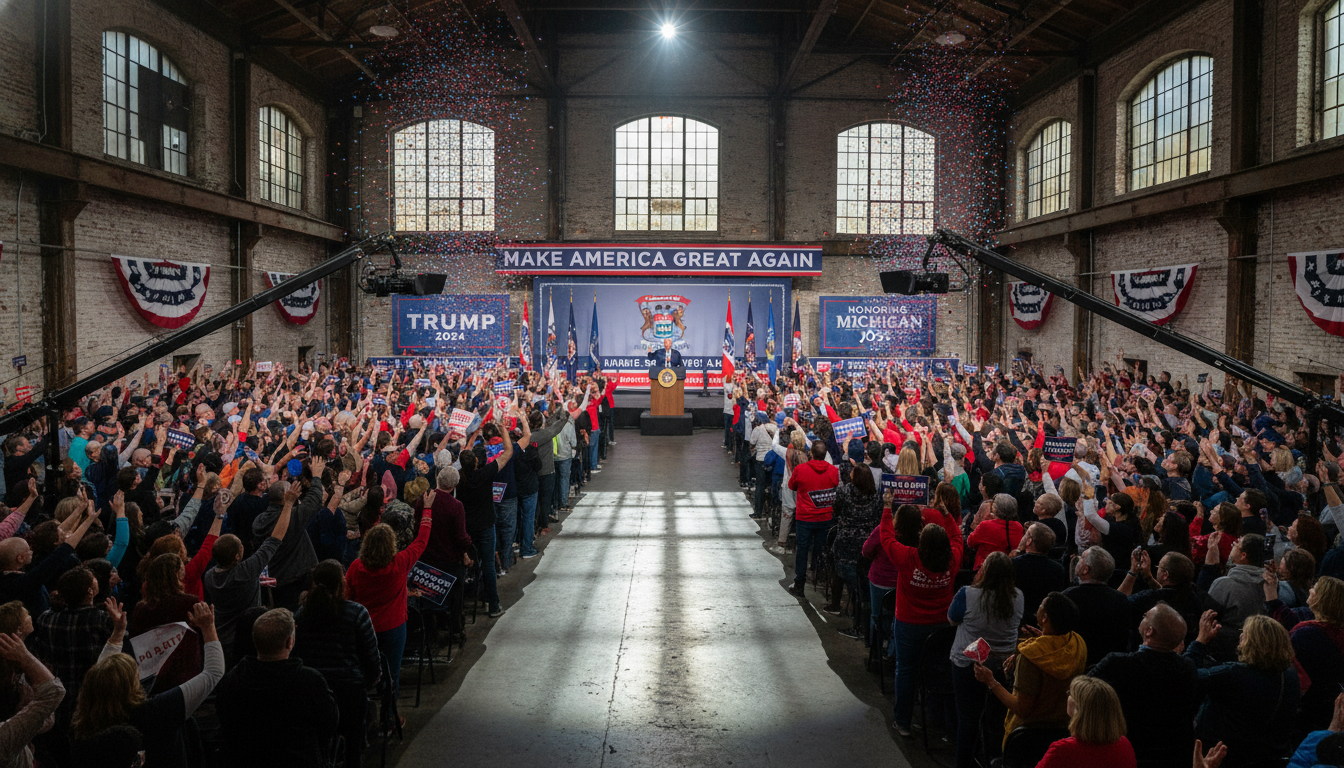
Observers will be watching for high-profile rallies in the Detroit metro area and the Macomb County suburbs, which have historically served as the tipping points for statewide victories. If the current favorability trends hold, the Michigan GOP will enter the general election with a level of base enthusiasm that could challenge Democratic incumbents in high-stakes local races as well.
Conclusion
The 86% favorability of Donald Trump within the Michigan GOP is a clear indicator of the state party’s current direction. As Detroit continues its own economic recovery, the political ripples from these poll numbers will be felt in every neighborhood, from the boardroom to the factory floor. With the state once again positioned as a kingmaker in national politics, the unity of the Michigan Republican base remains a central story in the 2024 electoral narrative.