The landscape of Detroit public transport is undergoing its most significant transformation in decades as city officials and regional planners move toward a more integrated, efficient, and technology-driven future. By 2026, the Detroit transit system is expected to feature expanded bus rapid transit (BRT) corridors, a fully transitioned QLine under regional management, and a modernized fleet of electric buses designed to bridge the gap between neighborhoods and employment hubs.
According to the Regional Transit Authority (RTA) of Southeast Michigan, the push for 2026 is centered on the concept of ‘seamless mobility.’ For years, Detroiters have faced challenges with fragmented services between the Detroit Department of Transportation (DDOT) and the Suburban Mobility Authority for Regional Transportation (SMART). New initiatives are now being implemented to unify these systems, ensuring that a single fare payment and synchronized schedules become the standard for riders across the metropolitan area.
The DDOT Reimagined Initiative
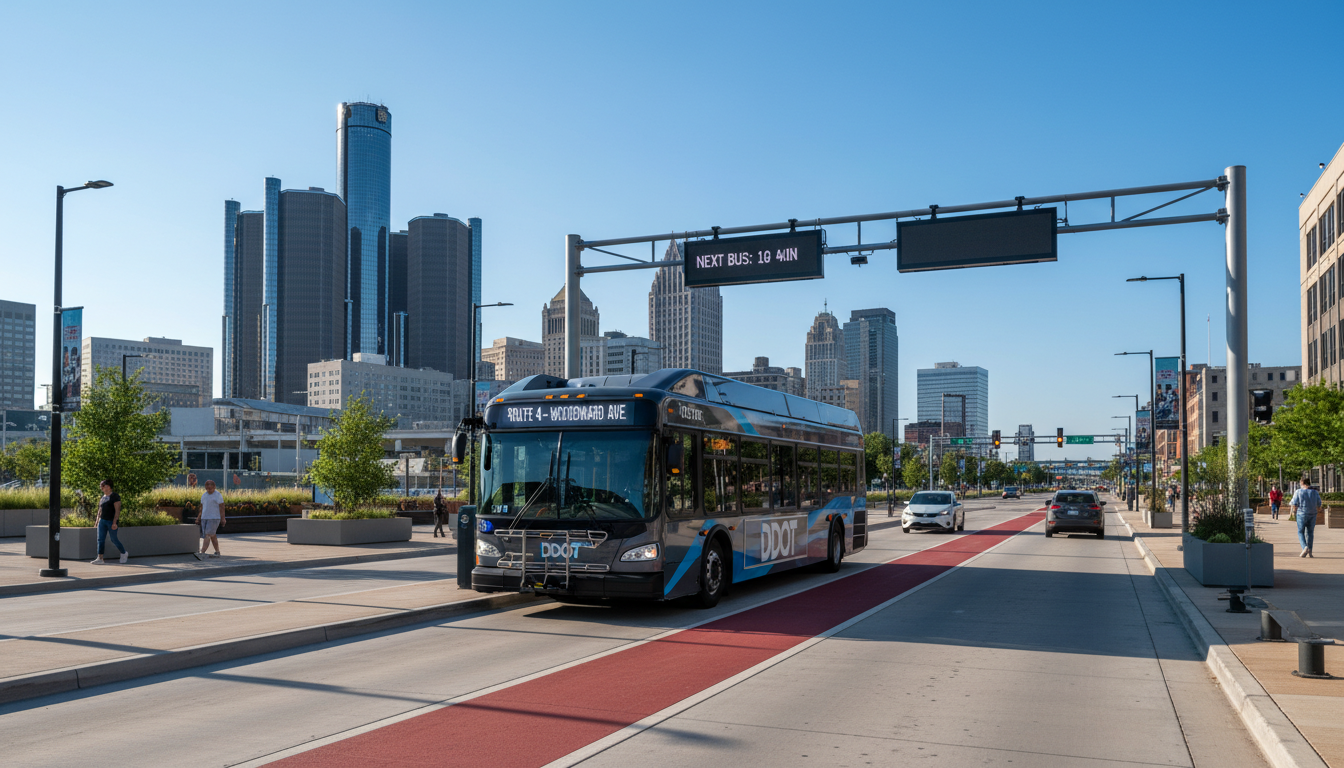
Central to the short-term improvements is the ‘DDOT Reimagined’ plan. This strategic overhaul focuses on increasing the frequency of the city’s most-used routes. Data from the City of Detroit shows that nearly 25% of Detroit households do not have access to a personal vehicle, making the reliability of buses in Detroit a critical economic lifeline. The 2026 vision includes 15-minute or better frequency on primary corridors such as Woodward, Gratiot, and Grand River Avenues.
To support this increased frequency, the city is aggressively pursuing federal grants for fleet electrification. ‘The transition to zero-emission vehicles is not just an environmental goal; it is an operational necessity to reduce long-term maintenance costs,’ a city transportation spokesperson stated during a recent city council session. By early 2026, a significant portion of the DDOT fleet is slated to be electric, supported by new charging infrastructure at the Shoemaker and Gilbert terminals.
Regional Integration and the QLine Transition
One of the most notable shifts in Detroit mobility is the official transition of the QLine streetcar to the oversight of the RTA. Previously operated as a private-public partnership, the streetcar is now being integrated into the broader regional transit network. This change allows for better coordination with SMART and DDOT bus lines, potentially leading to the QLine serving as a trunk line for a wider web of feeder routes.
The RTA is also moving forward with the ‘Connect 275’ pilot program, which aims to provide better transit access to the airport and western suburbs. By 2026, planners hope to convert this pilot into a permanent fixture of transportation in Detroit, addressing long-standing complaints about the difficulty of reaching the Detroit Metropolitan Airport via public transit from the city center.
Impact on Detroit Residents
For the average resident, these improvements are designed to solve the ‘last-mile’ problem. The expansion of micro-transit services—on-demand shuttles that ferry passengers from their doorsteps to major bus stops—is expected to scale significantly by 2026. This is particularly vital for residents in outer-ring neighborhoods where traditional fixed-route bus service is less dense.
Improved transportation in Detroit directly correlates with job accessibility. A study by the Southeast Michigan Council of Governments (SEMCOG) indicates that enhancing transit reliability could connect up to 50,000 additional residents to high-growth employment sectors in healthcare and logistics. As Detroit housing developments continue to rise along major corridors, the demand for high-quality transit is expected to reach an all-time high.
Infrastructure Upgrades and Smart Technology
The physical infrastructure of Detroit’s streets is also changing to prioritize Detroit public transport. Plans for 2026 include the installation of more dedicated bus lanes and ‘Transit Signal Priority’ (TSP) technology. TSP allows buses to communicate with traffic signals, holding green lights longer to ensure that buses stay on schedule even during peak traffic hours.
Furthermore, the ‘Dart’ payment system is receiving a digital upgrade. By 2026, officials expect 90% of all transit transactions to be handled via contactless mobile payments or smart cards, reducing boarding times and providing planners with real-time data on passenger flow. This data-centric approach allows the city to adjust routes dynamically based on actual usage patterns rather than outdated census blocks.
Background & Data
The urgency for these upgrades is backed by regional economic data. According to SEMCOG’s ‘2050 Regional Transportation Plan,’ the Detroit metro area has historically lagged behind peer cities like Chicago or Minneapolis in transit investment per capita. However, the 2021 Infrastructure Investment and Jobs Act has funneled record levels of capital into Michigan, allowing the RTA and DDOT to fast-track projects that were previously stalled due to budget constraints.
Current reporting suggests that the city has already secured over $100 million in federal funding specifically earmarked for bus replacement and facility upgrades. For more information on official route changes and public hearing schedules, residents can visit the Official DDOT Website.
What Happens Next
As we move toward 2026, Detroiters can expect a series of rolling updates. The next phase involves the completion of the state-of-the-art Jason Hargrove Transit Center at the former State Fairgrounds, which will serve as a massive hub for both city and suburban routes. This facility is expected to be fully operational by late 2025, serving as the cornerstone for the 2026 system-wide expansion.
While challenges remain—particularly regarding driver recruitment and retention—the coordination between the Mayor’s Office, the RTA, and the state government suggests a unified front. The goal is clear: by 2026, the Detroit transit system will no longer be seen as a last resort, but as a viable, modern, and preferred method of travel for all residents. This evolution is essential not just for mobility, but for the continued resurgence of Detroit neighborhoods and local businesses.