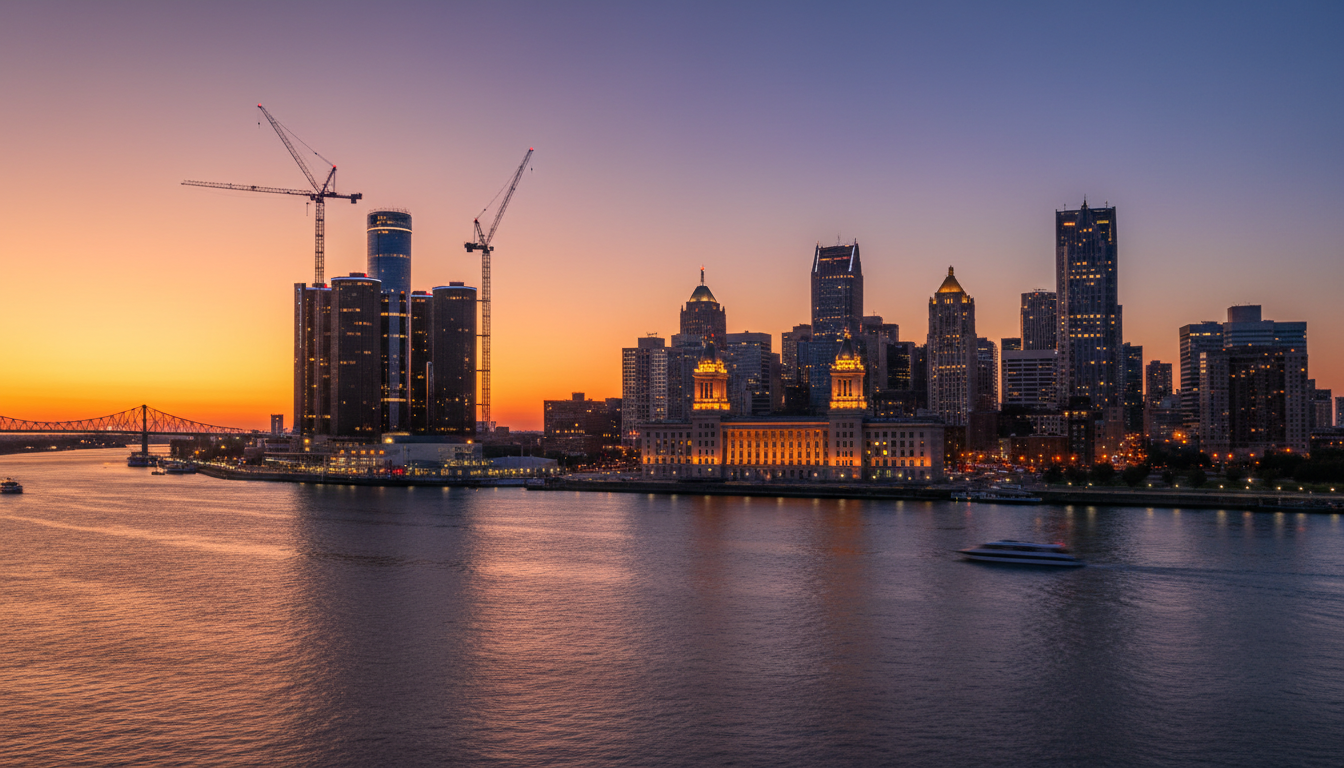
For the first time in decades, the narrative surrounding Detroit’s population is shifting from one of decline to one of strategic growth. As we move into 2026, the latest migration data suggests that the city is no longer just a destination for speculative investment, but a primary choice for residents seeking a combination of urban density and economic opportunity. Following the U.S. Census Bureau’s landmark 2023 report which showed Detroit’s first population increase since 1957, the momentum has continued to build, driven by a diversified economy and massive infrastructure investments.
The current 2026 landscape for moving to Detroit is defined by a significant influx of remote workers, tech professionals, and returning Michiganders. According to the Detroit Economic Growth Corporation (DEGC), the city’s ability to retain talent is directly linked to the stabilization of its tax base and the expansion of the commercial sector outside of the traditional downtown core. While the city still faces challenges, the data points toward a sustained period of revitalization that is reshaping the Great Lakes region.
The Economic Drivers Behind Population Growth
One of the primary reasons for the shift in Detroit migration trends is the evolution of the local job market. While the automotive industry remains a pillar, the emergence of the Michigan Central innovation district in Corktown has acted as a magnet for global tech talent. This 30-acre campus, anchored by Ford Motor Company, has created a hub for mobility and sustainable energy startups, attracting professionals who might have previously looked toward Austin or the Bay Area.
Data from the U.S. Census Bureau indicates that the demographic moving to Detroit is increasingly composed of young professionals aged 25 to 34. This group is often drawn by the city’s lower cost of living compared to coastal hubs. Despite rising interest rates nationally, Detroit’s median home price remains significantly below the national average, allowing for a level of homeownership that is increasingly out of reach in other major metropolitan areas. For many, living in Detroit offers the chance to participate in a city’s transformation while maintaining financial flexibility.
Impact on Local Detroit Residents
The influx of new residents is a double-edged sword for long-term Detroiters. On one hand, the increased tax revenue is being funneled into essential city services. According to the City of Detroit’s Budget Office, higher property tax collections have allowed for the expansion of the Strategic Neighborhood Fund, which invests in parks, streetscapes, and commercial corridors in neighborhoods like Campau/Banglatown and Northwest Goldberg.
However, the rapid Detroit population growth has also raised concerns regarding housing affordability and displacement. Local community advocates note that while new developments are rising in Midtown and Downtown, the pressure on rental prices in adjacent neighborhoods is increasing. To combat this, the city has implemented the ‘Detroit Housing for the Future Fund,’ aimed at preserving affordable housing units. For current residents, the most tangible impact of the 2026 migration trends is the revitalization of neighborhood retail. As more people move in, grocery stores, pharmacies, and small businesses are reopening in areas that had been underserved for years.
Living in Detroit: The Neighborhood Revitalization Strategy
The city’s growth is not uniform, but rather concentrated in nodes of development. The “20-Minute Neighborhood” initiative, a core part of Detroit’s urban planning strategy, aims to ensure that residents can meet most of their daily needs within a short walk or bike ride from their homes. This has made relocation to Detroit particularly attractive for those looking to decrease their dependence on automobiles.
A recent report by Detroit Future City (DFC) highlights that the stabilization of middle-class neighborhoods is crucial for the city’s long-term health. The DFC research suggests that for Detroit to maintain its current trajectory, it must continue to bridge the gap between high-growth zones and legacy residential areas. This includes improving the quality of the Detroit real estate market and ensuring that public transportation infrastructure, such as the expanded DDOT and SMART bus services, keeps pace with the growing population.
Background & Data: Analyzing the 2026 Shift
To understand why people are moving to Detroit today, one must look at the historical context of the last three years. The 2024 and 2025 fiscal years saw record-breaking permits for multi-family residential units. This surge in supply was a direct response to the housing shortage that began to peak in 2023. Furthermore, the University of Michigan’s Economic Outlook for the City of Detroit projected a steady rise in per capita income through 2026, driven by the expansion of healthcare systems like Henry Ford Health and the University of Michigan’s Center for Innovation.
Statistical trends also show a reversal in the “suburban flight” model. For the first time in the post-war era, Detroit is seeing a positive net migration from its surrounding suburbs, such as Royal Oak and Ferndale, as individuals seek a more “authentic” urban experience. This is reflected in the high occupancy rates of lofts and converted industrial spaces in the Eastern Market and Milwaukee Junction areas.
What Happens Next for Detroit Migration
Looking ahead toward the end of the decade, the sustainability of Detroit population growth will depend on the city’s ability to improve its public education system and reduce the cost of insurance, which remains among the highest in the nation. While the 2026 trends are overwhelmingly positive, experts at the Detroit Economic Development Office caution that the city must remain vigilant in fostering inclusive growth.
As we monitor the data through the remainder of the year, the message is clear: Detroit is no longer a city of the future—it is a city of the present. The combination of industrial heritage, a burgeoning tech scene, and a renewed focus on neighborhood equity has created a unique environment for those moving to Detroit. The Motor City is once again revving its engines, and this time, the world is watching its progress with genuine optimism.