For the first time in over seven decades, the narrative surrounding Detroit’s demographic trajectory has fundamentally shifted. As 2026 unfolds, the city is no longer just a symbol of post-industrial recovery; it has become a primary destination for a new generation of residents. According to recent data projections from the U.S. Census Bureau and the Southeast Michigan Council of Governments (SEMCOG), the trend of people moving to Detroit has stabilized into a consistent year-over-year growth pattern, marking a definitive end to the era of mass suburban flight.
This demographic pivot is driven by a combination of strategic urban planning, a diversifying economy, and a national shift toward mid-sized, high-amenity cities. Local officials and urban planners point to the revitalization of core neighborhoods and the expansion of the city’s tax base as evidence that the ‘New Detroit’ is attracting more than just temporary interest. Instead, the city is seeing a rise in long-term relocation from major coastal hubs and other Midwest centers.
The Data Behind Detroit’s Population Growth
The U.S. Census Bureau’s updated estimates for the mid-2020s indicate that Detroit’s population is continuing the upward momentum first officially recorded in 2023. At that time, Mayor Mike Duggan famously challenged initial census counts, leading to a revised outlook that showed the city gaining residents for the first time since 1957. By 2026, the data suggests that Detroit is seeing a net positive migration of approximately 1.5% annually.
Reports from the City of Detroit Planning and Development Department highlight that the growth is not limited to the downtown core. While Midtown and Corktown remain high-demand areas, neighborhoods like Livenois-McNichols, Jefferson-Chalmers, and the North End are experiencing significant residential inflows. Experts suggest that the increase in housing permits and the rehabilitation of thousands of previously blighted structures have created a viable inventory for those considering moving to Detroit.
Economic Diversification as a Magnet for Relocation
One of the strongest catalysts for Detroit population growth in 2026 is the maturity of the city’s tech and innovation sectors. The completion and full activation of the Michigan Central innovation district in Corktown have served as a magnet for skilled workers in the mobility and green energy sectors. This hub, spearheaded by Ford Motor Company, has brought thousands of high-paying jobs into the city limits, encouraging employees to live where they work.
“We are seeing a shift where professionals who previously would have commuted from Oakland or Wayne County suburbs are now choosing to find homes within the city,” says a lead analyst at a local real estate firm. The availability of historic architecture at a fraction of the cost found in cities like Chicago or New York continues to make living in Detroit an attractive financial proposition for young professionals and remote workers.
Impact on Detroit Residents and Long-term Community Stability
The influx of new residents is having a profound impact on local people and long-time Detroiters. On one hand, the increased tax revenue is funding critical infrastructure improvements. The city has accelerated its schedule for road repairs and expanded the Detroit Department of Transportation (DDOT) services, addressing long-standing complaints about transit reliability. Furthermore, the expansion of the Joe Louis Greenway—a 27.5-mile looping trail system—has improved quality of life and property values in previously overlooked residential zones.
However, this growth also brings challenges. The City of Detroit has had to implement aggressive affordable housing mandates to ensure that long-time residents are not displaced by the rising costs associated with relocation Detroit trends. According to the Detroit Housing and Revitalization Department, the city has maintained a policy requiring 20% of new developments receiving city subsidies to be set aside for residents earning below the area median income. This balance is seen as essential for maintaining the cultural fabric of the city as it grows.
Why Living in Detroit Appeals to the 2026 Demographic
Modern migration to the city is fueled by more than just jobs; it is driven by a desire for urban density and cultural authenticity. Detroit’s culinary scene, which has received national accolades from organizations like the James Beard Foundation, and its status as a UNESCO City of Design, play significant roles in its appeal. Prospective residents often cite the city’s unique combination of grit, history, and a burgeoning creative class as the primary reason for their move.
For more updates on neighborhood transitions, see our previous coverage on Detroit neighborhood development. Additionally, the recent expansion of the Detroit real estate market has made it easier for first-time homebuyers to navigate the local landscape through city-backed down payment assistance programs.
Background and National Context
Detroit’s resurgence is part of a broader national trend where ‘legacy cities’ are reinventing themselves. While the COVID-19 pandemic triggered an initial exodus from high-density coastal cities, the subsequent years have seen a ‘return to the city’ movement focused on affordability and space. Detroit, with its vast footprint and historical capacity for much higher population levels, is uniquely positioned to absorb this growth without the extreme density issues faced by other urban centers.
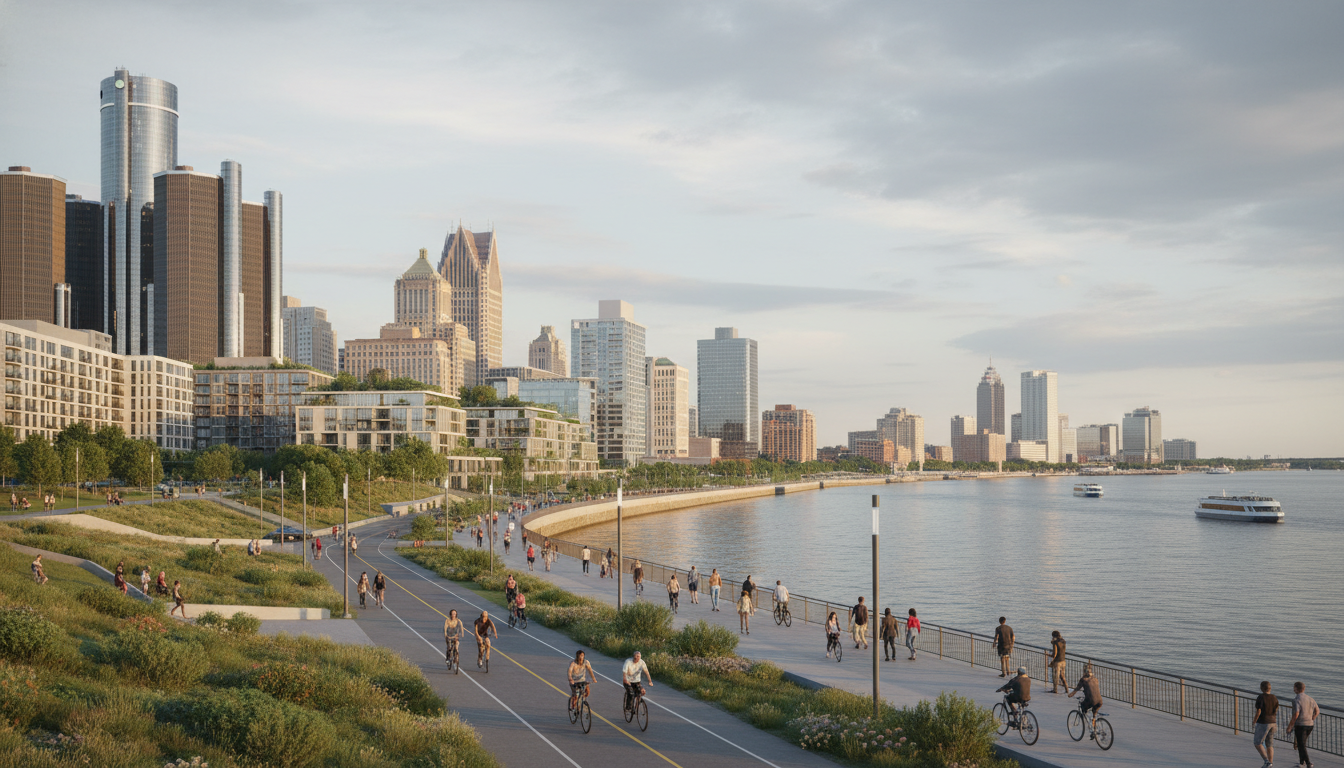
Statistics from the National Association of Realtors show that Detroit remains one of the most affordable major markets in the United States, even with the steady appreciation of home values over the last five years. This affordability, coupled with a revitalized riverfront—regularly voted the best in the nation—continues to drive the narrative of Detroit as a destination of choice rather than a city of the past.
What Happens Next: The Future of Detroit Migration
Looking toward the late 2020s, the City of Detroit aims to further capitalize on these migration trends by focusing on ‘middle-neighborhood’ stabilization. This involves targeted investments in retail corridors and schools to ensure that those moving to Detroit today become long-term stakeholders. The upcoming 2030 Census is expected to be the first in decades to show a decade-long period of growth, a milestone that would solidify Detroit’s status as a leader in American urban recovery.
As infrastructure projects like the I-375 conversion into a boulevard continue to reconnect neighborhoods to the downtown core, the physical barriers to growth are being removed. For now, the data is clear: Detroit is growing, and its future as a vibrant, residential powerhouse is increasingly certain.