The skyline of Detroit’s oldest neighborhood has been permanently altered by the towering presence of the restored Michigan Central Station, but the true pulse of the district’s future may lie in its sophisticated new infrastructure. As the Michigan Central innovation district moves from construction to full operation, the introduction of a centralized Detroit transportation hub is poised to transform how residents and commuters interact with the Corktown area. At the center of this transformation is the Bagley Mobility Hub, a facility that serves as more than just a parking structure, acting as a gateway for multi-modal transit and advanced urban development.
A New Vision for Urban Development at Michigan Central
For decades, the Roosevelt Park area and the surrounding blocks of Corktown were defined by industrial decay and the hollow shell of the 1913-built train station. Since Ford Motor Company acquired the site in 2018, an estimated $950 million has been funneled into creating a 30-acre innovation campus. According to official project documentation from Michigan Central, the development is designed to be a ‘platform for the future of mobility,’ integrating tech companies, venture capital, and academic institutions.
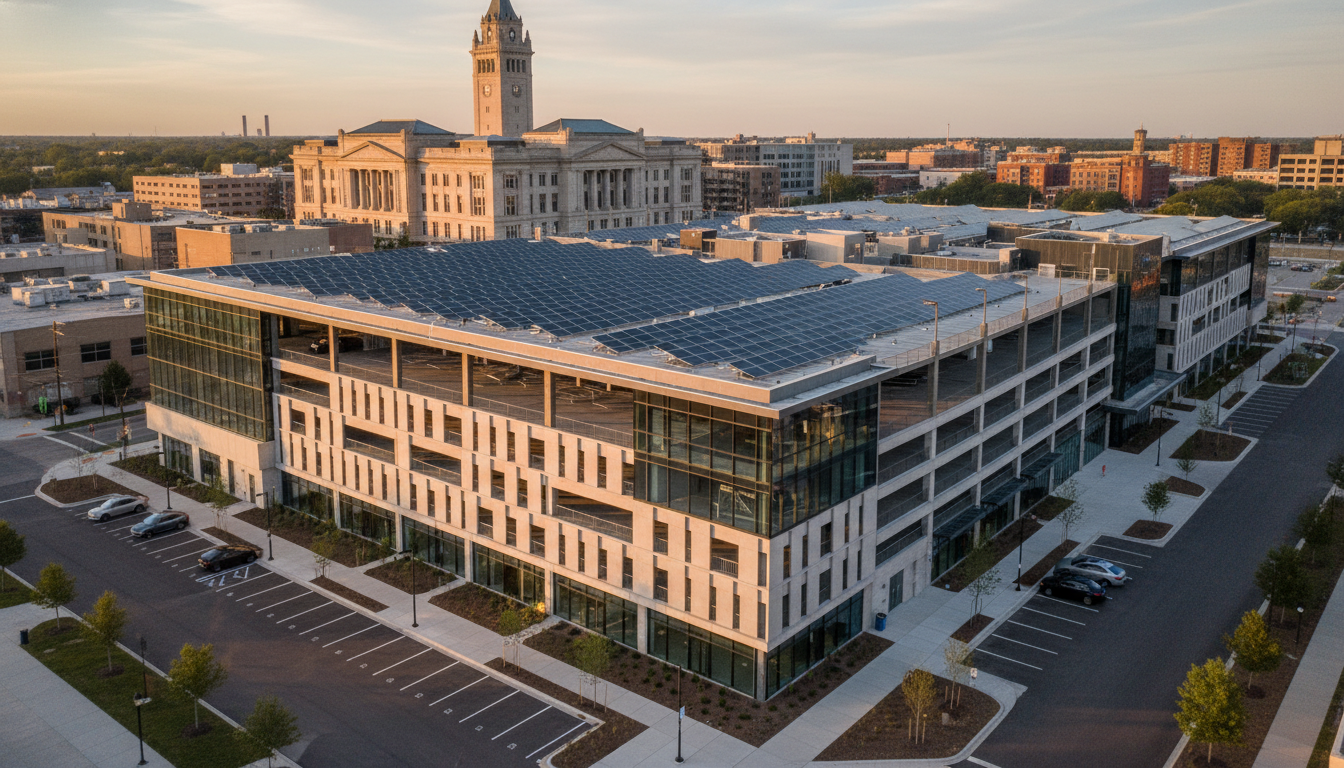
The Detroit transportation hub located at 1501 21st Street—the Bagley Mobility Hub—is a cornerstone of this vision. It provides 1,250 parking spaces, but its primary purpose is to facilitate the transition between personal vehicles and public or micro-mobility options. It features dedicated space for e-bike charging, autonomous vehicle testing zones, and a pedestrian-friendly plaza that connects the hub directly to the station and the Southwest Greenway. This development is not merely about storage for cars; it is an exercise in reducing street-level congestion and improving the walkability of Detroit’s historic core.
Impact on Detroit Residents and Local Businesses
For long-time residents of Corktown and nearby Hubbard Richard, the influx of development has sparked both excitement and practical concerns regarding traffic and property accessibility. The city’s planners have prioritized the hub to prevent the neighborhood’s residential streets from becoming overflow parking for the thousands of employees expected to work on the campus. By consolidating parking into a single, tech-enabled Detroit transportation hub, the city aims to preserve the character of local streets.
Local business owners along Michigan Avenue have already noted an uptick in foot traffic. The Southwest Greenway, which connects to the mobility hub, provides a direct link for residents in Southwest Detroit to access the riverfront and the new innovation district without relying on a car. Data from the City of Detroit’s Planning and Development Department suggests that projects like the Bagley Mobility Hub are essential for meeting the goals of the Strategic Neighborhood Fund, which seeks to improve neighborhood density and transit accessibility. For residents, this means better-lit walkways, more frequent security patrols in the campus area, and a more vibrant public realm.
Connecting to the Greater Detroit Region
The Michigan Central project does not exist in a vacuum. It is part of a broader push for infrastructure Detroit needs to compete on a global scale. As reported by the Detroit Free Press, the development is expected to support approximately 5,000 jobs, including 2,500 Ford employees and another 2,500 from partner companies. To support this workforce, the hub serves as a node for regional transit. Discussions are ongoing between Michigan Central and the Regional Transit Authority (RTA) to ensure that the hub is well-served by existing bus lines and potential future shuttle services.
“The goal is to make the campus accessible to everyone, not just those who own a vehicle,” stated a spokesperson for Michigan Central during a recent community meeting. This focus on inclusivity is a departure from previous decades of urban development in Detroit, which often prioritized the automobile over the pedestrian. You can read more about recent neighborhood revitalization efforts that are shaping our city’s future on our local news portal.
Infrastructure Detroit: Data and Sustainability
Sustainability is a core component of the new infrastructure Detroit is seeing at Michigan Central. The Bagley Mobility Hub includes a massive solar array and rainwater collection systems to minimize its environmental footprint. Furthermore, the facility is equipped with 150 electric vehicle charging stations, one of the largest concentrations in the Midwest. This aligns with the state’s broader goal of expanding EV infrastructure to support Michigan’s automotive legacy.
According to data from the U.S. Census Bureau and the Southeast Michigan Council of Governments (SEMCOG), the population density in Corktown is projected to rise as new residential units are completed alongside the commercial development. This growth necessitates a sophisticated approach to urban development that balances high-tech needs with environmental stewardship. The hub’s design includes 10,000 square feet of public space, featuring murals by local artists, which integrates the massive structure into the artistic fabric of the city. More insights on Corktown real estate trends can be found in our previous coverage of the local housing market.
What Happens Next for the Innovation District
The full activation of the Michigan Central campus is expected to continue throughout the remainder of 2024 and into 2025. With the restoration of the train station’s ground floor as a public space, the hub will become the primary entry point for tourists and visitors. This influx of people will serve as a litmus test for Detroit’s ability to manage large-scale multi-modal transportation systems.
Moving forward, the city and Ford plan to use the Detroit transportation hub as a testing ground for ‘smart city’ technologies. This includes sensors that monitor air quality and traffic patterns, providing real-time data that can be used to improve city services. As Detroit continues to reinvent itself, the transformation of Michigan Central from a symbol of neglect to a hub of innovation serves as a blueprint for other post-industrial cities across the nation. The success of this project hinges not just on the beauty of the restored masonry, but on the efficiency and accessibility of the infrastructure that supports it.