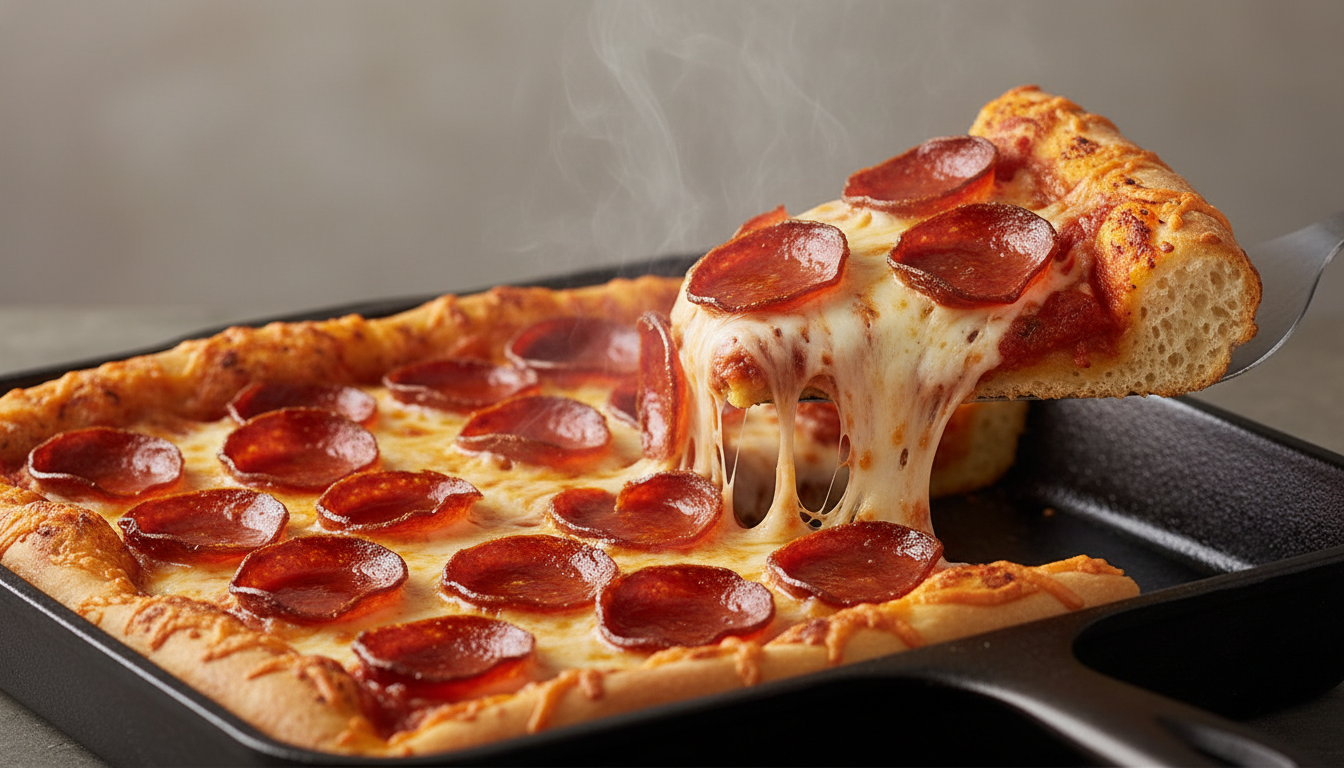
In the world of regional American cuisine, few items have experienced a meteoric rise quite like Detroit-style pizza. Once a localized secret confined to the corners of Six Mile and Conant, the square-cut, deep-dish pie with its signature caramelized cheese crust has become a global phenomenon. National chains and grocery giants have rushed to capitalize on the trend, leading to the release of the Trader Joe’s Detroit-style pizza. For residents of Southeast Michigan, however, the arrival of a national frozen version of their hometown staple is met with both curiosity and a high degree of skepticism.
The Anatomy of the Frozen Entre
The Trader Joe’s Detroit-style pizza, formally labeled as a ‘Detroit Style 8-Clover Pepperoni Pizza,’ enters the market at a price point significantly lower than a fresh pie from a local brick-and-mortar establishment. Weighing in at approximately 18 ounces, the frozen product attempts to replicate the specific structural requirements of the style: a thick, airy crust, a layer of cheese extending to the edges to create a ‘frico’ (burnt cheese) perimeter, and sauce applied over the toppings. According to product specifications provided by the retailer, the dough undergoes a specific proofing process to achieve the necessary honeycomb texture that defines the style.
While the packaging promises an authentic experience, Detroiters know that the devil is in the details. The traditional recipe, pioneered by Gus Guerra at Buddy’s Pizza in 1946, relies heavily on Wisconsin brick cheese. This specific cheese has a high fat content and a low melting point, which is essential for creating the buttery crust and the distinct flavor profile. Trader Joe’s version utilizes a blend of mozzarella and cheddar, a common substitute in mass-market versions that often lacks the pungency and oily crispness of the original.
Comparing the National Brand to Local Staples
To understand where this product sits in the culinary landscape, it is necessary to look at the standards set by Detroit’s heritage pizzerias. According to historical records from the Visit Detroit archives, the original pans used were blue steel industrial parts trays from local automotive factories. These pans were seasoned over decades, contributing to a crust that is nearly impossible to replicate in a home oven with a disposable cardboard or thin aluminum tray.
When compared to local favorites like Loui’s in Hazel Park or Cloverleaf in Eastpointe, the Trader Joe’s Detroit-style pizza offers a passable imitation but fails to reach the depth of flavor found in the city’s legendary pizza ovens. Local business owners in the Detroit dining scene have noted that while frozen versions increase awareness of the style, they often miss the nuance of the ‘sauce-on-top’ application, which prevents the crust from becoming soggy during the bake. For more on the evolution of our city’s food culture, see our previous coverage on the Detroit culinary scene evolution.
Impact on Detroit Residents
The proliferation of Detroit-style pizza in national grocery stores has a twofold impact on the local community. On one hand, it serves as a form of cultural export, elevating Detroit’s reputation as a premiere food destination. As national consumers grow accustomed to the style, tourism to the city’s historic pizzerias often sees a corresponding uptick. On the other hand, there is a concern regarding the ‘dilution’ of the brand. When a consumer’s first interaction with Detroit-style pizza is a frozen variant, the expectations for the authentic product can be skewed.
For the average Detroit resident, the Trader Joe’s pizza represents a convenient, budget-friendly alternative during a period of high food inflation. With fresh large pies at local icons often exceeding twenty-five dollars, a six-dollar frozen option provides accessibility to the style for families on a budget. However, community members frequently argue that the supporting of local business competition against national chains is vital for maintaining the authenticity and economic health of Detroit neighborhoods.
Background and Market Data
Data from the U.S. Census Bureau and recent retail market reports indicate a 12% increase in the consumption of specialized frozen ethnic and regional foods over the last three years. Trader Joe’s, known for its agile product development, has been at the forefront of this trend. The Detroit-style pizza is part of a broader strategy to offer premium, regionalized comfort foods to a national audience. Despite its popularity, the product faces stiff competition from other frozen brands like Motor City Pizza Co., which is headquartered in suburban Detroit and also distributed nationally.
Industry analysts suggest that the success of these frozen products relies heavily on the ‘premiumization’ of the frozen aisle. Consumers are increasingly willing to pay a slight premium for frozen foods that mimic the restaurant experience, even if they do not perfectly replicate it. In the case of the Trader Joe’s Detroit-style pizza, the use of uncured pepperoni and the omission of artificial preservatives are key selling points for health-conscious shoppers who still crave the indulgence of a deep-dish crust.
What Happens Next
The ‘pizza wars’ show no signs of slowing down. As more national retailers introduce their versions of Detroit’s signature dish, the city’s local pizzerias are doubling down on quality and tradition. Some local establishments have even begun offering their own flash-frozen shipping services to ensure that fans across the country can taste the real thing. The Trader Joe’s Detroit-style pizza will likely remain a staple for the chain due to its high demand, but for the purists in the Motor City, it remains a secondary option to the authentic, steel-pan-baked originals found in the heart of the city. As the national appetite for Detroit’s culinary exports continues to grow, the city remains the ultimate gatekeeper of what truly constitutes an authentic Detroit-style pie.