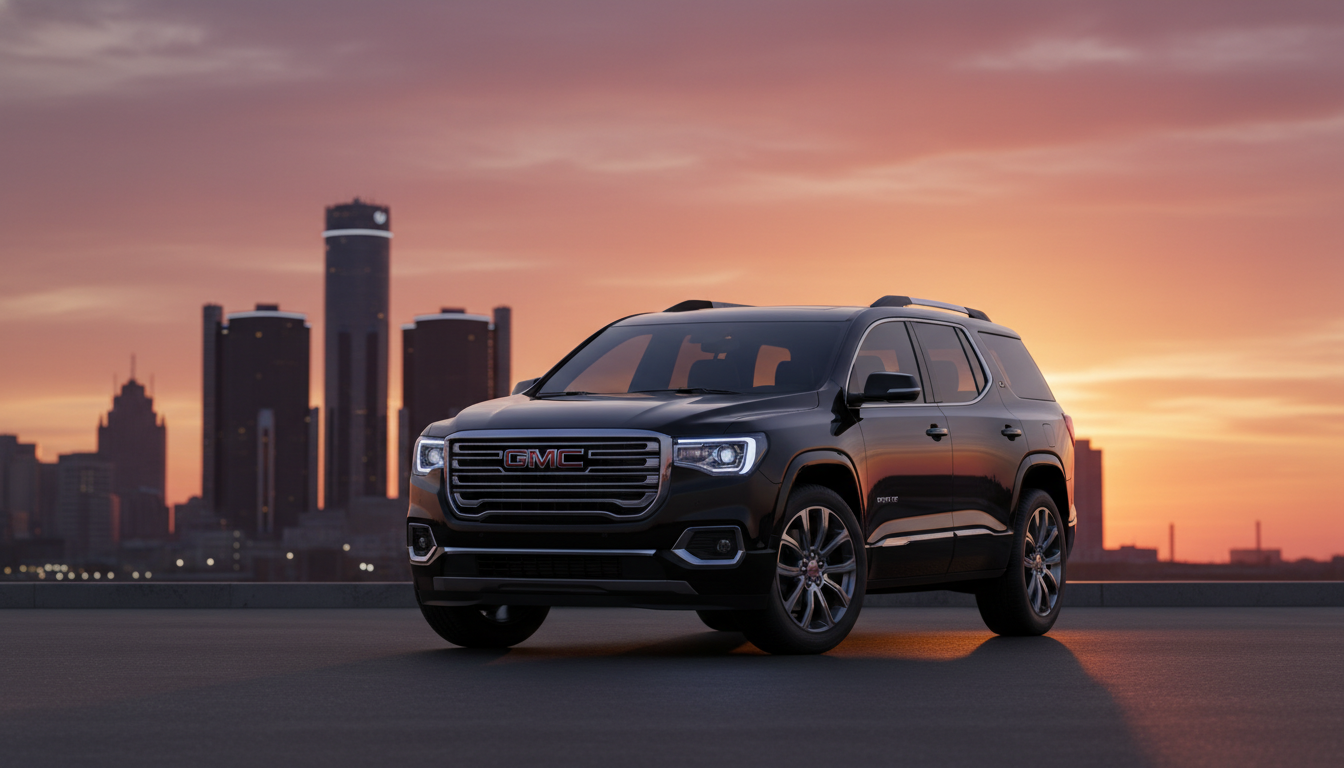
In the heart of the American automotive landscape, the GMC Acadia has long served as a bridge between utility and luxury for Detroit families. As General Motors continues to refine its SUV lineup, the 2026 GMC Acadia Denali arrives with a clear mandate: to push the boundaries of interior refinement and technological integration. However, as the vehicle makes its way from the Lansing Delta Township Assembly plant to local showrooms, a persistent question lingers among automotive enthusiasts and Detroit commuters alike—does the shift in powertrain compromise the ‘professional grade’ performance that defines the brand?
The latest iteration of the Acadia Denali is a testament to the design prowess currently residing in the Renaissance Center. It is larger, bolder, and more tech-forward than its predecessor. Yet, as this car review 2026 reveals, the transition from the traditional V6 engine to a high-output turbocharged four-cylinder has created a dichotomy between the vehicle’s opulent cabin and its mechanical soul. For a city that prides itself on horsepower and torque, the new performance profile is a significant point of discussion.
The Denali Aesthetic: A Detroit Luxury Standard
Steering through the streets of downtown Detroit, the 2026 GMC Acadia Denali commands attention with its massive signature chrome grille and refined C-shaped LED lighting. The Denali trim has always been about presence, and this model delivers it in spades. The interior is where the luxury feel truly manifests. Drivers are greeted by a 15-inch diagonal premium infotainment system and high-quality materials that rival European competitors.
According to official specifications from General Motors, the interior space has increased significantly, offering more cargo room behind the third row than the previous generation. The inclusion of the Super Cruise hands-free driver assistance technology—a feature developed and tested extensively on Michigan highways—adds a layer of sophistication that justifies the Denali price tag. The real wood accents and perforated leather seating provide a tactile experience that aligns with Detroit’s modern luxury expectations.
SUV Performance: The 2.5L Turbo Dilemma
The core of the controversy surrounding this auto review lies under the hood. For 2026, GMC has replaced the 3.6L V6 with a 2.5L turbocharged four-cylinder engine. On paper, the numbers are impressive: 328 horsepower and 326 lb-ft of torque. This represents an increase in both figures compared to the outgoing V6. However, numbers on a spec sheet do not always translate to the visceral SUV performance expected by long-time GMC owners.
During testing on the Lodge Freeway and around the suburbs of Oakland County, the engine’s delivery felt strained under heavy acceleration. While the 8-speed automatic transmission is smooth, the acoustic profile of a turbocharged four-cylinder lacks the authoritative hum of the older V6. There is a noticeable delay—turbo lag—when merging into fast-moving traffic, a common occurrence for Detroit drivers. This creates a sensation that the luxury feel is missing the effortless power that usually accompanies the Denali badge.
Impact on Detroit Residents and the Local Economy
The production of the GMC Acadia is more than just a matter of consumer choice; it is a vital component of the regional economy. The 2026 model is assembled at the Lansing Delta Township plant, which employs thousands of Michigan residents. The success of this model directly impacts job security and economic stability within the Detroit-Lansing corridor.
Data from the U.S. Bureau of Labor Statistics indicates that automotive manufacturing remains a cornerstone of Michigan’s employment sector. When a flagship vehicle like the Acadia undergoes a significant mechanical shift, the local supply chain—from parts manufacturers in Warren to logistics firms in Romulus—must adapt. Local business owners in the automotive service sector have noted that the shift toward smaller, more complex turbocharged engines requires new training and equipment for local technicians, further shifting the economic landscape of the Detroit economy.
Market Context and Industry Trends
GMC’s decision to downsize the engine is not an isolated incident. Industry analysts at Cox Automotive have observed a broader trend across the domestic market where manufacturers are prioritizing fuel efficiency and emissions standards over engine displacement. According to a recent report by the Detroit Free Press, the move to the 2.5L turbo engine is part of a multi-billion dollar strategy by GM to bridge the gap between internal combustion engines and their eventual transition to an all-electric lineup.
While the 2026 GMC Acadia Denali achieves better fuel economy than its predecessors, it enters a highly competitive market where rivals like the Jeep Grand Cherokee and the Ford Explorer still offer diverse powertrain options, including hybrids and V6 variants. For the Detroit buyer, the choice often comes down to a balance between the prestige of the Denali nameplate and the mechanical confidence of the powertrain.
What Happens Next for the Acadia
As the 2026 GMC Acadia Denali begins to populate local driveways from Grosse Pointe to Bloomfield Hills, consumer feedback will be the ultimate arbiter of its success. GMC has a history of listening to its customer base, and it remains to be seen if future iterations will introduce hybrid options to supplement the four-cylinder’s power delivery. For now, the Acadia remains a symbol of Detroit’s ability to craft world-class interiors and advanced safety tech.
For those interested in the latest developments in local manufacturing and how it affects our neighborhoods, stay tuned to our coverage of Detroit development and infrastructure. The Acadia Denali is a beautiful, smart, and spacious SUV that almost reaches perfection—if only it had the muscular performance to match its sophisticated wardrobe.