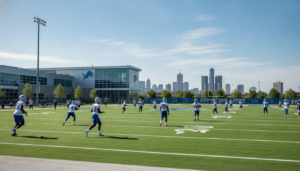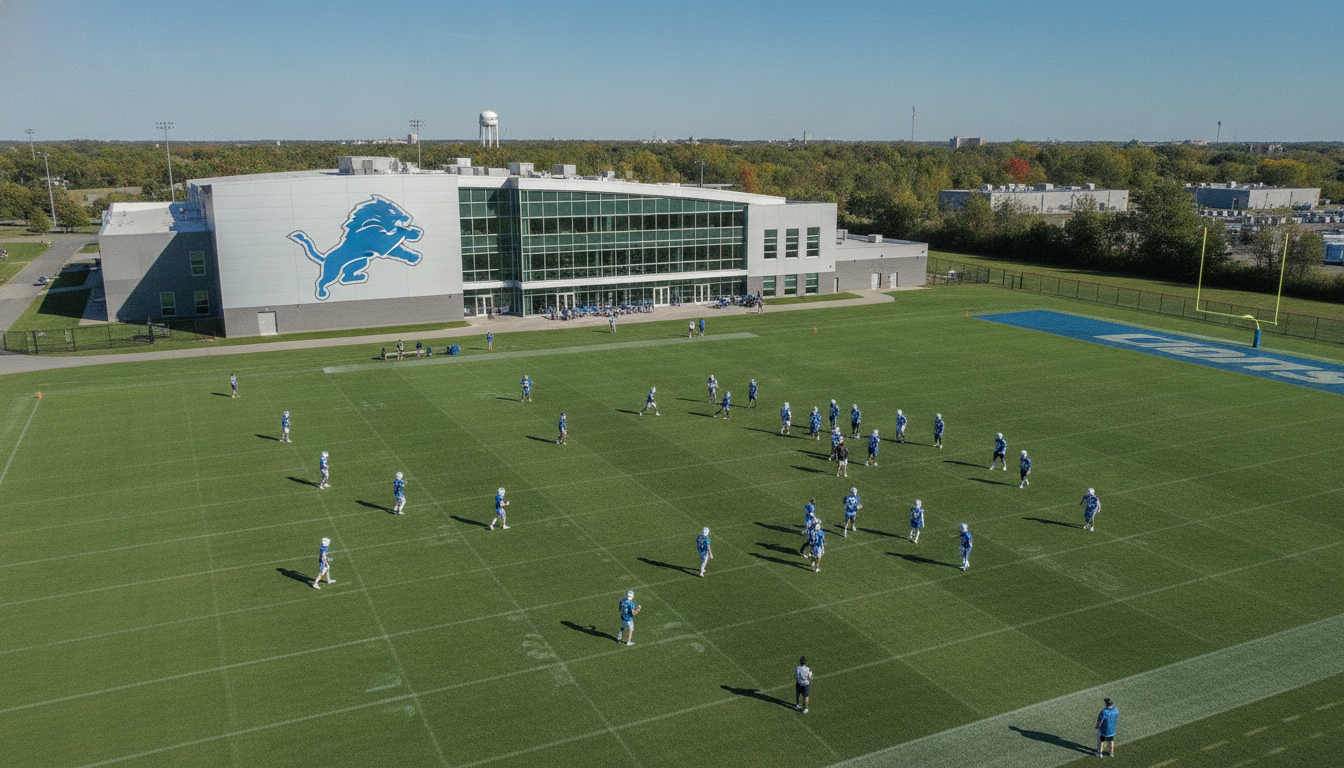
The sounds of whistles and the thud of shoulder pads returned to Allen Park this month as the Detroit Lions officially transitioned through their Organized Team Activities (OTAs) and mandatory minicamp. Following a historic run to the NFC Championship game last season, the atmosphere surrounding the facility is no longer one of quiet hope, but of vocal expectation. Head coach Dan Campbell has emphasized that the 2024 campaign is not about building on last year, but about starting a new climb with a significantly more competitive Detroit Lions roster.
Defensive Reinforcements and the New-Look Secondary
The primary focus for the Lions’ front office this offseason was an aggressive overhaul of the defensive backfield, which struggled at times during the 2023 season. According to reporting by Dave Birkett of the Detroit Free Press, the addition of veteran Carlton Davis III and the drafting of first-round pick Terrion Arnold have already begun to change the dynamic of the defense during early summer drills. Arnold, in particular, has drawn praise from the coaching staff for his poise and ability to shadow veteran receivers during 7-on-7 periods.
The current Detroit Lions roster reflects a shift toward length and versatility in the secondary. Amik Robertson and second-round selection Ennis Rakestraw Jr. have also rotated heavily with the first-team unit, suggesting that defensive coordinator Aaron Glenn plans to utilize a deep rotation to keep legs fresh. This depth is a stark contrast to previous seasons where injuries in the secondary forced the team into disadvantageous matchups against high-powered passing attacks.
Impact on Detroit Residents and Local Economy
The resurgence of the Lions has a tangible impact far beyond the practice fields of Allen Park. The success of the franchise has historically mirrored the revitalization of Detroit’s downtown development, drawing thousands of visitors to the city core for home games. Local business owners in the District Detroit and near Ford Field report that game days now represent their highest-earning windows of the year, a trend that is expected to continue as the team enters 2024 as a Super Bowl contender.
As noted in previous reports on the local economy and sports, the sheer volume of foot traffic during the NFL season supports hundreds of seasonal jobs in hospitality and transportation. For Detroit residents, the team’s success is not just about sports; it is a point of civic pride that fosters community engagement and fuels local commerce. The city government has also noted increased tax revenue from stadium-related activities, which contributes to broader municipal funding for neighborhood services.
Offensive Continuity and Standout Performers
While the defense has seen the most turnover, the offense remains a beacon of stability. The decision by offensive coordinator Ben Johnson to remain in Detroit has allowed the unit to bypass the usual learning curve associated with new schemes. During OTAs, the connection between quarterback Jared Goff and wide receiver Jameson Williams was a frequent topic of discussion. Coaches have noted that Williams has shown a matured understanding of the playbook, positioning him to take a massive leap in his third professional season.
The battle for the remaining spots on the Detroit Lions roster at the wide receiver and kicker positions remains the most closely watched competition. With Josh Reynolds departing in free agency, players like Kalif Raymond and Antoine Green are vying for increased targets. Meanwhile, the kicking competition between Michael Badgley and newcomer James Turner has been a daily focal point, with both specialists showing consistency during the windier sessions in Allen Park.
Background and Roster Strategy
The architectural strategy of General Manager Brad Holmes has centered on “building through the draft and supplementing with grit.” Data from the NFL’s official transaction logs shows that the Lions have one of the highest percentages of home-grown talent currently on their 90-man roster. This philosophy has created a locker room culture that is deeply aligned with Campbell’s “grit” mantra, which focuses on resilience and physical dominance.
Financially, the team remains in a healthy position despite high-profile extensions for Jared Goff, Amon-Ra St. Brown, and Penei Sewell. The front office has managed to retain its core stars while maintaining enough cap flexibility to address needs during the mid-season trade deadline, should the need arise. This balance of long-term stability and immediate competitiveness is what national analysts point to as the hallmark of a modern NFL powerhouse.
What Happens Next: The Road to Training Camp
With minicamp concluded, players will have a brief hiatus before reporting back for the start of official training camp in late July. This period is critical for the rookies on the Detroit Lions roster to internalize the playbook before the intensity ramps up with full-padded practices and preseason games. The Lions have confirmed that several sessions will be open to the public, allowing fans to witness the final stages of team preparation firsthand.
The upcoming preseason will be a test of the team’s improved depth, particularly on the offensive line and in the pass-rushing rotation alongside Aidan Hutchinson. As the heat of July approaches, the eyes of the NFL world remain fixed on Detroit, watching to see if this roster can finally deliver the championship the city has sought for decades. The journey from the quiet fields of Allen Park to the bright lights of Ford Field is nearly underway, and for Detroiters, the anticipation has never been higher.