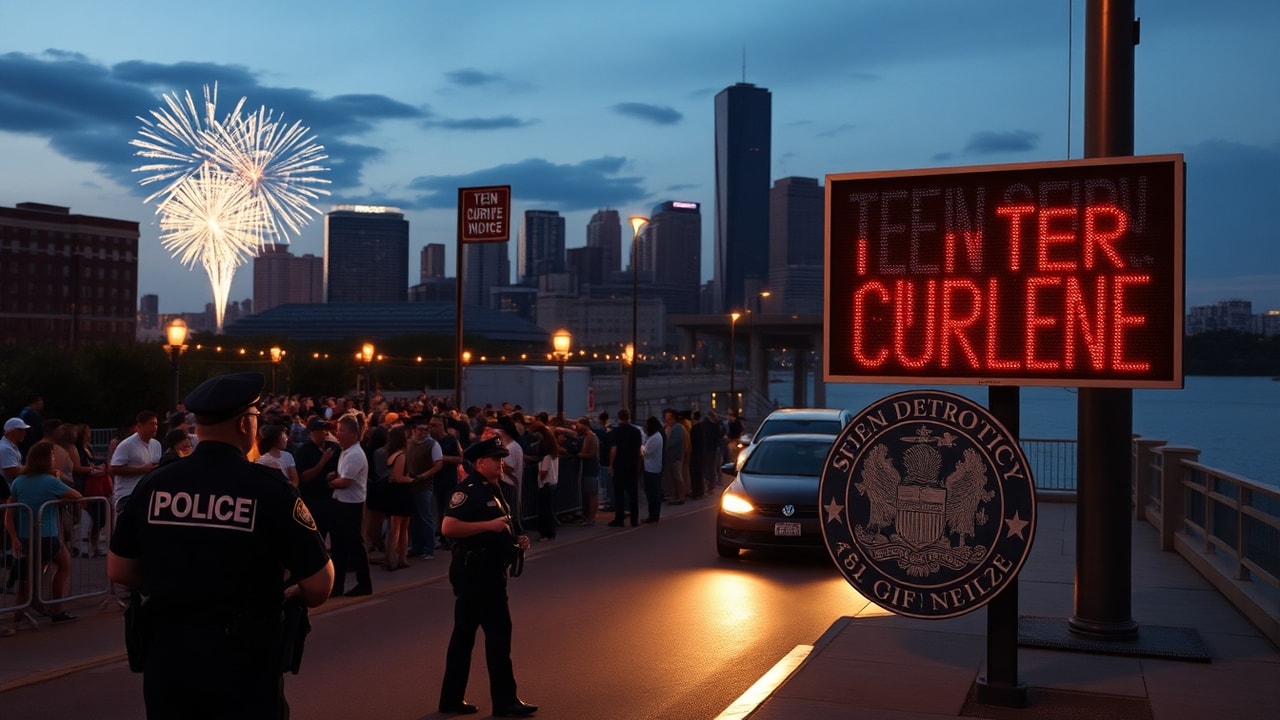
Detroit’s City Council approved a teen curfew connected to the upcoming Ford Fireworks show, aiming to reduce incidents involving minors during peak holiday travel and celebration hours. The measure, passed during a recent council session, establishes time-bound restrictions for youth in the city on the night of the fireworks event, with enforcement led by the Detroit Police Department and guidance from city officials.
The decision arrives as Detroit continues to balance event-day public safety and youth engagement, with council members weighing concerns about disorder, traffic collisions, and access to areas where large crowds gather.
What the Detroit teen curfew changes for Ford Fireworks Detroit
Under the approved teen curfew, minors are required to remain in designated locations during specified hours tied to the Ford Fireworks Detroit festivities. City officials said the policy is meant to prevent unsupervised youth from being in high-traffic, high-crowd areas at night, particularly where fireworks events draw families as well as individuals who may not be attending with adult supervision.
According to the City of Detroit, the curfew is event-specific and designed to support officers who typically plan for surge conditions around major celebrations. The city emphasized that the policy is intended to be temporary and narrowly focused on the fireworks timeframe, rather than a permanent change to youth curfew rules.
In a separate statement, the Detroit Police Department said the department will use the curfew as part of broader event planning, including patrol redeployment, visibility in crowd corridors, and coordination with event organizers. Officials also noted that enforcement procedures are meant to involve warnings and family contact when appropriate, while reserving citations for repeated or clearly prohibited behavior.
Impact on Detroit Residents
For Detroit families, the youth curfew change is expected to affect how parents and guardians plan evening activities around the fireworks. Detroiters who plan to attend the Ford Fireworks show or remain out late nearby may need to ensure minors have appropriate supervision and transportation home before the curfew window begins.
Neighborhood residents within reasonable travel distance to the fireworks venue may also notice increased police presence before and after peak viewing hours. That can mean slower vehicle movement on approach routes, more traffic control around major intersections, and additional checks in areas where crowds form.
Community advocates have been divided on curfew policies nationwide, but local perspectives often center on whether curfew enforcement becomes a catch-all for youth behavior rather than addressing the underlying causes of violence or disorder. In Detroit’s case, council members framed this action as an event-safety response.
According to data compiled by the U.S. Department of Justice via its public guidance on juvenile justice, temporary restrictions can be deployed as one tool for reducing nighttime victimization and risky behavior—though effectiveness can depend on implementation quality and community context. Local officials said they will review event-day outcomes to determine whether the approach reduces calls for service and improves safety for residents and visitors.
What residents should watch for
Residents are likely to see:
- Higher police visibility in entertainment corridors and near public viewing areas during the curfew hours.
- Increased family contact efforts following stop-and-checks involving minors.
- Traffic and parking adjustments as officers manage congestion linked to Detroit fireworks crowds.
City officials urged residents to check the Detroit Police Department’s event guidance for the specific curfew timeframe, designated exemptions, and how to confirm whether a minor’s location qualifies as an exception during the restricted period.
Background & Data on curfews and public safety policy
Teen curfews have long been used in cities across the U.S. during times when large groups gather—such as holidays, sporting events, and major civic celebrations. Supporters argue curfews reduce opportunities for minor-related disorder and make it easier for police to intervene early. Critics contend curfews can disproportionately affect youth from households already facing systemic barriers, and may not address the conditions that lead to harm.
In Detroit, the latest vote reflects an ongoing effort to manage public safety policy in a way that aligns with event planning. Officials said the curfew is intended to be narrowly scoped for Ford Fireworks Detroit—limiting the policy’s reach while giving law enforcement clear expectations during a high-density moment.
While national debates continue, implementation details matter. The National League of Cities has noted in its policy resources that event curfews must be paired with clear rules, public notice, and consistent enforcement practices. Detroit officials said this ordinance is designed with those priorities in mind, particularly by tying it to one event window rather than a broad, year-round restriction.
How the vote unfolded
During the council discussion, members weighed enforcement feasibility, the likely effect on families, and the need to prevent disruptions during a major civic tradition. Supporters said the city needs practical measures to help officers maintain safe conditions when thousands of people gather and when minors may be more vulnerable to unsafe situations.
Opponents raised concerns about how curfews are enforced and whether the policy could lead to unnecessary stops or heightened tension. Several council members emphasized that any curfew should be paired with accountability—such as reporting on event-day stops, calls for service, and outcomes for youth contacts.
Ultimately, the council voted to approve the measure, adopting a framework city officials described as temporary and focused on the Ford Fireworks show timeframe.
What Happens Next
In the days leading up to Ford Fireworks Detroit, the city is expected to publish details about the curfew window, enforcement procedures, and any exemptions. Residents are encouraged to monitor updates from the City of Detroit and the Detroit Police Department for signage locations, event-day guidance, and how to confirm whether a child is covered under the policy’s rules.
After the fireworks, city officials said they will consider feedback from residents, law enforcement, and event organizers—particularly regarding whether the curfew reduced disorder and improved safety without creating new problems. If the approach proves workable, it could influence how Detroit plans future major events; if not, the city may revise the method for upcoming public safety measures.
For Detroit families planning their fireworks night, the key step is preparation: plan supervised activities, arrange transportation before the curfew begins, and familiarize yourself with the specific restrictions tied to this teen curfew and the Ford Fireworks Detroit schedule.