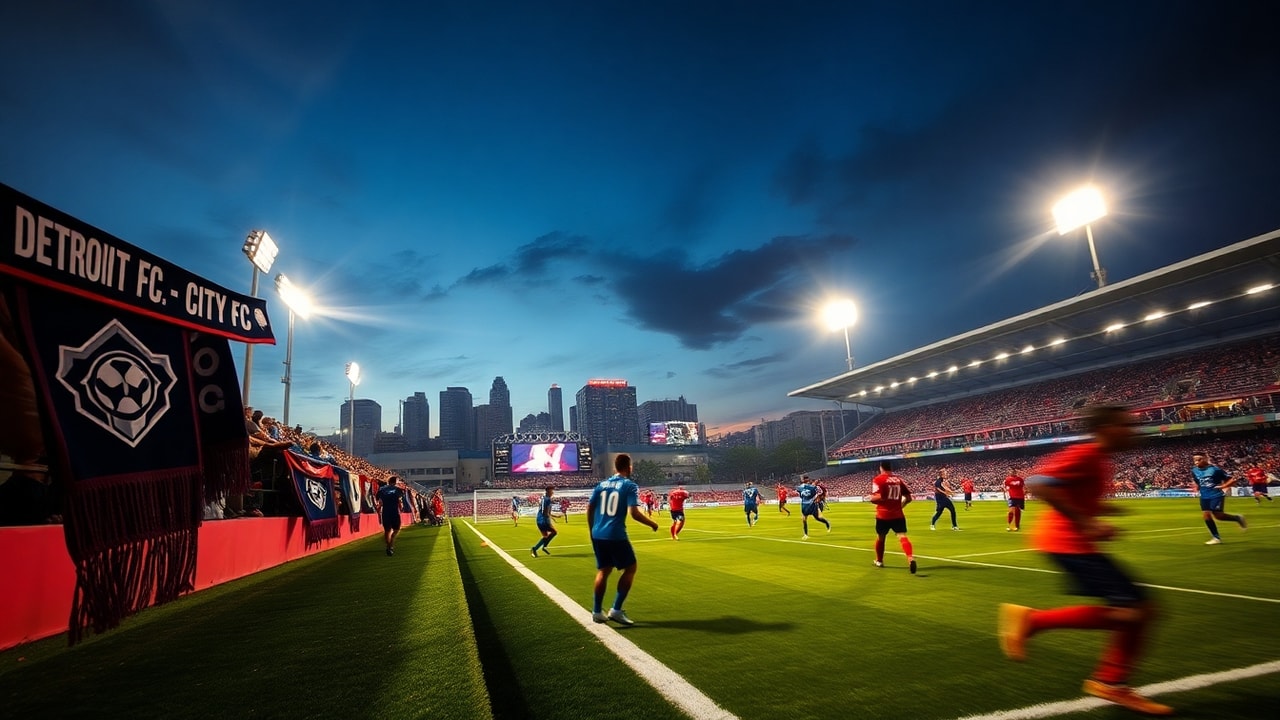
Detroit City FC will travel to Alabama for a primetime USL Championship matchup against Birmingham Legion, a high-profile test that comes as the club looks to sustain momentum while navigating the demands of away-game travel.
The match, scheduled for evening viewing, places Detroit soccer fans watching from home as the team focuses on execution in unfamiliar surroundings—on a road game that carries extra visibility compared with Saturday-afternoon kickoffs.
Detroit soccer in the spotlight on an Alabama road game
For Detroit City FC supporters, the Alabama road trip is more than a fixture shift on the calendar. Primetime match scheduling can bring broader regional attention to USL Championship clubs, and it also affects how teams plan logistics on game week—timing, recovery, and travel schedules tend to tighten when kickoffs are set for broadcast windows.
Detroit City FC is entering the Birmingham Legion matchup with the common USL Championship road-game challenge: adjusting quickly to field conditions, local weather patterns, and the rhythm of a late-afternoon or evening opponent. Birmingham Legion, meanwhile, will aim to capitalize on home support and the intensity that often follows nationally visible games.
USL Championship officials and club leadership have emphasized that the league’s growth increasingly hinges on consistent matchday experiences, including attention to broadcast-quality timing. According to USL reporting on league operations, the schedule is increasingly structured to support fan access across multiple platforms.
What’s at stake for Detroit City FC
While Detroit City FC supporters know results always matter, the bigger story for the club and the city is what the team can build through consistency. Road points can influence standings and postseason positioning, but they also shape perception—how local and regional audiences view Detroit soccer as a contender in the USL Championship ecosystem.
For Detroit, a strong showing on a primetime stage can resonate beyond the final whistle. The club has become part of the broader Detroit sports identity, drawing attention to the city’s growing reputation as a hub for fan-driven soccer culture.
As Detroit City FC prepares for its Alabama road game, the match also highlights a practical reality: USL clubs operate with tighter resource margins than major league franchises, making efficient travel and sharp preparation crucial.
“USL Championship teams plan these trips to protect performance during a short window,” a team operations perspective reflected in USL operational guidance suggests, underscoring why primetime scheduling changes game-week routines even when the opponents remain unchanged.
Impact on Detroit residents
Detroit residents don’t just follow the club’s results—they experience the team’s presence through matchday culture, local spending, and the civic pride that comes with keeping a professional soccer identity alive in the city.
Home watch parties, local bars, and community gatherings often form around high-visibility fixtures, especially when kickoffs are aligned with evenings and widely shared broadcasts. Those gatherings can translate into increased local business activity on game nights, particularly for establishments that already serve as soccer-friendly meeting points for fans.
Detroit’s economic story and public life intersect with sports in measurable ways. The City of Detroit has outlined priorities for strengthening local commerce around community events, and local planners have noted that sports can create recurring foot traffic when games are visible and well attended.
According to a Detroit Police Department annual overview of public safety programming tied to major public events, the city prepares for crowd flows and traffic patterns when large gatherings are expected. While this Alabama match is not a home event, the broader visibility of primetime games can still influence how people organize watch groups and travel locally.
For residents, the match can also serve as a cultural touchpoint: Detroit soccer is increasingly visible as residents seek entertainment that feels connected to the city rather than imported from elsewhere.
Background & data: USL Championship momentum and travel realities
The USL Championship has continued to expand its audience and infrastructure, and clubs across the league frequently face scheduling that reflects a balance between regional fan engagement and national visibility. Primetime matchups—often positioned for broader coverage—can create an outsized spotlight for clubs like Detroit City FC.
Travel remains a significant operational factor for second-tier professional leagues. Detroit to Birmingham is a multi-state trip that can affect rest, recovery, and routine, particularly when matches are staged for evening broadcasts. For Detroit City FC, preparation includes aligning training intensity with recovery time and ensuring players can adapt quickly once the match environment changes.
To understand why match visibility matters, it helps to look at how sports viewership has increasingly been shaped by scheduling. Data from the U.S. Census Bureau on population distribution and commuting patterns can’t predict a single match outcome, but it underscores that regional access and mobility are major elements of sports fandom—audiences concentrate where communities organize watch habits and local venues host broadcasts.
In Detroit, that organizing habit is part of the club’s identity: fans have helped cultivate a soccer atmosphere that stands out in a city best known for its auto industry legacy and major-league sports. The Birmingham Legion fixture on primetime lighting reinforces that Detroit soccer can compete for attention on a larger stage.
Background on Birmingham Legion and the matchup
Birmingham Legion brings its own fan culture and competitive approach to USL Championship play. The matchup between Legion and Detroit City FC is also a test of style: Detroit’s emphasis on organized play and intensity has drawn supporters who value structured soccer, while Birmingham typically aims to turn home support and momentum into attacking pressure.
For Detroit soccer, the central question in this primetime clash is how the team manages transition moments—especially on the road, where crowd noise and opponent adjustments can shift the game’s tempo.
What happens next for Detroit City FC
After the Alabama road game, the immediate priority will be recovery, film review, and re-centering around the team’s next set of league matches. In a schedule where opponents are accustomed to scouting and responding to patterns, the postgame window is where coaching staff can fine-tune decisions—set pieces, defensive spacing, and the timing of substitutions.
Detroit fans are also likely to focus on how the team’s performance holds up under primetime conditions—how players respond to the match pressure that comes with increased visibility and more attentive audiences.
Ultimately, the Birmingham Legion encounter is a measuring stick: a chance for Detroit City FC to demonstrate that its brand of Detroit soccer can travel, adapt, and compete on a stage that reaches beyond the Motor City.