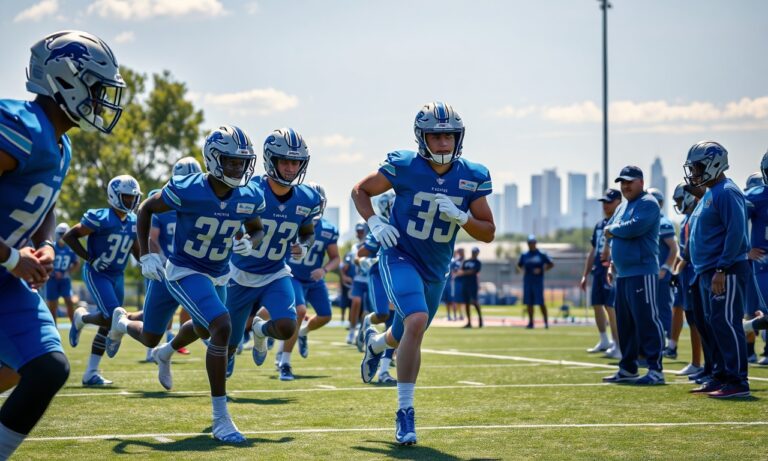
The Detroit Lions are heading toward the 2026 season with a familiar goal for any contending team: protect the offense’s continuity while creating just enough roster flexibility to adjust when injuries, performance swings, or scheme changes hit. That balancing act is showing up most clearly at running back, where a handful of players could be pushing for key snaps and, in some cases, a spot on the 2026 NFL roster.
In a sport where the “Lions depth chart” can change quickly after training camp, the running back room is becoming a focal point for fans trying to understand the team’s next roster bubble. It’s also a reminder that Detroit football isn’t only about Sundays—football spending ripples into local bars, restaurants, and community events on game weeks across Metro Detroit.
Detroit Lions 2026 roster bubble: why running back is a high-leverage position
Running backs in modern NFL offenses often do more than carry the ball. They protect the passing game by setting up play-action looks, and they can be central to pass protection responsibilities. For the Lions, that means roster decisions at the position can affect more than one phase of the offense.
According to the U.S. Inflation Calculator and broad NFL salary-cap reporting from outlets such as Spotrac, teams have increasingly managed payroll by using a blend of draft picks, veteran contracts, and mid-round competition. While cap rules are league-wide, roster strategy often shows up in teams with stable quarterbacks and an emphasis on sustaining offensive line performance—because those priorities shape how often teams rotate and where they invest depth.
In that context, the Lions’ 2026 roster bubble at running backs will likely hinge on three questions: who can earn trust as a runner, who can handle route and pass-game responsibilities, and who can stay available across a physically demanding season.
RB competition inside the Lions depth chart
The Lions depth chart at running back has historically treated the position as a competition zone where roles can expand quickly—particularly for players who can contribute on third downs or as emergency ballcarriers when starters miss time. In 2026, the RB competition could be shaped by how well the team identifies players who can handle both the workload and the nuance.
1) The starter-and-below roles: “carry value” plus availability
When teams talk about “value,” they usually mean more than yards: it’s efficiency, reliability, and the ability to execute in the red zone and on schedule. For Detroit, that can translate into a back who can carry the ball but also doesn’t force the offense to simplify when game flow changes.
Once the Lions lock in their base personnel packages, the 2026 roster bubble can come down to who separates during practice from the rest of the group. That separation often looks like quicker decisions at the line of scrimmage, cleaner pass-protection angles, and a knack for finishing runs without losing leverage.
2) The “third-down back” that coaches can trust
Another pressure point in the Lions depth chart is the player best suited for third downs—someone who can run routes with enough precision to be a realistic outlet and who understands how to block with urgency. According to the Pro Football Focus, pass-game responsibilities among running backs have grown in importance across the league, and coaches increasingly look for backs who can earn targets without breaking down protections.
For 2026, the roster bubble could narrow to the back who can translate run-game reads into pass-game timing—especially against blitzes and disguised coverages that require quick adjustments.
3) The special-teams swing player
On any contender’s 2026 NFL roster, special teams performance can be the deciding factor for borderline players. Detroit has often emphasized disciplined, assignment-based football, which gives teams a reason to reward running backs who tackle with leverage, earn reps on coverage units, and stay mentally sharp.
That’s why the running back room can look deeper than it does on paper. In practice, coaches may evaluate which back can contribute immediately when substitutions come in for kick coverage, field-position swings, or late-game scenarios.
What to watch during training camp and the preseason
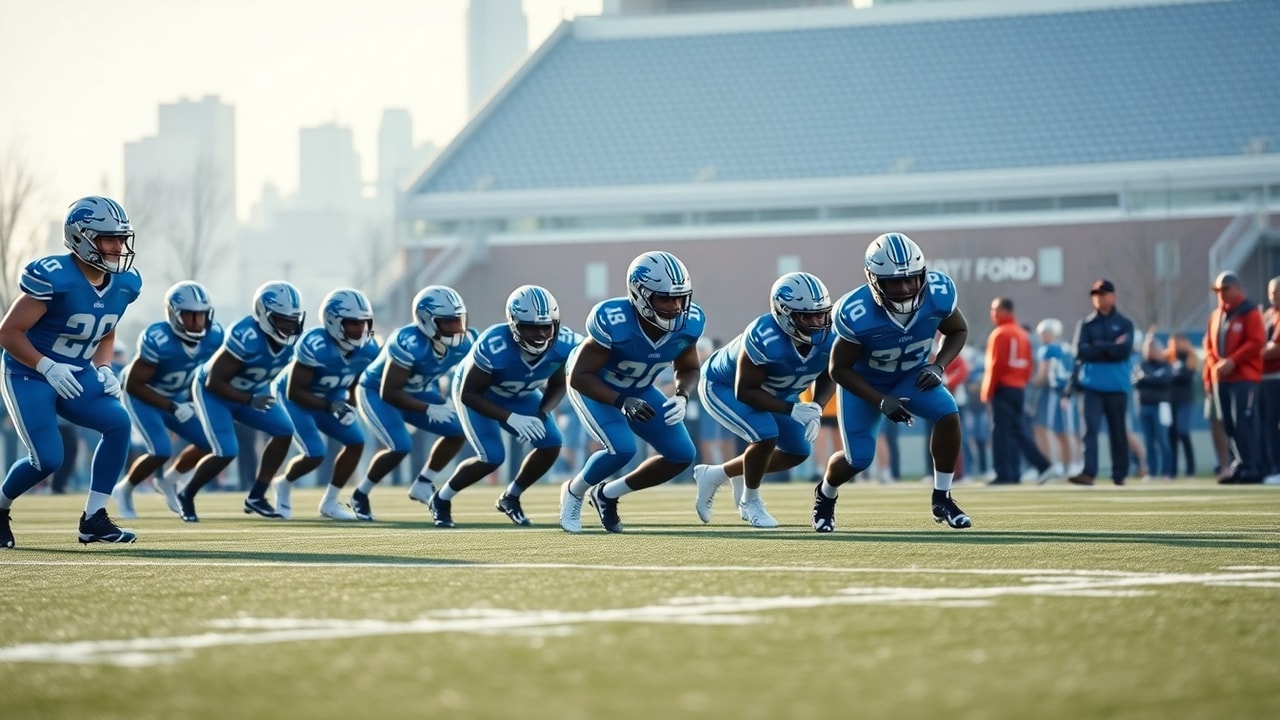
Detroit football fans won’t have official depth-chart answers until the team does its public roster work, but the path to a final 2026 roster bubble decision becomes clearer in August and early September. In particular, look for:
- Run-pass split execution: Who consistently hits the right lanes on inside runs and recognizes edges in zone concepts?
- Pass protection repetition: Which backs protect the quarterback with reliable hand placement and footwork?
- Route timing: Who is present on third downs and can appear for checkdowns without forcing the quarterback to throw late?
- Practice consistency: A player who performs daily tends to earn trust faster than a highlight-only performer.
- Special teams reps: Coaches often signal role value through who gets into coverage and return work.
These are the kinds of signals local fans will read between the lines as Detroit works through camp. They also matter for players trying to lock in a longer look on the 2026 NFL roster—because a single missed assignment or missed block can erase days of good work.
Impact on Detroit residents: game-week spending and community visibility
The Lions’ decisions at positions like running back don’t stay inside Ford Field. In Detroit, the franchise is part of the local rhythm. When roster news breaks, it often triggers immediate attention—media cycles, bar TVs, and conversations that affect business on game days.
According to the U.S. Bureau of Labor Statistics, household spending patterns can be sensitive to broader economic conditions, which makes discretionary “extras” like dining out or watching games together especially important during peak schedules. In Detroit-area entertainment districts, Lions season weeks can mean higher foot traffic—especially for restaurants that offer game-day specials, sports bars that rely on broadcast viewership, and local vendors that benefit from crowds.
Community impact can extend beyond commerce. Many Detroit-area youth football and community programs look to NFL visibility as motivation and inspiration, and roster decisions that shape the identity of the offense can become part of the storytelling that families share in the offseason.
In practical terms, the 2026 roster bubble at running backs is one of those “small roster moves, big local conversation” storylines—because every position battle influences who plays, who gets highlight opportunities, and which players become familiar names in Detroit households.
Background & data: how roster bubbles form
Roster bubbles rarely appear out of nowhere. They form from a mix of contract timing, injuries that alter the pecking order, and evolving scheme demands. For the Lions, the running back position is especially sensitive to:
- Injury variance: The NFL’s schedule compresses recovery time, and the physical nature of running backs increases the likelihood of missed practices.
- Scheme fit: Different offensive looks—zone concepts, gap schemes, and play-action systems—favor different runner traits.
- Cap management: Teams may prefer to keep some flexibility to address the offensive line, cornerback, or defensive front needs if injuries force a midseason correction.
- Development curves: Players often grow into roles, and teams may use 2026 roster bubble situations to reward readiness rather than reputation alone.
While fans focus on who is “best,” front offices often look at whether a player is the best fit for a specific role. That makes the Lions depth chart at running back a moving target into 2026.
What happens next for Lions running backs in 2026
As the Lions transition toward the 2026 roster build, the running back competition is likely to become clearer through three phases: offseason workouts, training camp evaluations, and preseason snap counts.
By the time the Lions set their final 2026 NFL roster, the RB battle could produce a clearer pecking order—one that reflects both performance and reliability. For Detroit residents, it also means the narrative around the Lions offense will shift from “potential” to “who is earning it.”
For now, the key is to watch the smallest details: who takes correct angles, who stays disciplined in pass protection, and who shows up consistently on third downs and special teams. Those are the traits that turn a roster bubble into a role—on the field and, in Detroit, into a season-long story families will be discussing long after kickoff.