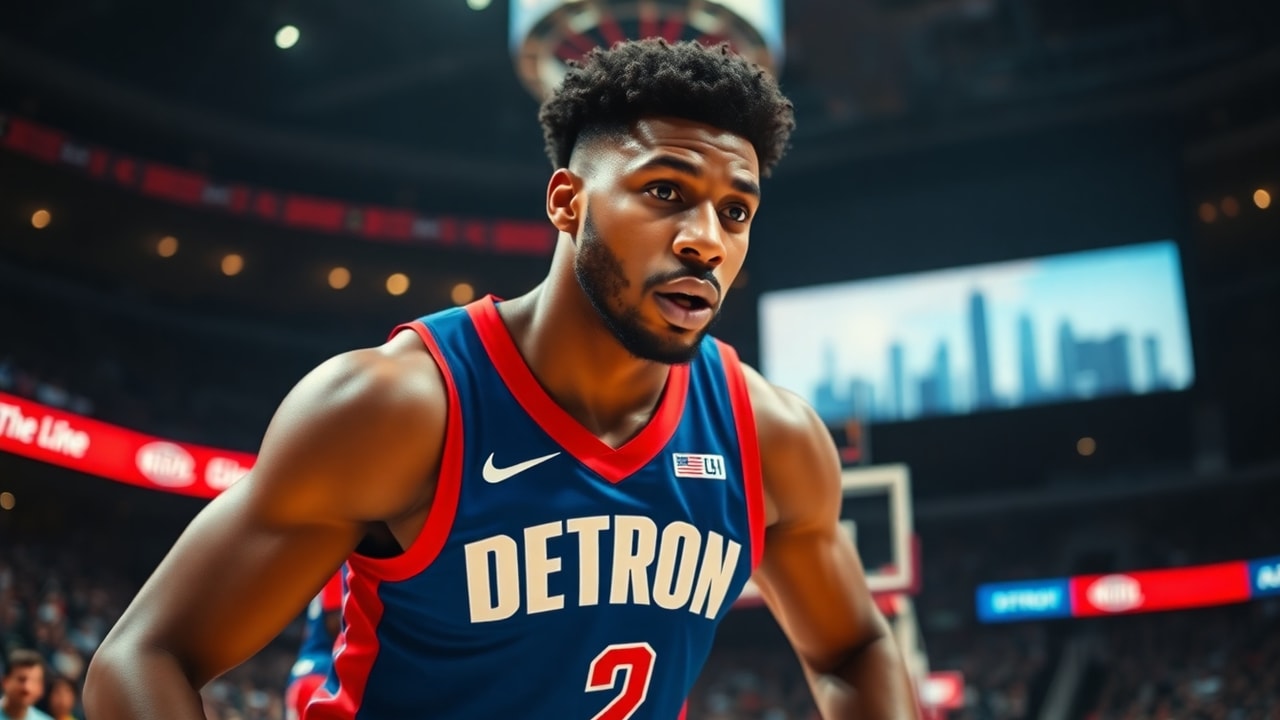
Detroit Pistons forward-center Jalen Duren broke down how the team adjusts its communication and positioning when opponents switch defensive coverages—specifically referencing Detroit’s recent look against the Lakers switch and what it requires from the league’s frontcourt on the floor.
In a Jalen Duren interview after the Pistons’ matchup, Duren emphasized that the Pistons’ ability to protect the paint depends on synchronized footwork, clear calls, and quick decisions by big men and guards, especially when a defense swaps matchups late in possessions. The comments offer a window into Detroit’s current priorities as it builds continuity on defense and tries to make late-game stops more repeatable.
Jalen Duren on reading the “Lakers switch” in real time
Duren described the “Lakers switch” concept as a challenge that hits multiple positions at once: when the defense changes who is guarding whom, the offensive spacing can immediately shift the advantage between a big man and a perimeter defender. For Detroit, he said, the task is not just physical—timing matters as much as strength.
“When you see a switch coming, you’ve got to be ready before it happens,” Duren said, according to a Pistons postgame interview transcript shared by the team. He added that the first instinct should be to prevent easy entry passes and then rotate to the new matchup quickly so opponents don’t gain a clean lane or a high-percentage shot.
While the Pistons’ schemes can vary based on opponent personnel, Duren’s description aligned with standard NBA principles for switch-heavy defenses: establish help coverage before contact, maintain contact on drives, and avoid collapsing so aggressively that the ball finds an open shooter. In Detroit’s case, those choices are especially important because opposing teams often try to draw attention from their guards and wings before attacking the rim or operating in the mid-post.
Why the Pistons’ switch defense matters for Detroit basketball
The Detroit Pistons have spent this season refining how their frontcourt and perimeter players coordinate during live-ball breakdowns. Switch sequences frequently decide whether a possession ends with a contested shot or an uncontested advantage. Duren’s remarks point to Detroit’s focus on keeping the defense organized even when the matchup changes.
NBA game analysis routinely treats defensive switches as a tradeoff—more mobility and potentially better screening coverage, but more vulnerability if rotations lag. When switches are executed cleanly, they can disrupt predictable drives and deny comfortable post touches. When they are not, the defense can give up a quick mismatch that is difficult to erase after the ball is already in motion.
Duren highlighted the mental side of those moments: communicating early, staying aligned with the play, and understanding how the next action develops once the switch occurs. For Detroit basketball fans, that’s the kind of detail that often separates “good effort” from sustained defensive reliability.
Impact on Detroit Residents: From the arena to the community
Although the matchup happened on an NBA court, the way teams talk about defense can matter beyond sports entertainment. For Detroit residents, local support for the Pistons is closely tied to civic identity—particularly in neighborhoods where youth leagues and recreation programs depend on community partners and visibility.
According to the U.S. Bureau of Labor Statistics, local economic conditions influence discretionary spending on entertainment, which can affect attendance and revenue streams for professional sports organizations and their community programming. The point is not that one game changes a household budget, but that consistent performance and recognizable team identity can strengthen fan engagement—supporting the broader ecosystem around Detroit sports.
Additionally, team messaging can shape how young athletes understand preparation. Detroit-area youth basketball programs often teach “communication and rotations” as fundamentals—skills that are directly echoed in how players like Duren describe switching responsibilities. When a veteran-level big man explains those principles clearly, it reinforces coaching points that are already part of development pathways in the city.
From an investment standpoint, Pistons basketball also influences local commercial activity tied to game nights—restaurants, bars, and retail near downtown venues typically see spikes in demand on event dates. Clear on-court identity, including defensive toughness, can play a role in maintaining that schedule-driven local spending.
Background & Data: What the Pistons are trying to fix
Switching defenses are increasingly common in the NBA, largely because they can reduce the damage done by screens and force offenses to operate without a single, static advantage. The tradeoff is that switches require discipline; if players get late or lose the ball, the offense gets a mismatch before help can arrive.
Basketball analysis outlets that track lineups and defensive performance have long noted that effective switching depends on both individual matchups and teamwide timing. In practice, “Lakers switch” style sequences often test whether a team can keep shooters from getting open looks after the defense swaps responsibilities.
For Detroit, the key questions the team’s staff—and fans—are watching are straightforward:
- Can the frontcourt secure rim deterrence after the ball moves to a new matchup?
- Do rotations arrive early enough to prevent uncontested drives?
- Are communication cues consistent so teammates react instead of second-guessing?
Those points also connect to how the Pistons shape offensive possessions. If Detroit understands when opponents plan to switch, it can design entry reads that exploit hesitation—such as using cutters to force a defender off the spot or making quick passes before the swap is fully set.
What happens next for Detroit’s defense
The immediate takeaway from Duren’s Jalen Duren interview is that the Pistons want to keep their identity tied to preparation. Switching defense isn’t one adjustment; it’s a chain reaction that begins before the ball is thrown and continues through the first pass after contact.
As the Pistons move through the next stretch of their schedule, fans can expect coaches to keep emphasizing:
- Earlier communication during live dribble drives and screening actions.
- Frontcourt positioning so big men don’t get caught behind the play when a switch occurs.
- Rotational discipline to avoid leaving shooters open after the defensive swap.
For the city, those improvements are more than scoreboard math. When Detroit’s defense executes, it slows opponents down enough for the Pistons to play with tempo—and that often translates into a more watchable brand of basketball that sustains local interest.
Whether the next opponent leans into a “switch” strategy again or forces the Pistons into different defensive looks, Duren’s core message should remain relevant: defense is teamwork, and switches punish teams that react too late.
More Detroit basketball coverage you can follow
If you’re tracking how the Pistons adapt their schemes possession by possession, watch for how Detroit responds when opponents shift matchups on screens, particularly around the lane. Those moments—where players decide what happens after the switch—are exactly where Jalen Duren says Detroit has to be ready.