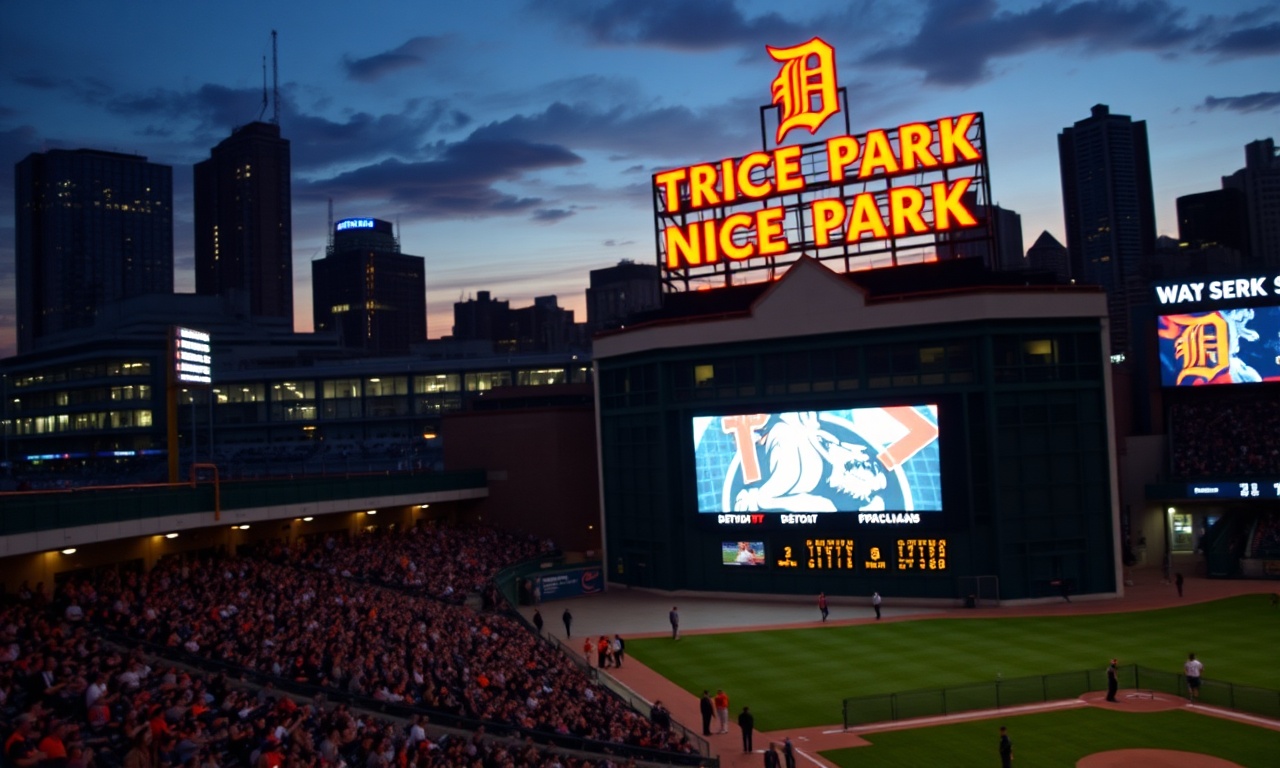
The Detroit Free Press columnist’s message was clear: the Detroit Tigers still have a path to the postseason, even as the AL playoff race in MLB 2025 remains unforgiving and every series can swing the standings. For Detroit sports fans, the statement lands at a moment when Motown sports conversations are increasingly about momentum—who’s hitting at the right time, which rotations are holding up, and how teams respond when the calendar turns.
While baseball standings can feel opaque to casual observers, the path to “make the playoffs” tends to be less about any single game and more about whether a team can turn close stretches into wins. Detroit’s challenge is to do that consistently—especially against playoff-caliber opponents in the American League—without relying on a few lucky weeks to carry the season.
Why the Detroit Tigers still have a realistic playoff window
As of midseason, the Tigers’ ability to compete for postseason positioning is influenced by three variables: one-run performance, run prevention over longer stretches, and how frequently they can manufacture offense when power output fluctuates. Those factors are increasingly important in modern AL standings, where several teams often finish with similar records and tiebreakers can be decided by performance in divisional play and against common opponents.
In practical terms, “can still make playoffs” usually means the Tigers are not simply winning games—they are keeping the gap close to teams already in the playoff conversation and staying within striking distance as the season approaches the back half. That’s the core of the argument the Detroit Free Press columnist points to: the Tigers’ remaining schedule and current form give them a chance, not a guarantee.
What the standings reveal about the AL playoff race
Baseball’s postseason picture is shaped by how quickly the AL contenders separate themselves. According to official MLB standings and the league’s playoff format, the American League playoff field includes the division winners plus wild cards, meaning teams can remain alive even if they’re not first in their division. The math may change week to week, but the structure means a club that stays competitive can still control its destiny in late summer.
For Tigers fans, that’s an important nuance: the season doesn’t end when a team falls behind early. It ends when it’s mathematically eliminated—which often occurs only after multiple simultaneous outcomes go against a team.
Motown sports impact: what a Tigers playoff push can mean in Detroit
Detroit’s sports identity is tied to more than the scoreboard. When local teams contend, Motown sports often see a measurable ripple effect across everyday life—crowd energy, local business demand, and community attention. That connection is especially evident in cities where ballpark weekends operate like social anchors.
According to data reported by the U.S. Census Bureau, local consumer spending patterns can be influenced by major events, and visitor-related activity tends to cluster around popular attractions and sports calendars. In Detroit, a sustained Tigers run could help translate interest into attendance, merchandise sales, and increased foot traffic around partner businesses near Comerica Park.
There’s also a broader civic angle. In communities where teams draw diverse fan bases, playoff contention can serve as a shared story that cuts across neighborhoods—something local media and community organizations often highlight when building year-round engagement.
Local business and neighborhood benefits
When Detroit residents talk about sports seasons, they frequently mention the “weekend economy”—restaurants, bars, and retailers near downtown that benefit from game-day crowds. While not every business experiences the same boost, a playoff push can change how customers plan outings, how long they stay, and how frequently they bring groups.
For local operators, that’s significant. A typical regular-season pattern can look steady, but higher attendance and longer postgame stays can alter daily revenue. In the same way that Detroit’s development discussions often focus on how activity concentrates around anchors, a postseason chase can act as a temporary anchor for consumer activity.
Background & data: how teams “make the playoffs” in MLB 2025
The baseball season may feel endless, but the postseason cutoff typically sharpens by late summer. Teams that remain competitive are usually the ones that can cover for variance—injuries, bullpen volatility, and the natural swings in batting performance.
To understand how a team stays in the AL playoff race, it helps to look at the kinds of metrics that tend to predict late-season success. While fans focus on batting averages and highlights, analysts often track whether a club converts opportunities into runs and prevents opponents from scoring in high-leverage innings. The Tigers’ ability to do those two things consistently has a direct relationship to whether they can continue to “make the playoffs” rather than just keep pace early.
In addition, the MLB schedule structure matters. According to MLB’s published game and postseason rules, the path to the wild card involves not only winning but also maintaining position relative to other AL teams. If the Tigers face a series of opponents also fighting for postseason spots, each result matters twice—once in the standings and again in head-to-head positioning and potential tiebreaker scenarios.
Attribution: what MLB and local reporting say about postseason opportunities
MLB’s official postseason eligibility rules outline how teams qualify for division titles and wild-card spots, and how final standings determine the playoff field. Meanwhile, the Detroit Free Press columnist’s take reflects a common beat-journalism approach: pairing current team performance with remaining schedule realities to argue that the Tigers are still within striking distance.
Separately, baseball analysts frequently point out that runs scored and runs allowed over multiweek stretches tend to be more telling than single-game streaks. This aligns with how many late-season surges happen: not necessarily through a dramatic talent shift, but through steady execution—pitching depth holding up and lineup production not collapsing when matchups get tougher.
Impact on Detroit residents: tickets, viewing culture, and community attention
For Detroit residents, the immediate impact of the Tigers’ playoff relevance typically shows up in three areas: ticket demand, media coverage, and community programming. Even when the team is not guaranteeing a postseason berth, a credible playoff window can shift how residents plan weekends and how local sports content fills feeds and bar TVs.
It’s also when sports becomes more integrated into neighborhood routines. Detroiters often share game-day experiences—watch parties, family outings, and gatherings near the ballpark—creating a feedback loop of attention. That attention can bring more casual fans into the conversation, widening the audience for local reporting and strengthening the cultural visibility of Motown sports.
For families, it can mean more chances to experience the Tigers as something bigger than a weekday schedule—especially if Detroit businesses support promotions around home games.
What happens next for the Detroit Tigers
The most important next step is not a single headline series but a sustained stretch of execution. A team trying to make the playoffs needs to do a few things reliably: keep bullpen arms fresh, limit damage from mistakes, and win against opponents they match up well against while staying competitive in games where the matchup shifts.
From a fan perspective, the actionable question is whether the Tigers can string together wins while the AL playoff race tightens—particularly as other contenders also fight for positioning. Each upcoming series will serve as a referendum on whether the team’s earlier form was just a brief run or a sign of something more durable.
Ultimately, the Detroit Free Press column’s argument that the Tigers “can still make playoffs” is best understood as a spotlight on opportunity and urgency. In MLB 2025, playoff dreams don’t usually end when fans want them to; they end when the math becomes impossible. Until then, Detroit’s ballclub has room to chase the postseason—and for a city that measures its seasons in community rituals, that chase matters.