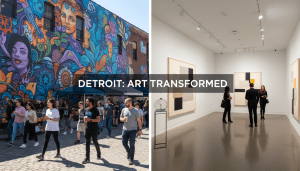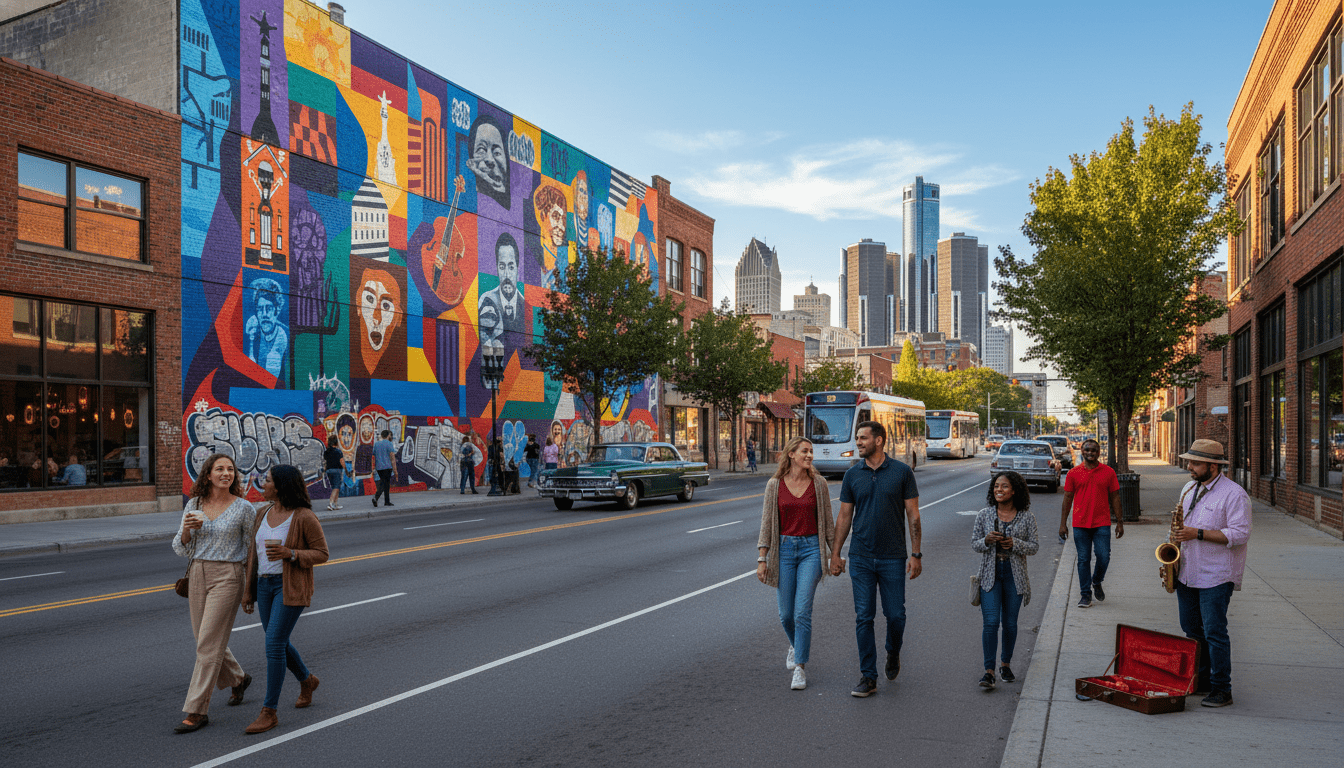
Detroit’s narrative has long been dominated by the automotive industry and Motown music, but in recent years, a visual revolution has taken hold of the city’s streets, galleries, and institutions. From the sprawling murals of Eastern Market to the curated corridors of the Detroit Institute of Arts (DIA), the Detroit art scene has evolved into a powerful economic and cultural engine. Following its designation as the first UNESCO City of Design in the United States, Detroit is leveraging its creative capital to reshape neighborhoods and attract global attention.
While the city has always possessed a creative soul—evident in long-standing institutions like the College for Creative Studies (CCS) and the Cranbrook Academy of Art just outside the city limits—the current momentum feels different. It is a convergence of grassroots community activism, municipal investment through the Office of Arts, Culture and Entrepreneurship (Detroit ACE), and a surge in commercial gallery openings that are putting Detroit artists on the international map.
The Intersection of Commerce and Creativity
The transformation of the Detroit art scene is perhaps most visible in the way art is being integrated into the city’s infrastructure and commercial developments. It is no longer confined to museums; it is woven into the urban fabric.
“We are seeing a shift where art is not just decoration, but a driver of development,” says Rochelle Riley, the city’s Director of Arts and Culture, in previous statements regarding the city’s cultural initiatives. The City of Detroit’s “City of Walls” program, for instance, has invested heavily in beautifying blight and turning industrial corridors into open-air galleries. This initiative has not only improved aesthetics but has increased foot traffic to local businesses.
Private investment is mirroring this trend. The Library Street Collective, a gallery that has become a cornerstone of downtown’s artistic revival, was instrumental in creating “The Belt,” a formerly desolate alleyway transformed into a vibrant public art space. Developments like these suggest a sustainable model where culture and commerce support one another.
For more on how commercial developments are reshaping the city, read our coverage on Detroit business and real estate trends.
Impact on Detroit Residents
While the influx of international artists and high-end galleries grabs headlines, the true heartbeat of the Detroit art scene remains its impact on long-time residents. Art in Detroit has historically been a tool for resilience and storytelling. The Heidelberg Project on the East Side stands as a decades-long testament to using creativity to combat urban decay.
However, the rapid expansion of the art district in areas like Midtown and Corktown raises questions about accessibility and inclusion. Local advocacy groups emphasize the need for the “new” Detroit art world to remain accessible to the communities that kept the city’s culture alive during harder times.
Programs funded by the Kresge Foundation and the Knight Foundation are specifically targeting individual artists living in the city, ensuring that the economic benefits of this cultural renaissance trickle down to the creators themselves. For residents, this means more programming in neighborhood parks, increased funding for school art programs, and public spaces that reflect their history and identity.
Background & Data: The Economic Engine
The economic footprint of the creative sector in Southeast Michigan is substantial. According to data from CultureSource, a regional arts service organization, the creative industry contributes billions annually to the regional economy. Their reports indicate that nonprofit arts and culture organizations in Southeast Michigan generate over $600 million in annual expenditures, supporting thousands of full-time equivalent jobs.
Furthermore, the Detroit Institute of Arts (DIA) continues to be a massive draw. Since the passage of the tri-county millage in 2012, the museum has provided free unlimited general admission to residents of Wayne, Oakland, and Macomb counties, democratizing access to world-class art. This stability has allowed the DIA to focus on community outreach and education, solidifying the foundation of the local art ecosystem.
In comparison to other Rust Belt cities, Detroit’s retention of creative talent is notable. The low cost of living relative to coastal art hubs like New York or Los Angeles continues to attract young creatives, leading to the repurposing of industrial spaces into studios and lofts.
What Happens Next for Detroit Culture
Looking ahead, the trajectory for the Detroit art scene appears robust. The city is preparing for the next iteration of the Detroit Month of Design, which draws thousands of visitors annually. There is also a concerted effort to preserve Black historic sites through artistic interventions, ensuring that as the city develops, its history is not erased but highlighted.
Challenges remain regarding funding sustainability and ensuring equitable growth across all zip codes. However, the collaboration between the city government, private philanthropy, and the artists themselves suggests a unified vision. As Detroit continues to rebuild, art is not merely an afterthought; it is a central pillar of the city’s strategy for the future.
Stay updated on upcoming cultural events by visiting our Detroit Local Living & Info section.