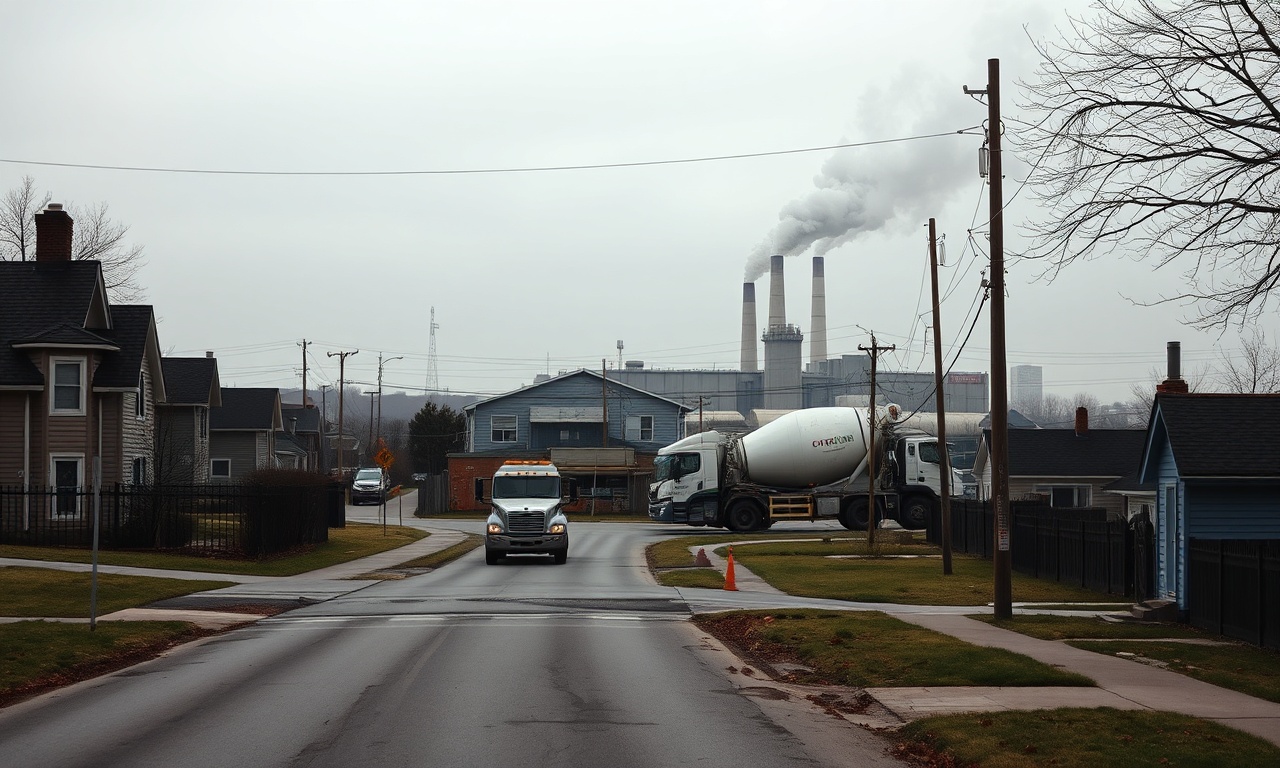
A billionaire-owned concrete plant has expanded into a Detroit-area neighborhood, drawing fresh scrutiny from residents and local environmental advocates who say the project will increase heavy truck traffic and air pollution. The company, which is now operating and/or controlling additional production capacity at the site, argues the expansion is part of Detroit’s construction pipeline, citing demand for concrete for infrastructure and development projects.
The dispute has put community groups and city officials on a familiar track: how Detroit industrial expansion can support jobs and building activity while also protecting residents from local environmental impact tied to dust, noise, and emissions from industrial operations.
Detroit concrete plant expansion draws neighborhood opposition
According to multiple residents who live near the facility, the expansion has already changed daily conditions—more commercial vehicles along nearby corridors, more visible particulate dust during dry or windy weather, and louder operating hours. Community members say they were not given meaningful opportunities to weigh in before the additional activity began.
Local activists framed the concern as a “community takeover” by an out-of-town ownership group. They argue that when billionaire-owned businesses control industrial sites, local decision-making can become limited, even when surrounding neighborhoods carry the day-to-day costs.
While the company has not publicly characterized the situation as a takeover, it has pointed to the concrete plant’s role in supplying Michigan construction materials for projects ranging from roadway work to commercial and residential builds. The company’s position, residents say, is that the facility supports broader development and that operators can comply with environmental rules.
Impact on Detroit Residents
Residents’ concerns generally fall into three categories: air quality, traffic and safety, and quality-of-life disruptions such as noise and dust.
Air quality and dust: Several neighbors described periods when exhaust fumes and visible dust were more noticeable than before. Advocates say particulate matter from concrete production and hauling can be harmful, particularly for people with asthma or other respiratory conditions. The Michigan Department of Environment, Great Lakes, and Energy (EGLE) regulates air quality through permits and inspections, and it can require operational controls intended to reduce emissions.
Local environmental impact: The risk, critics say, is cumulative—Detroit already contains multiple industrial sources in different corners of the region. “We can’t look at any one facility in isolation,” said a spokesperson for a Detroit-area environmental advocacy group, emphasizing that communities near industrial corridors often experience repeated exposure over time. (The group’s statement was provided by email.)
Heavy-truck traffic: Residents also reported more truck traffic on nearby roads. That raises safety questions, especially for pedestrians and cyclists, and it can contribute to road wear and congestion. Local groups have urged the city to demand clearer routing plans and scheduling limits tied to dust control and neighborhood sensitivity.
Background & Data: How Detroit industrial expansion is regulated
Concrete plants and other heavy industrial facilities typically operate under state air permits and other environmental requirements. In Michigan, EGLE oversees air permits and compliance, including conditions designed to limit emissions and manage particulate matter controls. According to EGLE, regulated facilities must follow permit terms and can be subject to inspections and enforcement actions if they fail to comply with conditions.
Detroit’s broader construction environment adds context. In recent years, the city has pursued or supported major public works and private development initiatives, which increases demand for construction materials. Data from the U.S. Census Bureau shows that construction spending and building activity can influence demand for building materials and downstream supply-chain industries across metropolitan areas.
Still, industrial activity’s local effects are uneven. Even when the overall economy benefits from Detroit industrial expansion, residents living closest to production sites can experience concentrated impacts. That is why community consultations, permitting transparency, and enforceable mitigation plans matter, especially when ownership structures are perceived as distant or financially powerful.
In public meetings, officials often face two competing narratives: one centered on jobs and project throughput, and the other focused on environmental justice and community health. The current controversy highlights how those narratives collide when expansion is interpreted as accelerating without adequate local engagement.
What the company says—and what critics are asking for
While details about the specific ownership structure and exact operational changes vary by source, residents and advocates say they want clarity on what has expanded—such as throughput, equipment changes, or increased hauling frequency—and how the concrete plant will control dust and emissions at the fence line.
Advocates are asking for:
- Public disclosure of permit modifications and operating schedules tied to the expansion;
- Independent monitoring or additional community-facing air quality reporting;
- Dust-control measures and documentation of enforcement actions, if any;
- Trucking route commitments to reduce impacts on the most residential streets;
- Community meetings before future capacity changes.
City officials and regulators, meanwhile, are expected to direct questions back to EGLE’s permitting framework and the facility’s compliance obligations. According to EGLE materials describing the permit process, air permits establish limits and monitoring requirements that operators must meet, and changes to operations can require review depending on permit terms and the nature of modifications.
Local environmental impact is central to the dispute
In Detroit, debates about industrial expansion often revolve around who benefits and who bears the burden. Critics of the Detroit concrete plant expansion say the neighborhood has become a catchment area for industrial growth, despite ongoing needs for improved infrastructure, cleaner air, and safer streets.
Supporters of industrial development emphasize that concrete supply is a practical necessity for ongoing construction and that compliance systems are designed to protect surrounding communities. The challenge for both sides is determining whether existing rules are enough—or whether additional conditions should be required to address the on-the-ground local environmental impact residents report.
What Happens Next
The next steps likely hinge on environmental review and enforcement timelines. If the facility’s expansion involved permit changes, regulators may publish or make available permit documents that residents and advocates can review. EGLE may also conduct inspections as part of routine oversight or in response to complaints.
On the community side, advocates said they plan to pursue additional documentation—such as incident reports, complaint records, and air monitoring data—while also pushing for structured neighborhood engagement before further operational changes. City leadership may face calls to convene local stakeholders, coordinate with state regulators, and request clearer trucking and mitigation commitments.
For Detroit residents living near industrial corridors, the central question remains whether the Detroit concrete plant expansion will be paired with measurable safeguards. As the city continues to navigate Detroit industrial expansion, the outcome of this fight may shape how future construction-related facilities and community expectations align—or fail to align.